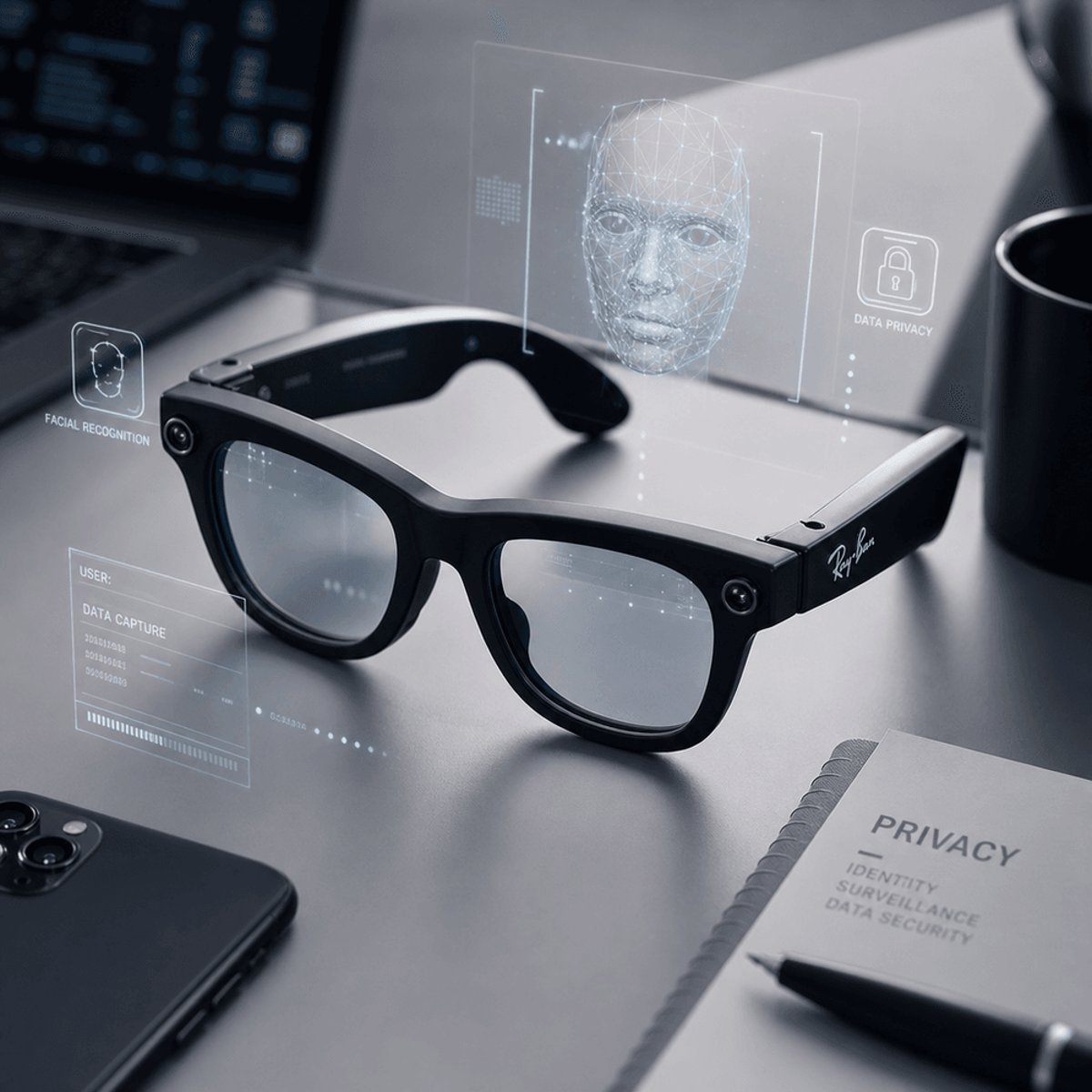
Meta has quietly scrubbed face-recognition code from its smart glasses companion app following a WIRED investigation that exposed its existence. The feature, discovered embedded in the Meta AI app that powers the company's Ray-Ban smart glasses, vanished from the latest version without explanation. Meta's refusing to comment on why the code was there, why it's gone, or whether it plans to bring it back - raising fresh questions about surveillance capabilities in consumer wearables and the company's commitment to transparency around facial recognition technology.
Meta just got caught with its hand in the facial recognition cookie jar - again. Following a WIRED investigation published earlier this month, the company scrubbed face-recognition code from the Meta AI app, which serves as the control hub for its Ray-Ban Meta smart glasses. The code's now gone from the latest app version, but Meta's staying silent on the crucial questions: what was it doing there in the first place, and is this capability coming back?
The discovery puts Meta in an uncomfortable spotlight just as the company's betting big on AI-powered wearables. The Ray-Ban Meta smart glasses, priced at $299, let users capture photos and videos through voice commands while looking like ordinary eyewear. According to reports from The Verge, the glasses have been surprisingly popular, with Meta struggling to keep up with demand since their September 2023 launch.
But facial recognition in smart glasses hits different than facial recognition on phones. We're talking about always-on, point-of-view cameras that can identify strangers in real-time without their knowledge or consent. WIRED's Dhruv Mehrotra and Dell Cameron found the code through reverse engineering the Meta AI companion app, spotting references to facial recognition systems that had no business being in a supposedly camera-only device.
This isn't Meta's first rodeo with facial recognition backlash. Back in 2021, the company announced it was shutting down its Facebook facial recognition system and deleting the faceprints of more than 1 billion users. That move came after years of regulatory pressure, lawsuits, and a $650 million settlement over Illinois privacy violations. Meta's vice president at the time called it "one of the largest shifts in facial recognition usage in the technology's history."
Yet here we are. The code's presence in the smart glasses app suggests Meta was at least exploring facial recognition capabilities for its wearables, even if the feature never went live. Industry watchers note that major tech companies routinely test features internally that never ship to consumers, but they usually don't leave the code sitting in production apps where security researchers can find it.
The timing couldn't be worse for Meta's wearables ambitions. CEO Mark Zuckerberg has positioned AI-powered glasses as a cornerstone of the company's hardware strategy, showing off new AI features at the company's Connect conference last fall. The glasses can now describe what you're looking at, translate text in real-time, and answer questions about your surroundings - all powered by Meta's Llama AI models.
But each new AI capability raises privacy stakes. Smart glasses with facial recognition could instantly identify everyone you pass on the street, match them to social media profiles, and serve up their personal information. It's the kind of dystopian scenario privacy advocates have warned about for years. Two Harvard students demonstrated exactly this capability last year using Ray-Ban Meta glasses and publicly available facial recognition tools, proving the technology's already here - it's just a matter of who deploys it.
Meta spokesperson declined to comment when reached by WIRED, offering no explanation for the code's presence or removal. That silence is deafening. If the code was benign test functionality, why not say so? If it was never meant to ship, how did it end up in production? And most importantly, is Meta still working on facial recognition for smart glasses behind closed doors?
The incident highlights a broader tension in the AI hardware race. Companies like Meta, Apple, and startups like Humane are rushing to embed AI into wearable devices that see the world through our eyes. But the same AI capabilities that make these devices useful - object recognition, scene understanding, real-time translation - sit uncomfortably close to surveillance features that could track and identify everyone around us.
Regulators are starting to catch up. The EU's AI Act, which began enforcement earlier this year, includes strict limitations on biometric identification in public spaces. Several U.S. cities have banned facial recognition by government agencies. But consumer devices remain a gray area, with few clear rules about what tech companies can and can't build into the gadgets we wear on our faces.
For now, the code's gone. But WIRED's investigation proves that journalists and researchers are watching - and that tech companies can't quietly test surveillance features without someone noticing. Whether that's enough to keep facial recognition out of smart glasses long-term remains an open question.
Meta's silent code deletion raises more questions than it answers. The company that once promised to leave facial recognition behind now finds itself explaining why the technology was lurking in its smart glasses app - except it's not explaining anything. As AI-powered wearables become mainstream, this incident shows we need clearer rules about what surveillance capabilities can be built into the devices we wear every day. The technology exists, the hardware's already on people's faces, and only public scrutiny stopped this particular feature from going live. That's not exactly a reassuring precedent as every major tech company races to put AI cameras on our heads.