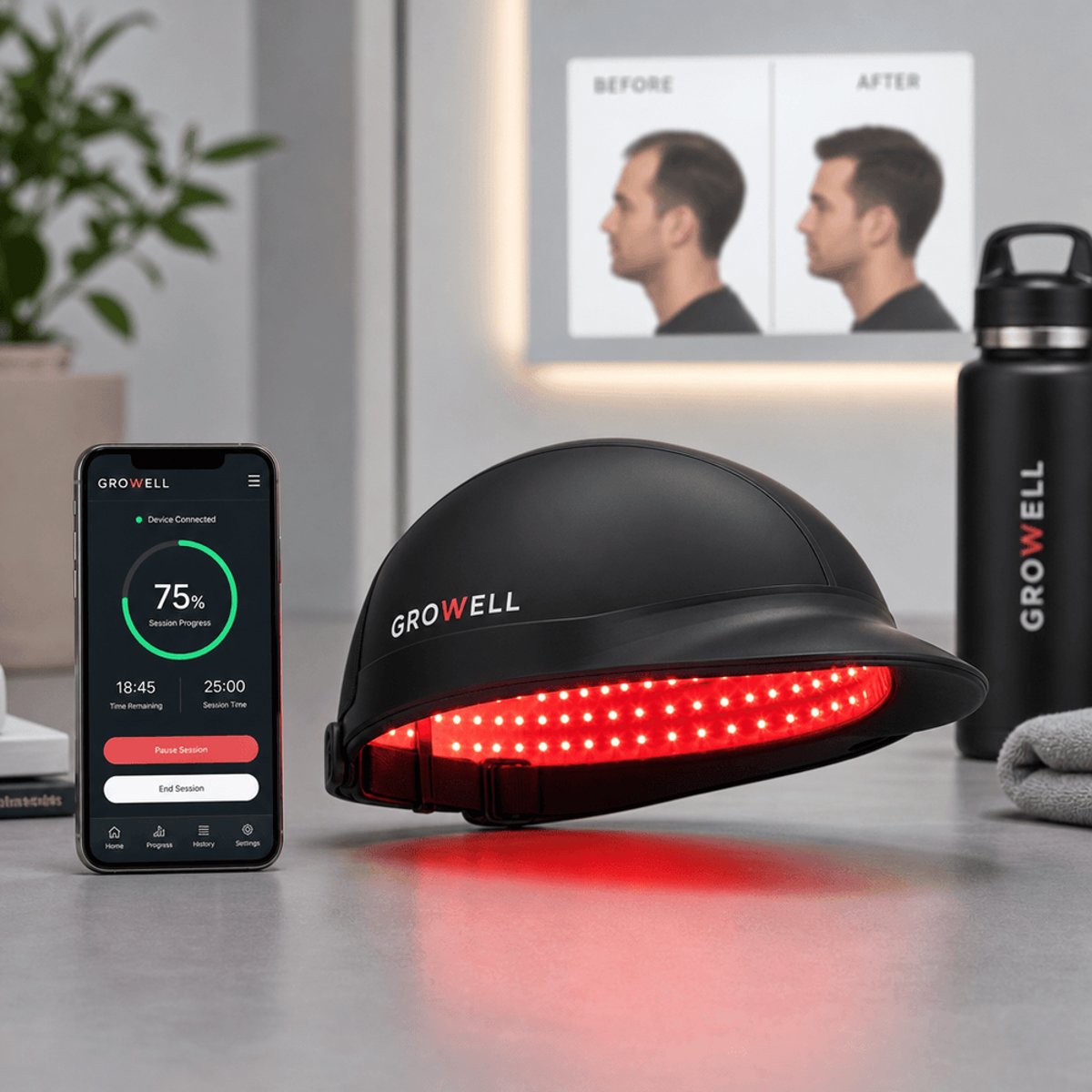
A new LED-based hair restoration device is making bold claims in the growing health tech market. Martin Cizmar, who went bald 15 years ago, tested the GroWell Cap and reports visible hair regrowth in a detailed review published by Wired. The wearable device uses low-level light therapy, a treatment gaining traction in the consumer wellness space as wearable health tech continues expanding beyond fitness trackers into medical-adjacent territories.
The line between consumer gadgets and medical devices keeps getting blurrier. Wired senior writer Martin Cizmar just published a review that's turning heads in the health tech space - literally. After shaving his head 15 years ago and accepting his fate as a bald man, Cizmar tried the GroWell Cap, an LED-based hair restoration device, and claims he now has visible hair growth for the first time in over a decade.
The GroWell Cap represents a wave of consumer health devices bringing medical-grade treatments into homes. The technology behind it - low-level light therapy, or LLLT - isn't new to dermatology clinics, but packaging it into a wearable consumer product marks another step in the ongoing democratization of health treatments. These devices use specific wavelengths of red light, typically between 630-670 nanometers, to stimulate hair follicles at the cellular level.
What makes this review noteworthy isn't just the personal testimony. It's part of a larger trend where consumer electronics companies are increasingly moving into medical-adjacent territories. We've seen Apple add ECG and blood oxygen monitoring to the Apple Watch. We've watched continuous glucose monitors transition from prescription medical devices to consumer wellness products. Now LED light therapy caps are following the same path from clinical settings to Amazon storefronts.
The science behind LLLT for hair growth has FDA clearance for certain devices, though results vary widely among users. The treatment works by allegedly increasing blood flow to hair follicles and stimulating cellular activity through photobiomodulation. Clinical studies have shown modest improvements in hair density for some androgenetic alopecia patients, though the medical community remains divided on effectiveness compared to pharmaceutical treatments like minoxidil or finasteride.
Cizmar's enthusiastic review positions the GroWell Cap as a life-changing device, but his experience raises questions that plague all consumer health tech: How do we evaluate personal testimonials versus clinical data? When does a wellness gadget cross into making medical claims? And who's responsible for verifying these devices actually work as advertised?
The wearable health device market is projected to reach over $60 billion by 2027, with beauty and hair care tech representing a growing segment. Companies like GroWell are betting consumers will pay premium prices for at-home treatments that promise clinical results without the hassle or cost of doctor visits. The GroWell Cap reportedly retails in the $300-500 range, positioning it as a significant investment compared to drugstore hair loss treatments but cheaper than ongoing dermatology appointments.
What's interesting from a tech industry perspective is how these devices are marketed. They sit in an awkward regulatory space - advanced enough to seem medical, but sold as consumer wellness products that don't require prescriptions. The FDA regulates some LLLT devices as low-risk medical devices, but enforcement and oversight in the direct-to-consumer space remains inconsistent.
For competitors in the space, Cizmar's glowing review in a major tech publication represents exactly the kind of authentic endorsement that money can't buy. Wired has built its reputation on skeptical, hands-on product testing. A rave review from their editorial team carries weight with tech-savvy consumers who've learned to distrust influencer marketing and paid endorsements.
The review also highlights a broader question facing consumer tech coverage: As devices increasingly address health conditions rather than just tracking fitness metrics, how should reviewers approach them? Traditional product reviews focus on usability, design, and features. Medical devices require discussions of efficacy, safety data, and clinical evidence. Consumer health tech products like the GroWell Cap exist in both worlds simultaneously.
Beyond hair loss specifically, this represents the ongoing consumerization of medical technology. What once required doctor visits and clinical settings is increasingly available as a wearable device you control from your smartphone. That shift brings both opportunities and risks - greater access to treatments, but less medical oversight and guidance.
The GroWell Cap review signals where consumer tech is heading - deeper into health and medical territories that were off-limits just a few years ago. Whether this specific device lives up to its promises for most users remains an open question that only broader testing and time will answer. But the trajectory is clear: expect more gadgets claiming to treat, not just track, actual medical conditions. For consumers, that means navigating an increasingly complex landscape where product reviews must be weighed against clinical evidence, personal biology varies widely, and the promise of technological solutions meets the messy reality of human health. The real test won't be one journalist's experience - it'll be whether devices like this deliver consistent results across diverse users, backed by rigorous data rather than just compelling testimonials.