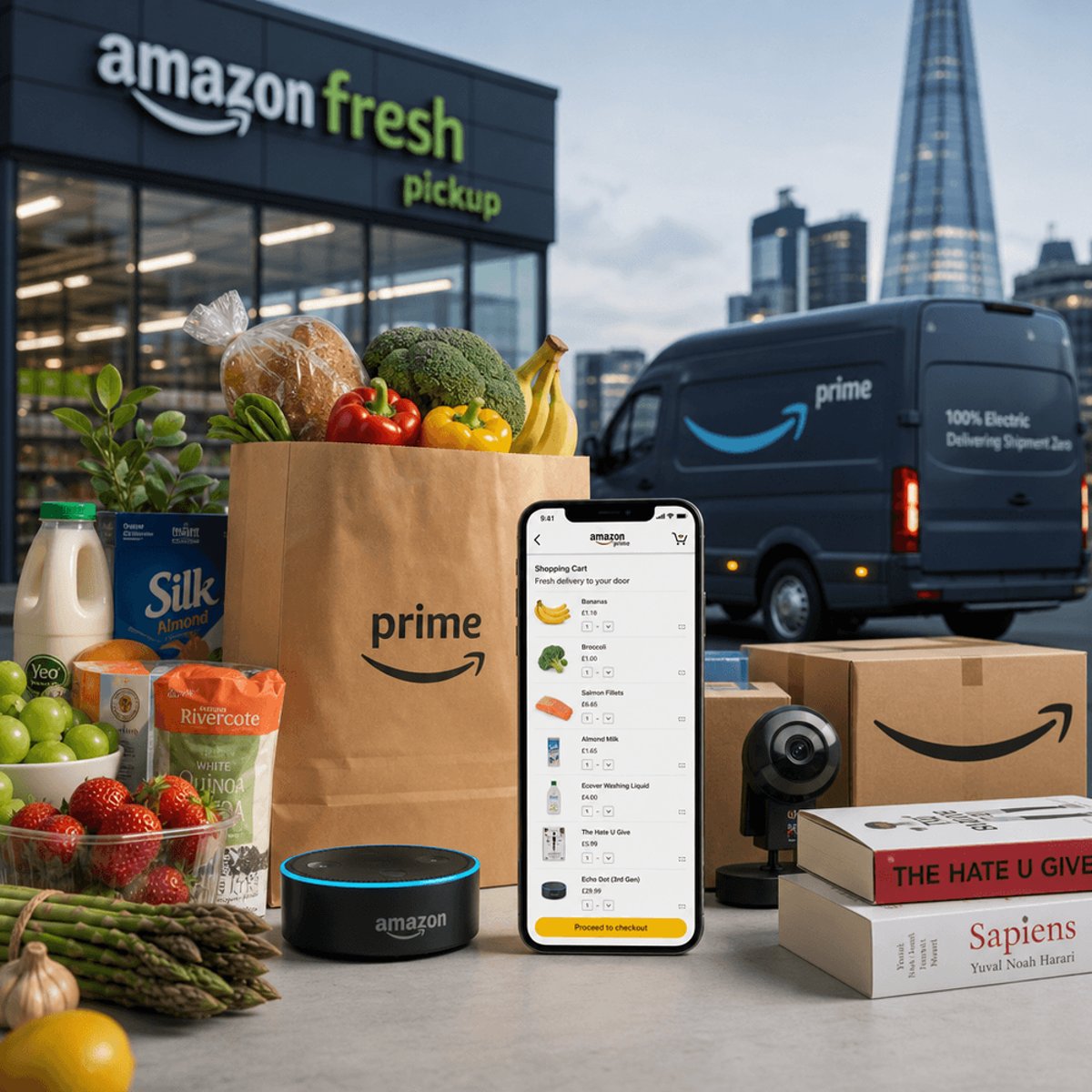
Amazon is rolling out a new service that lets UK customers add fresh groceries to their regular same-day delivery orders in parts of London, marking the company's latest move to integrate its sprawling logistics network with its grocery ambitions. The launch, announced this morning, represents a quiet but significant shift in how the retail giant is bundling its services to compete with UK grocery leaders like Tesco and Ocado.
Amazon just made it easier for Londoners to skip the grocery store entirely. Starting today, customers in select London postcodes can toss milk, fresh vegetables, and meat into the same cart as books, electronics, and household items - all arriving the same day.
The integration marks a strategic play in Amazon's long game to crack the UK grocery market, where it's been quietly building infrastructure since acquiring Whole Foods in 2017. According to the company's announcement, the service builds on "continued investment in UK grocery" - a phrase that undersells the millions Amazon's been pouring into cold-chain logistics and micro-fulfillment centers across Britain.
What makes this interesting isn't just the convenience factor. It's how Amazon's using its existing same-day delivery network - already moving millions of packages weekly - to absorb grocery orders without building an entirely separate infrastructure. That's the kind of operational efficiency that's given Amazon an edge in every category it enters.
The UK grocery delivery market is brutal right now. Tesco dominates with its established network, Ocado's built a tech-powered logistics empire, and even Deliveroo and Getir have been fighting for quick-commerce grocery turf. Amazon's been testing different approaches for years - from Amazon Fresh stores to Prime Now deliveries - but never quite broke through the way it has in other categories.
This basket-bundling approach could change that calculus. Instead of convincing someone to use Amazon specifically for groceries, the company's betting customers will add fresh items to orders they're already placing. It's a lower friction entry point, and it leverages Amazon's strongest asset: the habitual checking of its app for everything else.
The service launches in "parts of London" first - Amazon's typical testing ground before broader UK rollouts. The company hasn't disclosed which specific postcodes are covered or how many fulfillment locations are supporting the fresh inventory, but the phased approach suggests they're validating the cold-chain logistics before scaling.
Behind the scenes, this requires sophisticated inventory management. Fresh groceries have tight expiration windows and temperature requirements that books and electronics don't. Amazon's had to adapt its warehouse management systems to handle mixed-basket orders where some items need refrigeration and others don't, all while maintaining the same-day delivery promise.
The timing is deliberate. Online grocery penetration in the UK spiked during the pandemic and has largely held steady, even as other e-commerce categories cooled. British consumers got comfortable with grocery delivery in a way that stuck, creating an opportunity for whoever can offer the most convenient experience.
What Amazon's really testing here is whether its everything-store vision can extend to the most frequent purchase category. Groceries represent repeat business on a weekly or even daily basis - far more frequent than the typical Amazon order. If the company can own that purchase occasion, it deepens the moat around Prime membership and increases the frequency customers interact with its platform.
Competitors are watching closely. Ocado's spent billions building automated warehouses specifically for grocery fulfillment, while Amazon's adapting existing infrastructure. If Amazon's approach works, it validates a capital-lighter model that could scale faster across other markets. If it doesn't, it shows the limits of trying to bolt grocery onto a general merchandise logistics network.
For now, the launch is limited enough that it won't shake up UK grocery market share overnight. But it's another data point in Amazon's patient, methodical approach to cracking categories where it isn't the obvious leader. The company's been willing to test, iterate, and invest for years before finding the formula that works.
Amazon's London grocery experiment won't topple Tesco or Ocado overnight, but it's testing a fundamentally different approach to online grocery - one that uses existing logistics infrastructure rather than building dedicated systems. If the basket-bundling model works, it gives Amazon a playbook for every other market where grocery remains stubbornly local. The real question isn't whether Londoners will add bananas to their book orders, but whether Amazon's figured out how to make grocery delivery profitable by spreading costs across its entire fulfillment network. That's the breakthrough that could actually matter.