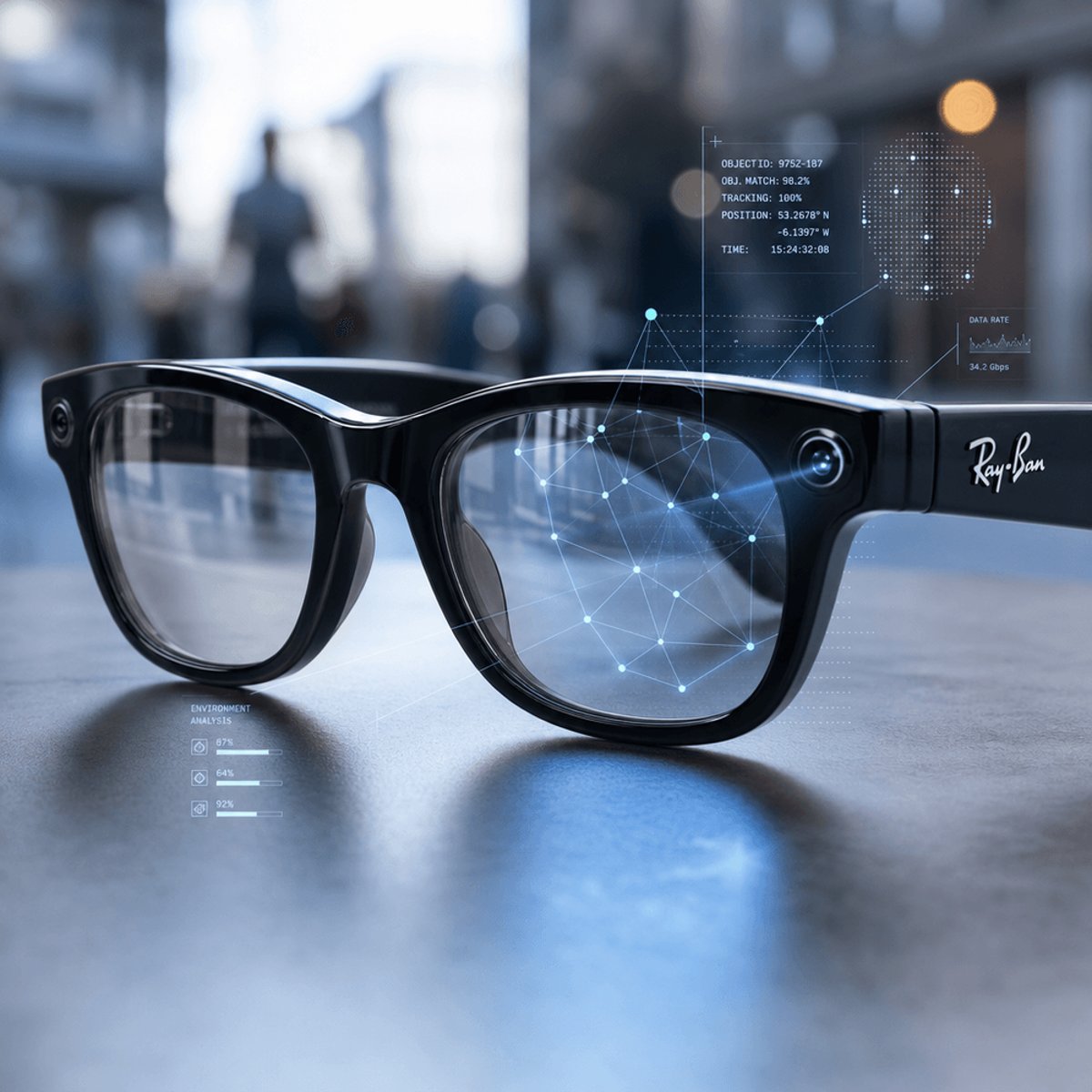
Meta quietly partnered with a Pentagon supplier to develop facial recognition capabilities for its smart glasses, raising fresh privacy concerns about consumer surveillance tech. The company tapped Rank One Computing, whose board includes a former CIA deputy director and ex-FBI science chief, to prototype face recognition features for an internal smart glasses app. The revelation comes as Meta publicly insists it won't add facial recognition to its Ray-Ban smart glasses without robust privacy safeguards.
Meta has been secretly working with a Pentagon supplier to build facial recognition capabilities into its smart glasses, according to documents reviewed by Wired. The partnership with Rank One Computing marks a significant escalation in Meta's ambitions for wearable AI, even as the company publicly distances itself from adding such features to consumer products.
Rank One Computing isn't your typical Silicon Valley startup. The Colorado-based firm supplies facial recognition technology to military and intelligence agencies, with a board that reads like a Who's Who of national security veterans. Former CIA deputy director David Cohen and Brett Shields, who led science and technology at the FBI, both serve on Rank One's board. The company's primary business involves providing biometric identification systems to defense contractors and government agencies.
The collaboration centered on prototyping face recognition features for an internal Meta smart glasses application, sources familiar with the project told Wired. While the feature hasn't shipped to consumers, the partnership reveals Meta's active exploration of technology that could instantly identify strangers in public, a capability privacy advocates have long warned against.
This contradicts Meta's public messaging around its Ray-Ban smart glasses, launched in partnership with EssilorLuxottica. Company executives have repeatedly stated they won't add facial recognition without establishing robust privacy protections first. "We believe in building these features responsibly," a Meta spokesperson said in previous statements about the technology.
But the Rank One partnership suggests Meta is actively developing the capability behind the scenes. The company's smart glasses already pack cameras and AI features that can identify objects and translate text in real-time. Adding face recognition would transform them into a persistent surveillance tool that could identify anyone a wearer encounters.
The privacy implications are staggering. Unlike smartphone apps that require users to point and tap, smart glasses offer always-on, hands-free identification. Someone could walk through a crowded street, coffee shop, or office building while their glasses silently catalog every face they see. Meta already operates one of the world's largest facial recognition databases through Facebook and Instagram, though the company shut down its automatic face tagging feature in 2021 following regulatory pressure.
Rank One's involvement adds another layer of concern. The company's technology is designed for high-stakes government applications where accuracy and speed matter more than privacy considerations. Adapting military-grade surveillance tools for consumer products represents exactly the kind of defense-to-consumer pipeline that civil liberties groups have warned about for years.
The timing is particularly sensitive. Meta is already under intense scrutiny for its AI initiatives and data practices. The company recently launched its Llama 3 language model and continues pushing AI features across its product lineup. Smart glasses with facial recognition would amplify existing concerns about Meta's data collection practices and bring them into the physical world in unprecedented ways.
Competitors are watching closely. Google famously killed its Glass product partly due to privacy backlash over similar concerns. Apple is reportedly developing its own smart glasses but has emphasized privacy-first design. Snap offers Spectacles with cameras but has avoided facial recognition entirely.
The revelation raises questions about what other capabilities Meta is prototyping behind closed doors. If the company is willing to partner with defense contractors for facial recognition, what other military-grade AI features might be in development? And how will Meta balance its stated commitment to privacy with the obvious commercial potential of such powerful surveillance tools?
The partnership between Meta and Rank One Computing exposes the gap between Silicon Valley's public privacy promises and private development efforts. While Meta hasn't shipped facial recognition in its smart glasses yet, the company's willingness to prototype the feature with a Pentagon contractor signals where the technology is headed. As smart glasses become more capable and widespread, the question isn't whether tech giants will add facial recognition, but whether society will accept always-on surveillance as the price of convenience. The answer will determine whether we're walking into a future where anonymity in public spaces becomes a relic of the past.