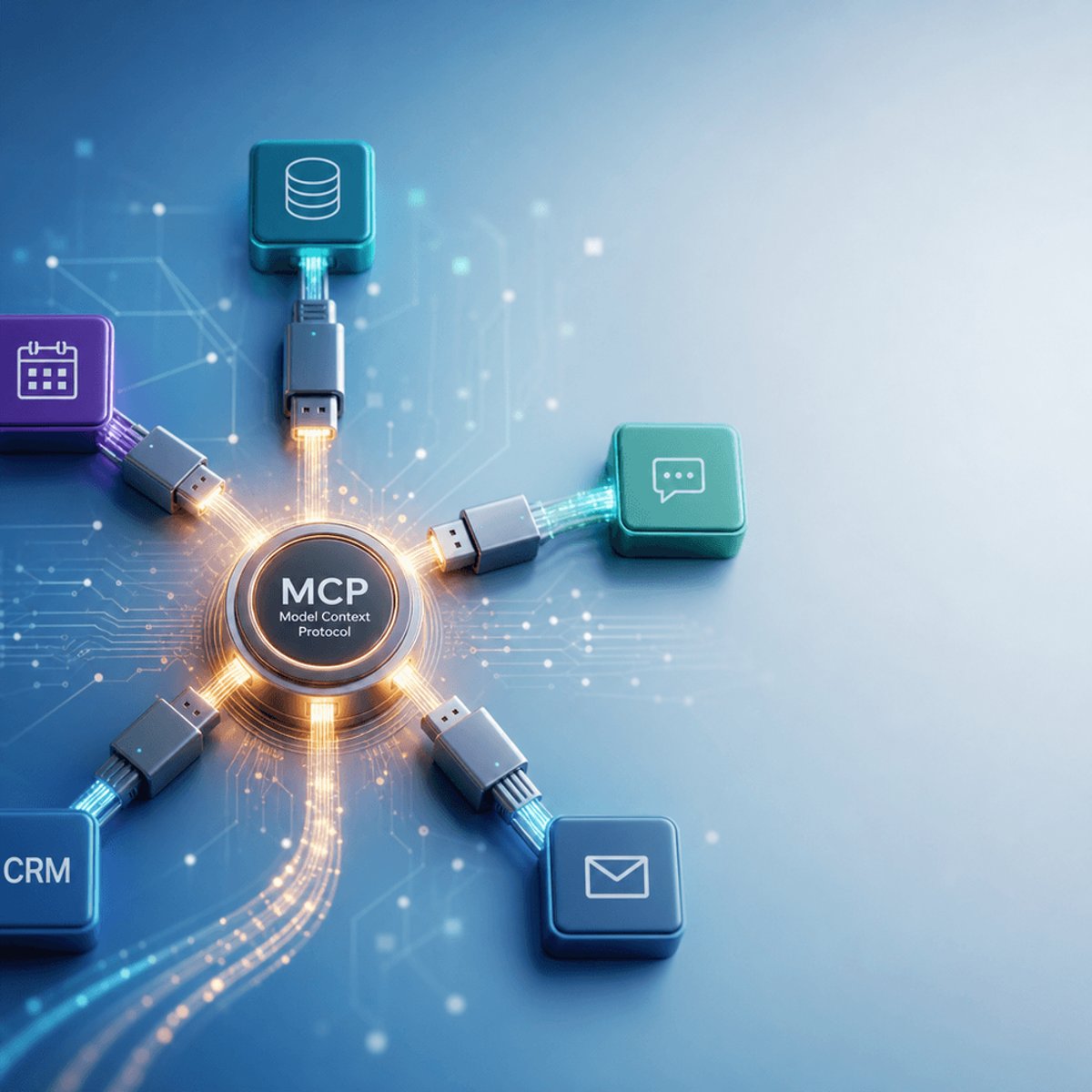
The plumbing holding together AI's data connections just got a major upgrade. The Model Context Protocol, the open standard that lets AI models securely tap into calendars, databases, and enterprise tools without custom integrations, is rolling out usability improvements that could accelerate how quickly companies deploy AI agents. For developers who've been stitching together fragile custom connections between chatbots and business systems, this means less time wiring up infrastructure and more time building features users actually want.
The invisible infrastructure powering AI's connection to the real world just became a lot more accessible. Model Context Protocol, the open standard that's quietly become essential plumbing for AI interoperability, is getting usability updates that promise to make connecting AI models to external data sources dramatically simpler.
For months, developers building AI agents have faced the same frustrating bottleneck. You build a chatbot that's supposed to check someone's calendar availability or pull data from a company database, but then you're stuck writing custom code for every single connection. It's tedious, error-prone work that slows deployment and creates security headaches. MCP was designed to solve exactly this problem by creating a standardized way for AI models to securely access external services.
Think of it like USB ports for AI. Before USB, every device needed its own proprietary connector. MCP does the same thing for AI data connections, letting models plug into calendars, databases, CRM systems, and internal tools through a common protocol instead of bespoke integrations. The new usability improvements make implementing that standard significantly less technical, according to the TechCrunch report.
The timing matters because enterprise AI deployment has hit an integration wall. Companies want AI assistants that can actually do things, not just answer questions. But connecting language models to business systems requires either giving them broad API access (a security nightmare) or building countless one-off integrations (an engineering bottleneck). MCP offers a middle path with standardized, secure connections.
The protocol has been gaining quiet momentum in enterprise AI circles. While consumer AI grabs headlines with flashy demos, the unsexy work of making models interoperable with existing business tools is where real productivity gains happen. A chatbot that can check inventory, update CRM records, and schedule meetings is infinitely more useful than one that just summarizes text. But building those connections has been painful enough to slow adoption.
What's changing with these updates isn't entirely clear from available details, but the focus on ease of use suggests lower technical barriers for implementation. That could mean simpler authentication flows, better documentation, pre-built connectors for common services, or streamlined setup processes. Any reduction in complexity helps, especially for companies without large AI engineering teams.
The broader context here is a race to standardize AI infrastructure before proprietary solutions lock in. Multiple companies have been pushing competing approaches to AI interoperability, but open protocols like MCP have advantages in enterprise environments where security, control, and vendor independence matter. Making the protocol easier to use strengthens its position as developers choose which standards to adopt.
Security remains the critical consideration. MCP's design emphasizes controlled access, letting AI models request specific data or actions rather than getting blanket permissions. But as implementation gets easier, the risk of misconfiguration grows. Simpler doesn't always mean safer if developers skip security reviews in favor of speed.
For AI companies building agents and assistants, these updates could reduce a significant friction point. Instead of dedicating engineering sprints to integration work, teams can focus on model performance and user experience. That matters in a market where speed to deployment often determines winners.
The enterprise SaaS world is watching closely. Companies like Salesforce, ServiceNow, and Microsoft have been building their own AI integration layers. An easier, more widely adopted open protocol could either complement those efforts or compete with them, depending on how the technology evolves.
What remains to be seen is adoption velocity. Developer tools live or die based on how quickly engineers embrace them. A protocol that's theoretically superior but practically difficult gets ignored. If these usability improvements hit the mark, MCP could cement its role as foundational AI infrastructure. If they fall short, proprietary alternatives will fill the gap.
The updates to Model Context Protocol arrive at a pivotal moment for enterprise AI. As companies move from experimenting with chatbots to deploying agents that need deep integration with business systems, the ease of connecting AI to data sources becomes a critical factor in adoption speed. If these usability improvements deliver on their promise, MCP could become the invisible standard that powers the next wave of practical AI applications. The real test won't be technical elegance but whether developers actually choose to use it when faced with tight deadlines and impatient stakeholders. In infrastructure, the standard that wins isn't always the best one, it's the one that's easiest to implement when you're racing to ship.