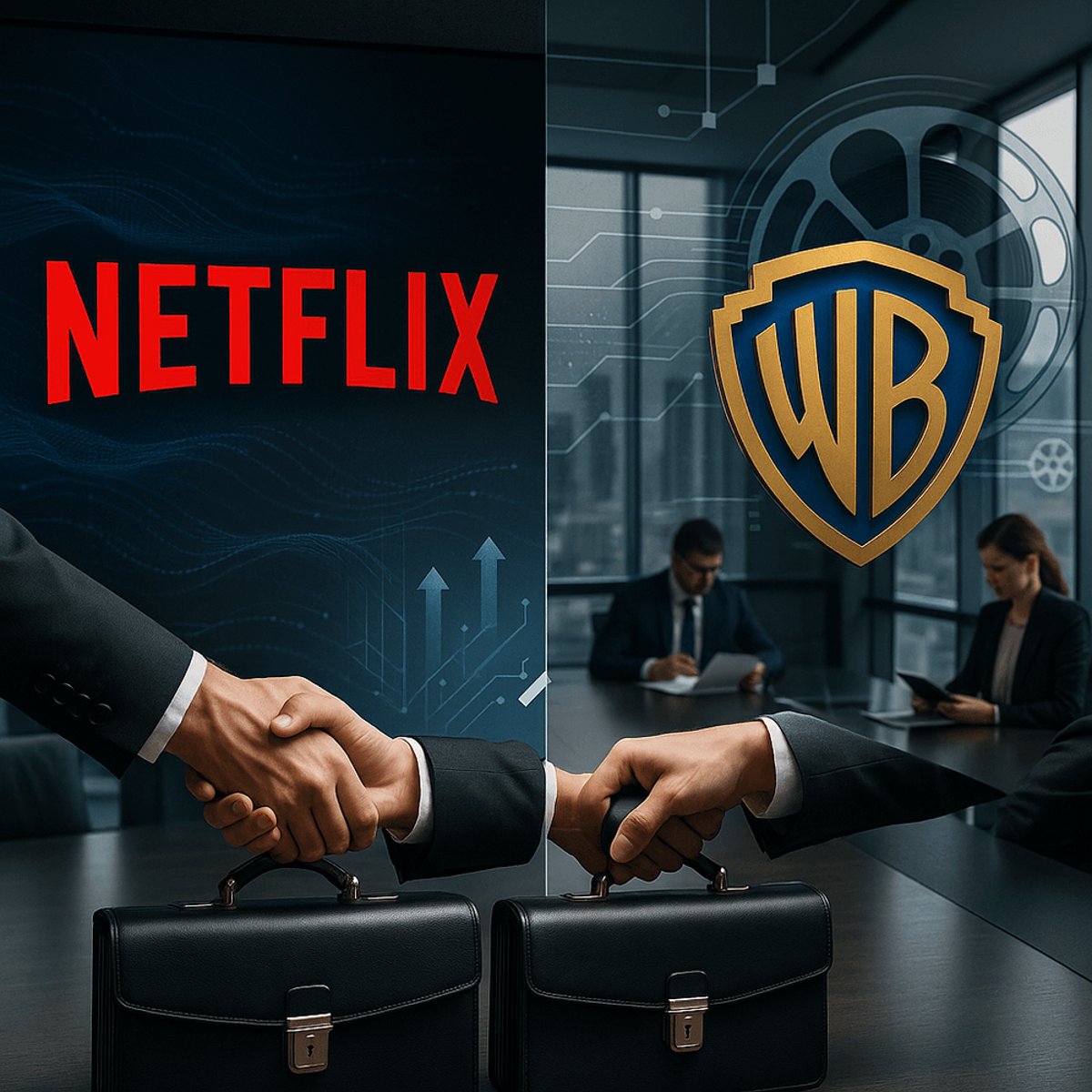
Netflix just pulled off what industry insiders are calling the most historic megadeal in Hollywood history - acquiring Warner Bros. in a transaction that fundamentally reshapes the entertainment landscape. The deal, which is still developing, hands the streaming giant control over one of the most storied studios in cinema history, complete with its century-old film library, HBO Max platform, and franchises from Harry Potter to DC Comics. It's the kind of vertical integration move that signals Netflix isn't just competing in streaming anymore - it's building an empire that rivals the old Hollywood studio system.
Netflix is rewriting Hollywood's playbook with a deal that seemed impossible just years ago. The streaming pioneer that once licensed content from studios is now buying one of the biggest studios outright, acquiring Warner Bros. in a transaction that dwarfs previous media consolidation moves and sends shockwaves through an industry already reeling from streaming wars.
The acquisition hands Netflix immediate control over Warner's legendary backlist - nearly a century of film history including Casablanca, The Wizard of Oz, and the entire Lord of the Rings franchise. More critically, it absorbs HBO Max's subscriber base and original programming slate, eliminating one of Netflix's most formidable streaming competitors in a single stroke. The deal also brings DC Entertainment into Netflix's orbit, pitting Batman and Superman directly against Disney's Marvel Cinematic Universe in a battle that will define the next decade of blockbuster filmmaking.
Wall Street is still processing the implications. Netflix transformed from a DVD-by-mail service to streaming disruptor to content producer, and now to legacy studio owner - completing a vertical integration arc that media analysts have speculated about for years. The company that once begged for licensing deals with Warner Bros. now owns the entire operation, including Warner Bros. Television, New Line Cinema, and the valuable HBO brand that's synonymous with prestige television.
The timing reveals Netflix's strategic calculus. After years of mounting content costs and intensifying competition from Disney+, Apple TV+, and Amazon Prime Video, owning a major studio provides both cost control and theatrical distribution capabilities. Warner's global distribution infrastructure and relationships with theater chains solve Netflix's longstanding theatrical release challenges - a persistent pain point as the company pushes into prestige filmmaking.
But the deal immediately raises thorny questions about HBO Max's future. Does Netflix fold the premium service into its main platform, creating a super-sized streaming juggernaut? Or does it maintain HBO as a separate brand, preserving the cachet that's driven subscriber loyalty for decades? Industry observers note that HBO's brand identity - built on quality over quantity - sits uneasily with Netflix's volume-driven content strategy that prioritizes algorithmic engagement over cultural prestige.
The competitive landscape just got dramatically more consolidated. Disney absorbed Fox's entertainment assets in 2019 for $71 billion. Comcast owns NBCUniversal. Paramount Global controls CBS and Paramount Pictures. Amazon bought MGM for $8.5 billion in 2022. Now Netflix vaults into the same weight class, controlling both distribution and production at unprecedented scale.
Regulatory scrutiny appears inevitable. The deal concentrates enormous power over both content creation and distribution in a single company, exactly the type of vertical integration that antitrust authorities have historically viewed with suspicion. The Federal Trade Commission and Department of Justice will likely examine whether Netflix's control over Warner's vast library and production capabilities gives it unfair advantages in licensing negotiations with competitors or in attracting top creative talent.
Creative talent is watching nervously. Warner Bros. has long maintained relatively filmmaker-friendly practices, giving directors like Christopher Nolan significant creative control. Netflix's data-driven approach to content decisions and its resistance to traditional theatrical windows has alienated some A-list filmmakers. Whether Netflix preserves Warner's creative culture or imposes its algorithm-informed production philosophy will determine if top directors stay or flee to remaining independent studios.
The theatrical exhibition business faces an existential crisis. Warner Bros. maintains crucial relationships with AMC, Regal, and other chains. Netflix has historically deprioritized theatrical releases, preferring to funnel subscribers directly to its platform. If Netflix curtails Warner's theatrical output or imposes shortened windows, theater owners lose a major supplier of blockbuster content at exactly the moment they're fighting to rebuild post-pandemic attendance.
International markets add another layer of complexity. Warner Bros. operates production facilities and distribution networks across dozens of countries. Netflix's global subscriber base suddenly gains access to localized content production capabilities that took Warner decades to build. The combination could accelerate Netflix's push into local-language programming in markets from India to Brazil, where regional players have successfully competed against American streaming giants.
The deal's financial structure remains unclear, but media analysts estimate Warner Bros. Discovery's market capitalization and debt levels suggest a transaction value potentially exceeding $50 billion. Netflix would likely need to take on significant debt or structure a complex stock-and-cash deal, fundamentally altering its balance sheet. The company has historically avoided major acquisitions, preferring to build capabilities organically - making this deal a dramatic strategic departure.
Content licensing agreements add immediate complications. Warner has existing output deals with other platforms, theatrical commitments for films already in production, and talent contracts that predate the acquisition. Untangling these agreements while maintaining good relationships with partners who are also competitors will test Netflix's dealmaking sophistication.
What happens next will reshape entertainment for decades. If regulators approve the deal, Netflix emerges as a vertically integrated media powerhouse that combines technology platform advantages with traditional Hollywood muscle. If authorities block it or impose significant conditions, the streaming wars remain fragmented - possibly opening opportunities for smaller players or new entrants. Either way, the old Hollywood studio system is officially dead, replaced by tech-forward streaming giants that control everything from production to distribution to the algorithms that determine what audiences watch.
Netflix's Warner Bros. acquisition represents more than just another media megadeal - it's a fundamental power shift from traditional Hollywood to streaming-first platforms. The transaction consolidates content creation and distribution at a scale that would have seemed impossible when Netflix was mailing DVDs fifteen years ago. Whether regulators allow this concentration of media power will determine if we're entering an era of streaming oligopolies or if competition authorities force a more fragmented market. For consumers, the implications are immediate: fewer streaming services as consolidation accelerates, but potentially more content as Netflix's library explodes overnight. The biggest question isn't whether this changes Hollywood - it already has. It's whether what comes next looks more like the golden age of studio dominance or something entirely new.