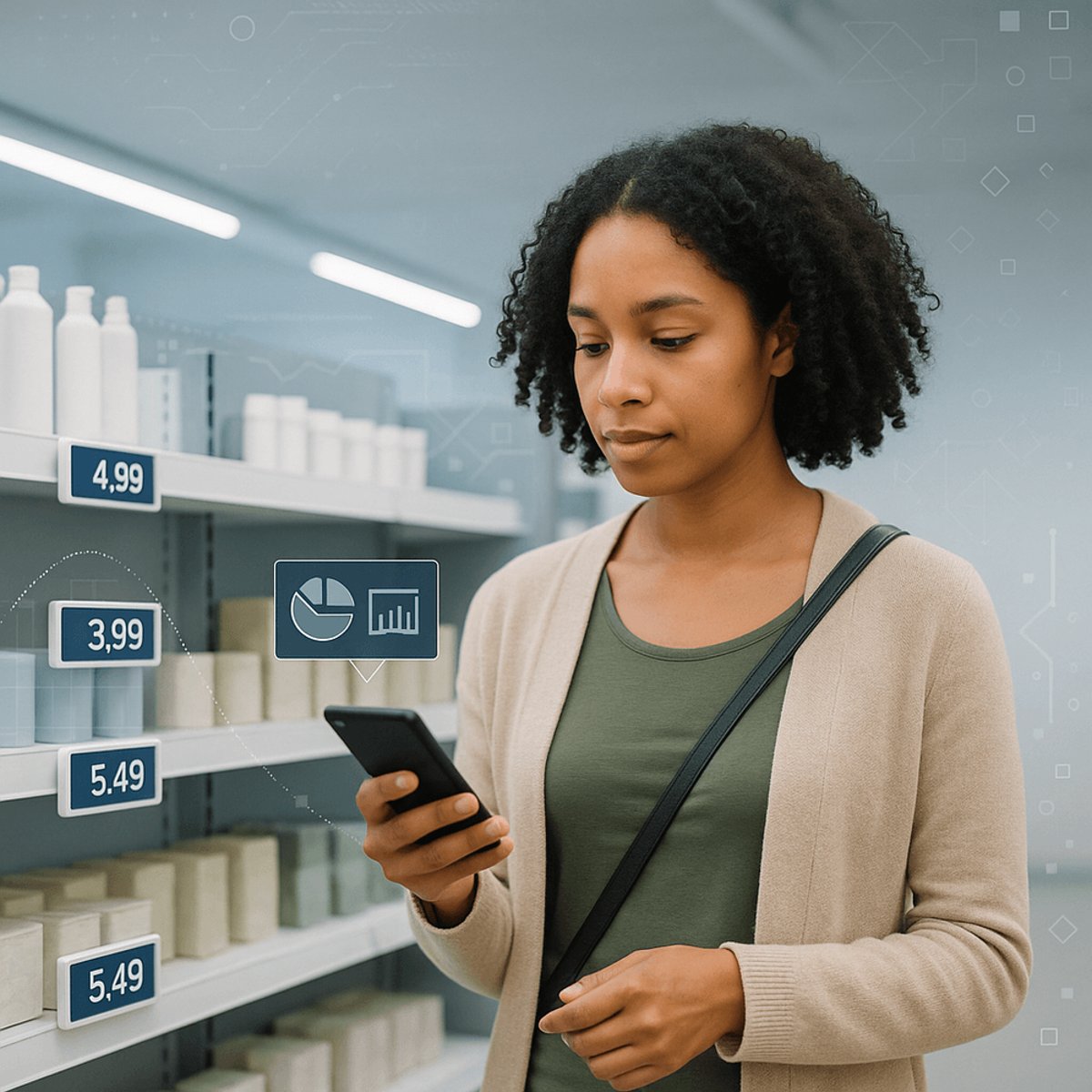
New York just pulled back the curtain on a practice that's been hiding in plain sight for over a decade. Under a groundbreaking new state law, retailers like Target must now disclose when algorithms use your personal data to set prices - even for basics like eggs and toilet paper. The catch? They don't have to explain how your data actually changes what you pay.
The disclosure appears as a small notice on Target's website: "This price was set by an algorithm using your personal data." It's buried behind an info icon customers have to actively click, then scroll to find. But it represents something unprecedented - the first time a major retailer has been legally required to admit their pricing isn't as straightforward as it seems.
The New York State law that took effect recently casts a wide net over what constitutes personal data. According to the legislation, it includes anything that can be "linked or reasonably linked, directly or indirectly, with a specific consumer or device." That could mean your browsing history, purchase patterns, estimated income, or even your zip code.
What the law doesn't require is transparency about the actual mechanics. Retailers must acknowledge they're using your data but can keep the algorithmic recipe secret. It's like being told your meal was personalized just for you, without knowing whether that means extra salt or a completely different dish.
Target has been perfecting this approach for years. Back in 2021, HuffPost caught the retailer changing prices based on store location associations. A company spokesperson defended the practice, saying online prices "reflect the local market." By 2022, Target settled a California lawsuit over allegations it used geofencing to automatically adjust app prices based on customer location.
The price variations are real and measurable. Shoppers near Rochester see Target's Good & Gather eggs listed at $1.99, while those in Manhattan's Tribeca neighborhood face a $2.29 price tag. The same pattern holds for toilet paper - a six-pack of Charmin costs $8.69 if you're associated with a Flushing, Queens store but $8.99 for Tribeca shoppers.
Target isn't breaking new ground here. The Wall Street Journal exposed similar practices at Staples back in 2012, when the office retailer displayed different website prices after estimating customer locations. Staples acknowledged the geographic pricing, citing "rent, labor, distribution, and other costs of doing business." ProPublica later found Princeton Review's SAT prep packages varying by thousands of dollars based on customer zip codes.
The Federal Trade Commission has been watching this space closely. Last year, the agency launched what it calls a "surveillance pricing" market study, examining how companies use customer location and other personal data for pricing decisions. An interim report dropped in January, but the final findings are still pending.
New York's disclosure requirement represents just the beginning of a broader regulatory push. Pennsylvania introduced similar legislation earlier this year, and a federal surveillance pricing bill hit Congress in July. Legal database JD Supra counts over 50 state-level bills addressing algorithmic pricing, covering everything from price-fixing concerns to restrictions on using certain consumer characteristics in dynamic pricing.
The timing isn't coincidental. Target recently announced it's launching a shopping experience within OpenAI's ChatGPT, where the AI chatbot will provide personalized product recommendations. As retailers lean deeper into AI-driven personalization, the line between helpful customization and data-based price discrimination gets blurrier.
For consumers, the new disclosure creates an uncomfortable awareness without offering much recourse. You can now know when your data influenced a price, but you can't know how much extra you're paying or what specific information triggered the algorithm. Courts have previously questioned whether tucking disclosures behind clickable info icons meets the "clear and conspicuous" standard the law requires.
The broader retail industry is watching New York's experiment closely. If similar laws spread to other states, companies may face a patchwork of disclosure requirements that could reshape how they approach algorithmic pricing. Some might dial back personalized pricing to avoid regulatory complexity, while others could double down with more transparent but equally sophisticated systems.
New York's algorithmic pricing law marks a turning point in retail transparency, even if it's more peek behind the curtain than full revelation. As other states consider similar legislation and federal lawmakers watch closely, retailers face a choice: embrace transparency or risk getting caught using consumer data in ways that regulators and shoppers might not appreciate. For now, consumers get acknowledgment without explanation - a small victory in understanding how their digital footprints translate to real-world costs.