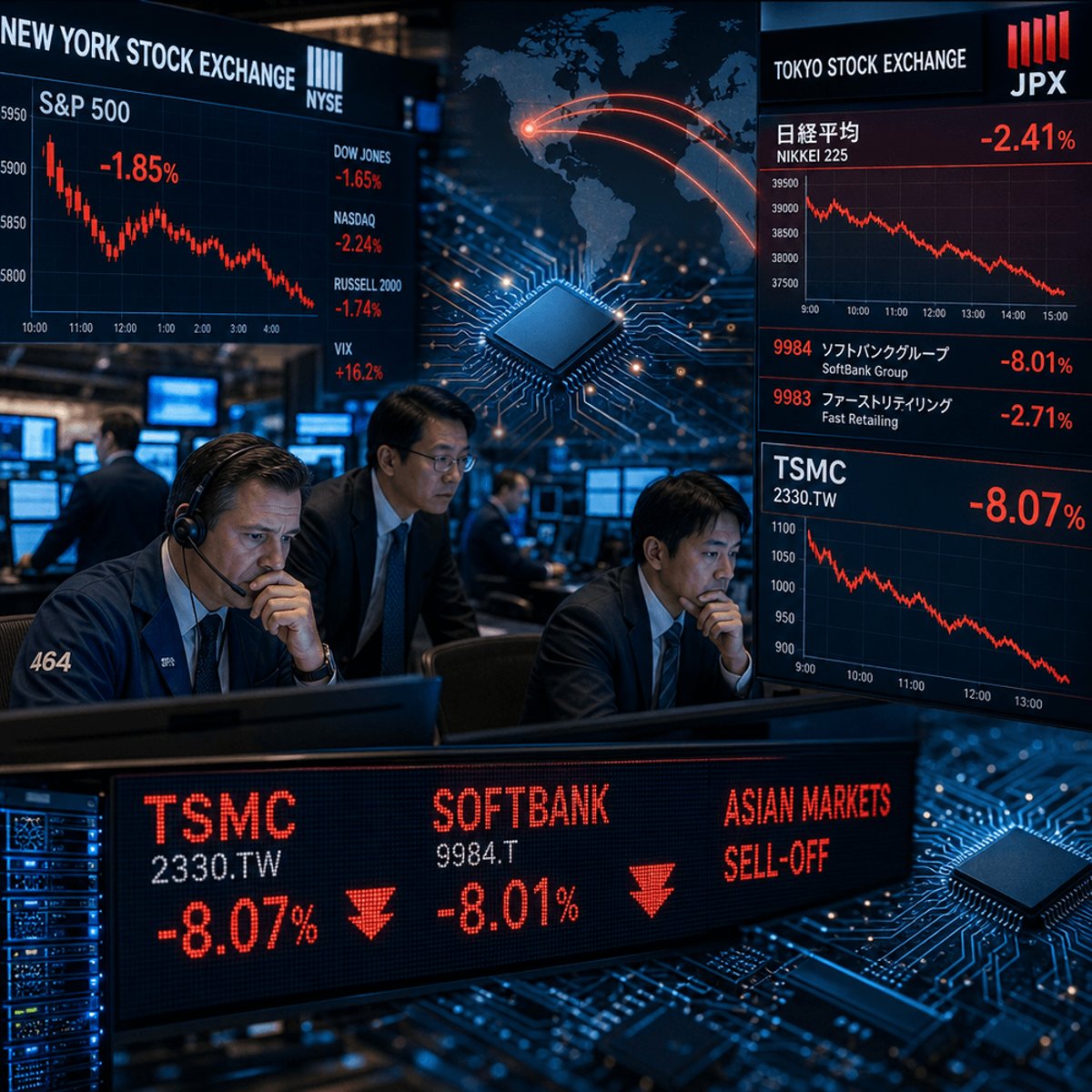
Asian chip stocks are getting hammered. SoftBank plunged 8% in Tokyo trading as investor panic over AI infrastructure valuations spread from Wall Street to Asia. The sell-off comes after Taiwan Semiconductor Manufacturing Company delivered an earnings outlook that failed to calm nerves about whether the AI boom can justify sky-high chip valuations. What looked like a Wall Street problem Thursday has now morphed into a full-blown regional rout.
SoftBank Group is taking the brunt of a regional sell-off that's exposing cracks in the AI infrastructure investment narrative. The Japanese conglomerate's shares tumbled 8% in Friday trading, leading a cascade of losses across Asian semiconductor and AI-related stocks.
The carnage started in New York. U.S. chip stocks got pummeled Thursday after Taiwan Semiconductor Manufacturing Company, the world's largest contract chipmaker, delivered quarterly results that should have been reassuring but somehow weren't. TSMC's numbers were solid - the company recently reported a 77% profit surge - but its forward-looking statements apparently spooked investors already jittery about whether AI spending can sustain current valuations.
By the time Asian markets opened Friday, the panic had spread. Japanese investors didn't wait around to parse the nuances. SoftBank, with its massive portfolio of AI investments through the Vision Fund and direct stakes in chip-related companies, became the poster child for the sell-off. The company's heavy exposure to AI infrastructure through investments in Arm Holdings and various AI startups made it particularly vulnerable.
But SoftBank wasn't alone. Other Japanese semiconductor equipment makers and AI-linked stocks followed it down. The correlation was stark - anything with "AI" or "chip" in its investor pitch was getting marked down. Tokyo's broader tech indices reflected the damage, with AI-related stocks leading losses across the board.
What's driving this sudden crisis of confidence? TSMC's outlook, while not disastrous, apparently didn't provide the reassurance investors wanted about sustained AI infrastructure demand. The chip giant's comments about future orders and capacity utilization raised questions about whether the frantic pace of AI hardware buildouts can continue. For months, investors have been betting that companies like Microsoft, Google, and Amazon would keep pouring billions into AI data centers. Any hint that this spending might moderate sends ripples through the entire supply chain.
The timing is particularly awkward for SoftBank founder Masayoshi Son, who's been positioning the company as an AI powerhouse. Son has spent the past year talking up AI investments and the potential for Arm's chip designs in AI applications. The Vision Fund's portfolio is loaded with AI startups betting on continued infrastructure expansion. An 8% single-day drop suggests investors are having second thoughts about those bets.
The contagion effect across Asian markets reveals how interconnected the global chip ecosystem has become. When Wall Street sneezes, Tokyo catches pneumonia. U.S. semiconductor stocks' weakness immediately translates to losses for Asian suppliers, equipment makers, and investors. The integrated nature of chip supply chains means a valuation reset in one market cascades through the entire network.
What's notable is that this isn't about actual business deterioration - it's pure sentiment shift. TSMC's fundamentals remain strong. AI adoption continues accelerating. Data center buildouts are still happening. But investor psychology has shifted from "AI growth is infinite" to "maybe we got ahead of ourselves." That shift in narrative is what's driving the sell-off, not any fundamental breakdown in the AI story.
The question now is whether this is a healthy correction or the start of something more serious. If AI infrastructure spending does moderate, companies with heavy chip exposure - like SoftBank - could face sustained pressure. But if this is just a temporary panic, bargain hunters might see opportunity in beaten-down AI infrastructure plays.
For SoftBank specifically, the 8% drop compounds an already complicated year. The company has been trying to demonstrate discipline after years of high-profile Vision Fund stumbles. But volatility like this makes that narrative harder to sell. Investors who bought into the AI transformation story are now wondering if they paid too much for the promise.
The 8% SoftBank plunge is more than just another bad trading day - it's a referendum on AI infrastructure valuations. Investors who spent months bidding up anything connected to AI chips are now questioning whether the fundamentals justify the premiums. For Asian tech companies heavily exposed to AI infrastructure spending, this sell-off represents a moment of reckoning. The AI story isn't over, but the easy money phase might be. What happens next depends on whether companies can demonstrate that AI spending isn't just hype but sustainable business transformation. Until then, expect continued volatility across chip stocks on both sides of the Pacific.