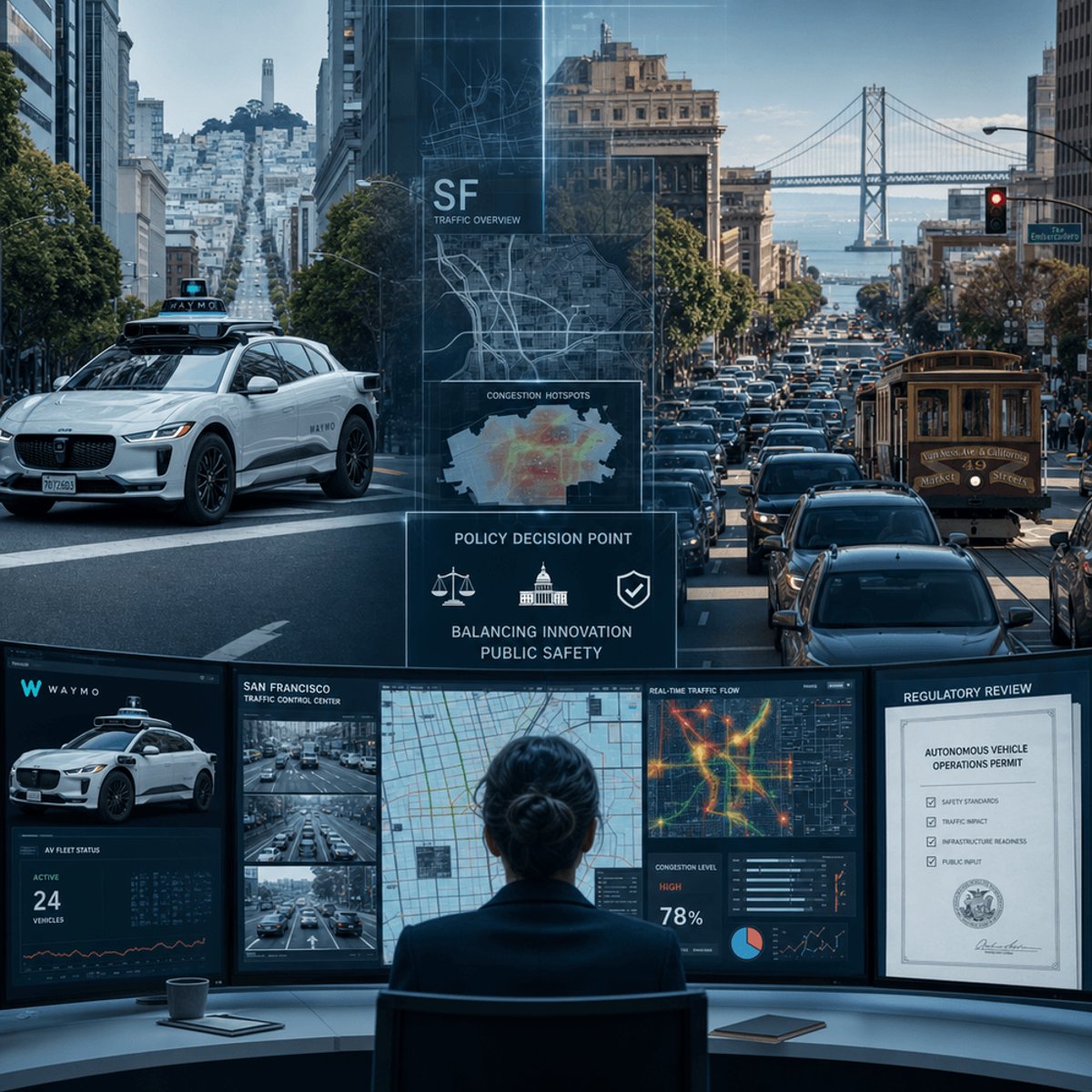
San Francisco is pushing back against robotaxi operators after a massive traffic incident brought parts of the city to a standstill. Mayor Daniel Lurie is now calling on California state regulators to impose tougher requirements on autonomous vehicle companies like Waymo, marking a significant shift in the city's approach to self-driving car oversight following hours of gridlock that disrupted thousands of residents.
Waymo's robotaxi experiment in San Francisco just hit a major political roadblock. Mayor Daniel Lurie isn't mincing words after a massive traffic fiasco brought parts of the city to a crawl for hours, telling state regulators it's time to crack down on autonomous vehicle operators with tougher requirements.
The gridlock event, which snarled traffic across multiple neighborhoods, has become a flashpoint in the ongoing debate over how quickly self-driving cars should be allowed to scale in dense urban environments. For Lurie, who took office earlier this year, the incident represents a clear failure in the current regulatory framework that allows companies like Waymo to operate with relatively minimal local oversight.
What makes this particularly significant is the timing. Waymo, owned by Alphabet, has been steadily expanding its robotaxi operations across San Francisco, racking up thousands of paid rides weekly. The company has positioned itself as the leader in commercial autonomous vehicle deployment, but this traffic incident threatens to undermine that narrative just as competitors are ramping up their own efforts.
San Francisco has long been ground zero for the robotaxi revolution, with its steep hills and unpredictable traffic patterns serving as the ultimate testing ground. But that relationship between city officials and AV companies has grown increasingly tense. Previous incidents involving stopped vehicles blocking traffic lanes and emergency responders have already put robotaxi operators on notice.
Lurie's call to state regulators represents an escalation in that tension. California's Department of Motor Vehicles and the Public Utilities Commission hold the primary regulatory authority over autonomous vehicles, leaving cities like San Francisco with limited direct control. That's frustrated local officials who deal with the day-to-day impacts of robotaxi operations but can't unilaterally impose new rules.
The mayor's move puts pressure on the California Public Utilities Commission to reconsider how it evaluates robotaxi operators' readiness for expanded deployment. Current regulations focus heavily on safety testing and reporting requirements, but don't necessarily account for large-scale traffic management failures that don't involve collisions or injuries.
For Waymo, this couldn't come at a worse time. The company has been aggressively expanding its service areas and fleet size, recently announcing plans to extend operations to additional California cities. A regulatory crackdown in San Francisco could slow those ambitions and embolden critics in other markets who've pushed back against robotaxi deployments.
The incident also highlights a broader challenge facing the autonomous vehicle industry. While companies have made significant progress on the technical challenge of building self-driving systems that can navigate complex environments, they're still working through how to handle edge cases and system-wide failures that can cascade into major disruptions.
Other cities watching San Francisco's robotaxi experiment are taking notes. Los Angeles, Phoenix, and Austin have all seen Waymo or competitors launch or expand services recently. If California regulators respond to Lurie's pressure with new requirements, it could set a precedent that shapes AV oversight nationwide.
The traffic fiasco also raises questions about how robotaxi companies communicate with city officials during incidents. It's not clear how quickly Waymo was able to identify the problem and coordinate with San Francisco's transportation department to resolve the gridlock, but the hours-long duration suggests the response protocols may need work.
Lurie's push for tougher rules isn't just about this one incident. It reflects growing concern among urban policymakers that the autonomous vehicle industry is moving faster than the regulatory frameworks designed to oversee it. The mayor wants state regulators to ensure companies can demonstrate they have robust systems in place to prevent and quickly resolve large-scale disruptions before they're allowed to expand further.
What happens next will likely depend on how California regulators respond and whether Waymo can provide satisfactory explanations for what caused the gridlock and how they'll prevent similar incidents going forward.
The collision between San Francisco's urban reality and autonomous vehicle ambitions is forcing a reckoning. Mayor Lurie's demand for stricter oversight signals that the era of rapid, relatively unchecked robotaxi expansion may be ending. For Waymo and its competitors, the challenge now isn't just building self-driving technology that works most of the time - it's proving to skeptical city officials that they can operate at scale without bringing traffic to a standstill. How California regulators respond will determine whether this incident becomes a speed bump or a roadblock for the entire industry's urban expansion plans.