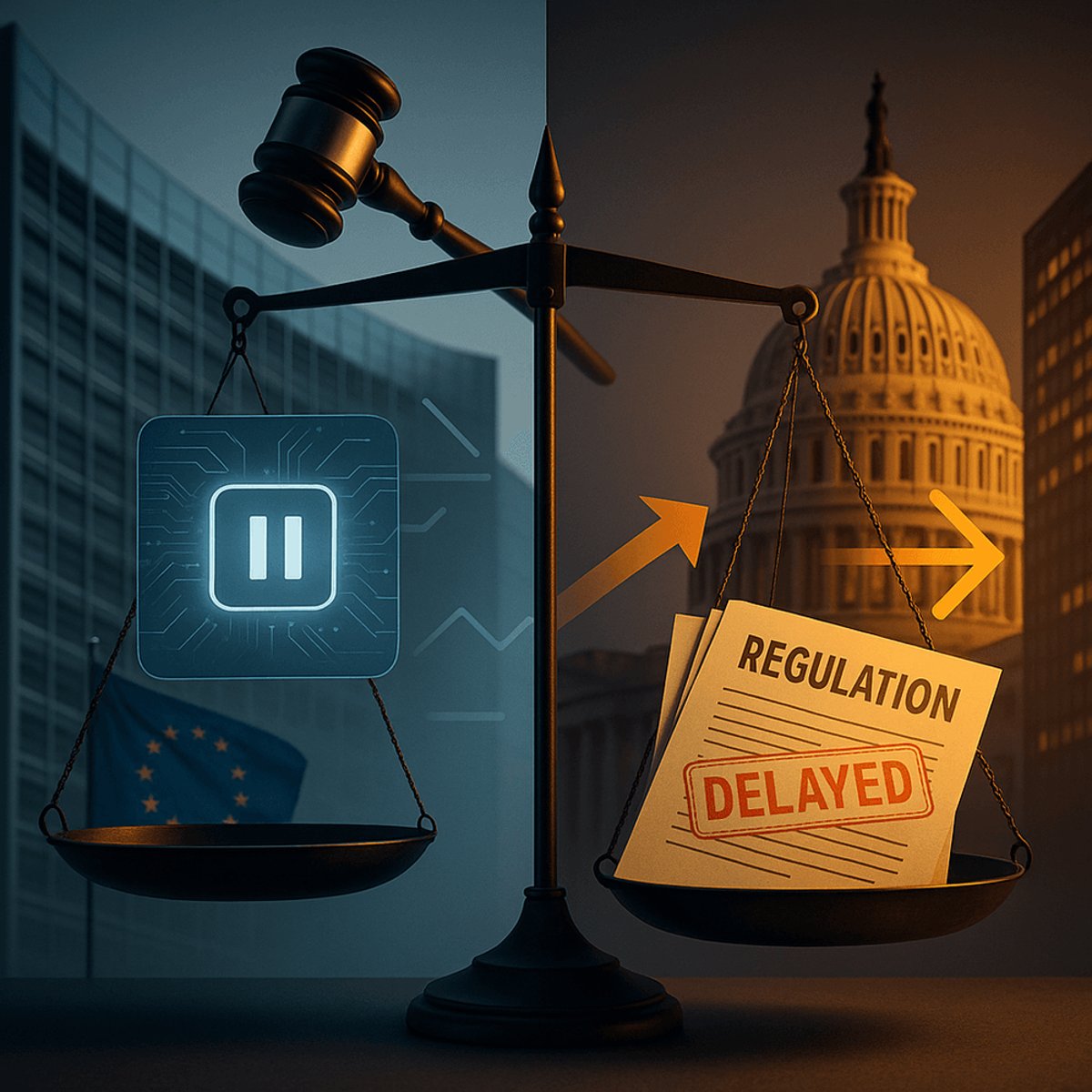
Europe's ambitious tech regulation agenda is grinding to a halt as the Trump administration and Big Tech companies intensify pressure on EU lawmakers. Key legislation including the AI Act, Digital Services Act, and Digital Markets Act face delays or rollbacks, marking a dramatic shift in the transatlantic regulatory landscape that could reshape global tech oversight.
The European Union's regulatory machine is hitting the brakes. After years of positioning itself as the world's tech watchdog, Brussels is quietly backing down from its most ambitious digital legislation as pressure from Washington and Silicon Valley reaches a boiling point.
The retreat is most visible with the EU AI Act, Europe's landmark artificial intelligence law that went live in August 2024. According to Financial Times reporting, the European Commission is now considering pushing back penalty enforcement by a full year - from August 2026 to August 2027 - to give AI companies more time to comply. Thomas Regnier, spokesman for the European Commission for Digital Sovereignty, acknowledged the mounting pressure at a November 7 briefing: "Standards are lagging. There are concerns from industry and member states."
The timing isn't coincidental. Since the tariff agreement between the US and Europe was signed last August, Apple, Google, Microsoft, and Meta have ramped up lobbying efforts, backed by the Trump administration's explicit warnings about regulatory overreach. The message is clear: ease up on tech restrictions or face economic retaliation.
Apple and Google have been particularly vocal critics of the Digital Markets Act in recent weeks, with both companies filing multiple appeals that are stretching enforcement timelines. The Federal Trade Commission added fuel to the fire last August, warning that certain Digital Services Act rules might conflict with American laws on free speech and national security.
But the regulatory retreat extends far beyond AI. The Digital Networks Act, which was supposed to create a unified European telecom market, has been pushed to January 2026 at the earliest. Germany reportedly blocked the proposed 2030 deadline for shutting down copper networks, while national authorities resist strengthening BEREC, the European regulatory body, fearing loss of domestic influence. The revision of net neutrality rules has quietly disappeared from the current draft entirely.
Even more telling is the fate of the EU Space Act. The US State Department submitted a blunt 13-page response during the public consultation phase, calling Europe's proposal "unacceptable" and warning it would "hinder American companies by restricting their scope of operations." The document explicitly stated that the current draft "contradicts the spirit of the agreement" on tariffs, threatening retaliation if Europe doesn't allow "smoother cooperation with the US government and industry."
The American tech industry's influence is particularly evident in spectrum policy battles. According to MLex reporting, the US State Department lobbied EU member states to reserve nearly half of the upper 6 GHz band for Wi-Fi services, benefiting major American companies like Apple, Broadcom, Cisco, and Qualcomm. The effort paid off - 13 out of 27 countries sided with mobile operators, while others abstained from the Radio Spectrum Policy Group vote.
This regulatory pause marks a stark reversal from Europe's previous stance as the global leader in tech oversight. The EU had positioned itself as the counterweight to American tech dominance through comprehensive legislation covering everything from AI governance to platform accountability. Now, with multiple initiatives stalled or diluted, Europe's digital sovereignty project faces its biggest test.
The implications ripple far beyond Brussels. Other countries have looked to European regulations as templates for their own tech laws. If the EU retreats under American pressure, it could signal that even the world's largest trading bloc lacks the political will to challenge Silicon Valley's influence.
Industry observers note this isn't just about regulatory capture - it's about economic leverage. The Trump administration has made clear that trade relationships depend on regulatory cooperation. European officials face a choice between maintaining their tech oversight ambitions and preserving broader economic partnerships with the United States.
Europe's regulatory retreat under Trump administration pressure represents a pivotal moment in global tech governance. As the EU delays or dilutes its most ambitious digital legislation, the balance of power in tech oversight is shifting back toward Silicon Valley and away from Brussels. This development could reshape how governments worldwide approach Big Tech regulation, potentially ending the era of Europe as the global tech industry's primary challenger. The next few months will determine whether this pause becomes permanent or if European leaders can find a way to maintain their digital sovereignty agenda while managing US economic pressure.