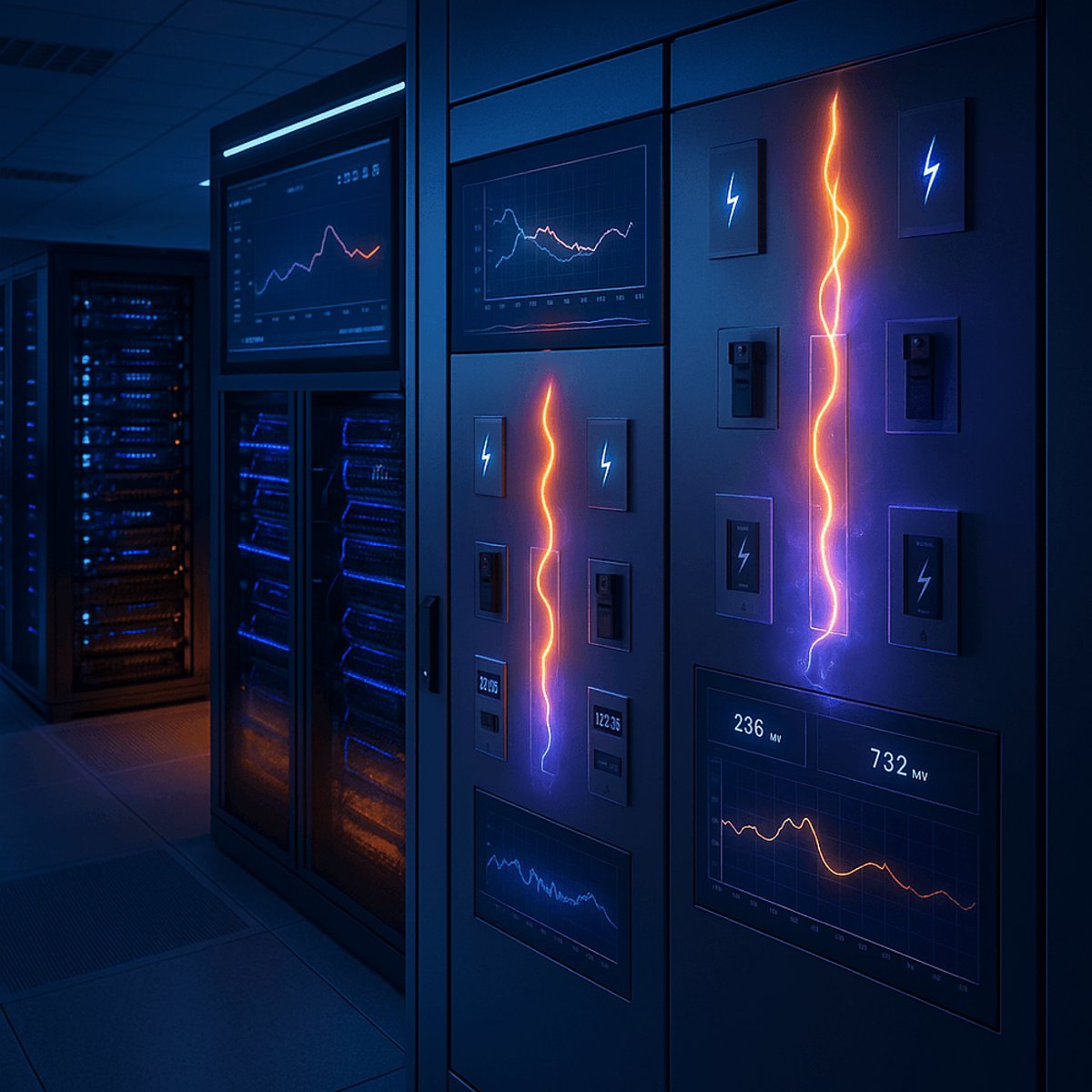
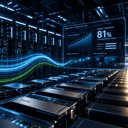
A new player just emerged from stealth with a solution to one of AI's most expensive headaches. Niv-AI announced today it's raised $12 million in seed funding to help data centers measure and manage the wild power surges that happen when GPUs shift between workloads. As AI training clusters scale into the hundreds of thousands of chips, those power spikes are becoming a serious constraint on how much computing power can actually fit in a building.
Niv-AI is betting that the next big AI infrastructure problem isn't about getting more GPUs, it's about actually using the ones you have. The startup emerged from stealth today with $12 million in seed funding to tackle what sounds like a mundane issue but is quietly driving data center operators crazy: GPU power surges.
Here's the problem. When Nvidia H100s or similar chips switch between different AI workloads, they don't sip power steadily. They gulp it in massive, unpredictable surges that can spike 50% or more above baseline in milliseconds. Data centers design their electrical infrastructure around peak loads, not averages, which means those surges directly limit how many GPUs you can cram into a facility before you hit the building's power ceiling.
For hyperscalers and cloud providers racing to build out AI capacity, that's not just an engineering headache, it's millions of dollars in stranded infrastructure. You might have physical rack space and cooling capacity for another thousand GPUs, but your electrical panels say no. Meta and Microsoft are building entire data center campuses to support their AI ambitions, and every watt counts when you're deploying hardware at that scale.
Niv-AI's approach centers on real-time measurement and intelligent power management. The company hasn't disclosed full technical details yet, but the pitch is straightforward: if you can predict and smooth out those power spikes, you can fit more compute into the same four walls. That matters enormously in a market where GPU allocation is the new currency and data center space is the constraint.
The $12 million seed round signals that investors see genuine value in infrastructure tooling beyond just the headline-grabbing foundation model companies. While OpenAI and Anthropic chase AGI, there's a whole ecosystem of picks-and-shovels companies solving the practical problems of running AI at scale. Power management sits right at that intersection of critical need and underserved market.
Timing matters here too. Nvidia's Blackwell architecture is already shipping to select partners, and next-generation chips are only getting more power-hungry. The GB200 systems can pull over 120 kilowatts per rack, more than double what previous generations demanded. As those systems roll out through 2026 and beyond, the power surge problem gets worse, not better.
Data center operators have been dealing with power management forever, but AI workloads behave differently than traditional enterprise computing or even high-performance computing clusters. Training runs can shift from low-intensity data loading to full-throttle tensor operations in seconds. Inference workloads spike with user demand. The variability is the killer, and legacy power distribution systems weren't built for it.
What Niv-AI hasn't revealed yet is how their solution integrates with existing data center infrastructure. Are we talking software that orchestrates workload placement? Hardware that sits between the power distribution units and the GPU racks? Some combination? The company's stealth exit leaves those details under wraps, but the funding round suggests they've convinced investors they have answers.
The competitive landscape here is still forming. You've got established data center infrastructure players like Schneider Electric and newer cooling-focused startups addressing adjacent problems. But purpose-built GPU power management appears to be relatively open territory, at least for now. That won't last long if Niv-AI's approach proves out.
For data center operators, the value proposition is clear. If you can increase GPU density by even 10% without building new facilities, that's a massive return on investment. If you can reduce the margin you need to maintain for peak power events, you unlock capacity you're already paying for. The economics work if the technology delivers.
The broader trend here is the infrastructure layer catching up to the AI boom. For two years, the conversation was all about model capabilities and who could secure enough H100s. Now we're seeing investment flow into the operational challenges of running those systems efficiently. Power management, cooling optimization, networking fabric, storage architectures - the entire stack is getting rebuilt for AI-first workloads.
Niv-AI's stealth exit lands at exactly the right moment. As the AI infrastructure buildout accelerates, the bottlenecks are shifting from chip supply to operational efficiency. Power management won't make headlines like the latest frontier model, but it's the kind of unglamorous problem that determines who can actually scale AI profitably. The $12 million seed is a bet that solving these infrastructure challenges is just as valuable as the models running on top of them. For data center operators maxing out their power budgets, that bet probably sounds about right.