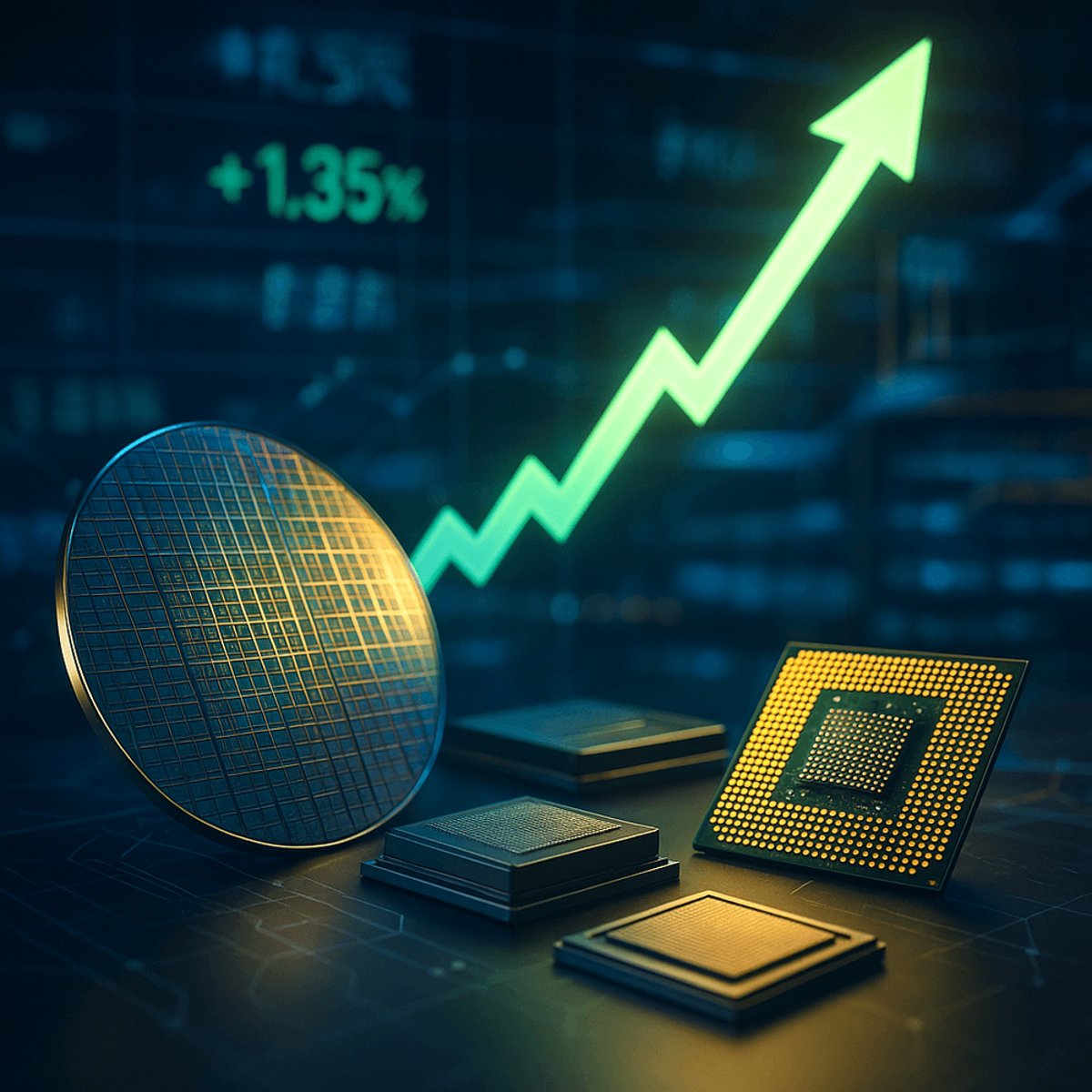
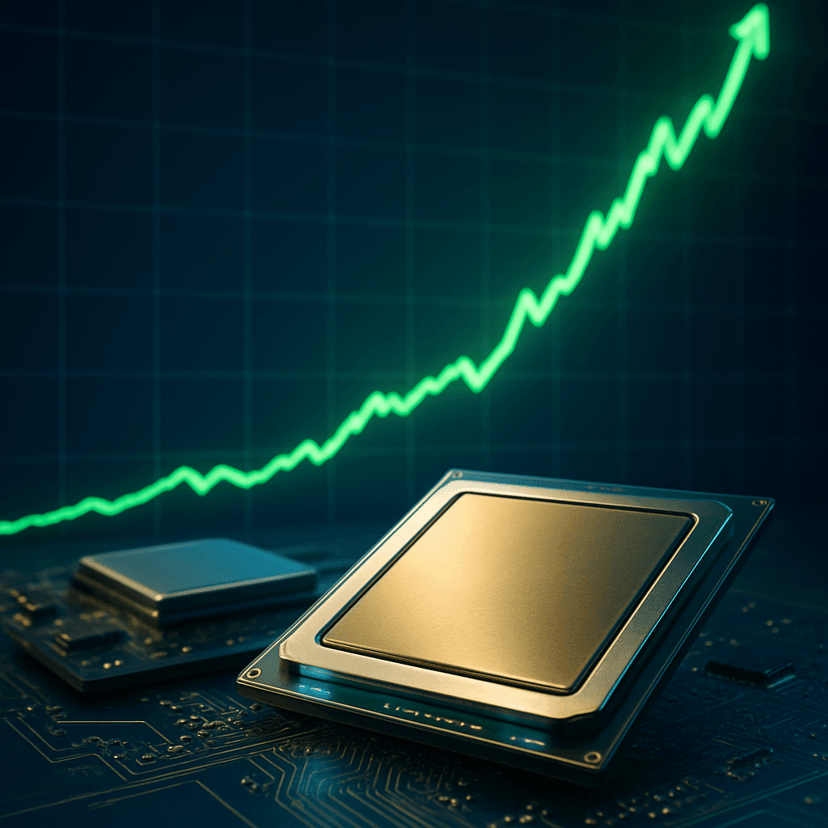
Nvidia's latest earnings just sent shockwaves through Asian markets, with chip stocks rallying up to 7% in early trading Thursday. The AI giant's third-quarter beat and stronger-than-expected fourth-quarter guidance is being read as proof that AI demand remains red-hot, despite mounting bubble fears. For investors watching the global semiconductor supply chain, this morning's reaction shows just how tightly the entire industry orbits around Nvidia's performance.
The numbers tell the story of an industry still running full throttle. Nvidia's third-quarter earnings didn't just beat Wall Street expectations - they delivered the kind of guidance that has Asian chip suppliers calculating bigger order books for 2026.
SK Hynix, Nvidia's top supplier of high-bandwidth memory for AI applications, popped 4% in Seoul trading. The Korean memory giant has been riding the AI wave harder than anyone, with its HBM chips becoming as crucial to data centers as graphics cards themselves. Not far behind, rival Samsung Electronics climbed nearly 4% as investors bet the company's aggressive push to catch up in high-bandwidth memory will land it more Nvidia contracts.
But it's Taiwan Semiconductor Manufacturing Company that might matter most in this equation. The world's largest contract chipmaker, which fabricates most of Nvidia's chip designs, rose 4% in Taipei as traders processed what stronger AI demand means for the foundry's already-packed production schedule.
"We expect Nvidia's results to drive higher earnings estimates across the sector, including for its primary GPU supplier TSMC, memory vendors SK Hynix and Samsung, and the broader Asian subcomponent and assembly value chain," Rolf Bulk, equity research analyst at New Street Research, told CNBC.
The ripple effects spread deeper into Japan's chip ecosystem. Renesas Electronics, a key Nvidia supplier, added about 4%. Tokyo Electron, which provides essential chipmaking equipment to foundries manufacturing Nvidia's chips, gained nearly 6%. Another Japanese equipment maker, Lasertec, jumped 6% as investors positioned for increased capital spending across the semiconductor manufacturing chain.
Perhaps most telling was SoftBank's 7% surge, even though the Japanese conglomerate recently sold its entire Nvidia stake for $5.83 billion. The company's rally reflects its ownership of British semiconductor firm Arm, which supplies Nvidia with chip architecture and designs. SoftBank's also deeply involved in AI ventures using Nvidia's technology, including the massive $500 billion Stargate data center project in the U.S.
These moves come as the industry grapples with persistent questions about AI's sustainability. Recent months have seen growing chatter about an AI bubble, with some investors questioning whether the massive infrastructure spending can justify current valuations. But Nvidia CEO Jensen Huang pushed back hard against that narrative during Wednesday's earnings call.
"There's been a lot of talk about an AI bubble," Huang told investors according to CNBC's earnings coverage. "From our vantage point, we see something very different." That confidence is now flowing through supply chains from Silicon Valley to Seoul, creating what amounts to a global vote of confidence in AI's staying power.
For Asian markets specifically, this rally represents more than just momentum trading. These companies have restructured their entire business models around AI demand, with memory makers retooling production lines and equipment manufacturers designing specialized tools for AI chip fabrication. Nvidia's continued strength validates those massive capital investments at a time when global tech spending faces broader headwinds.
This morning's Asian rally isn't just about one company's quarterly performance - it's a real-time stress test of the global AI supply chain's confidence. With Nvidia maintaining its bullish outlook and Asian suppliers betting big on continued demand, the semiconductor industry is doubling down on AI infrastructure at a critical moment. The question now isn't whether AI demand is real, but whether the supply chain can scale fast enough to meet it.