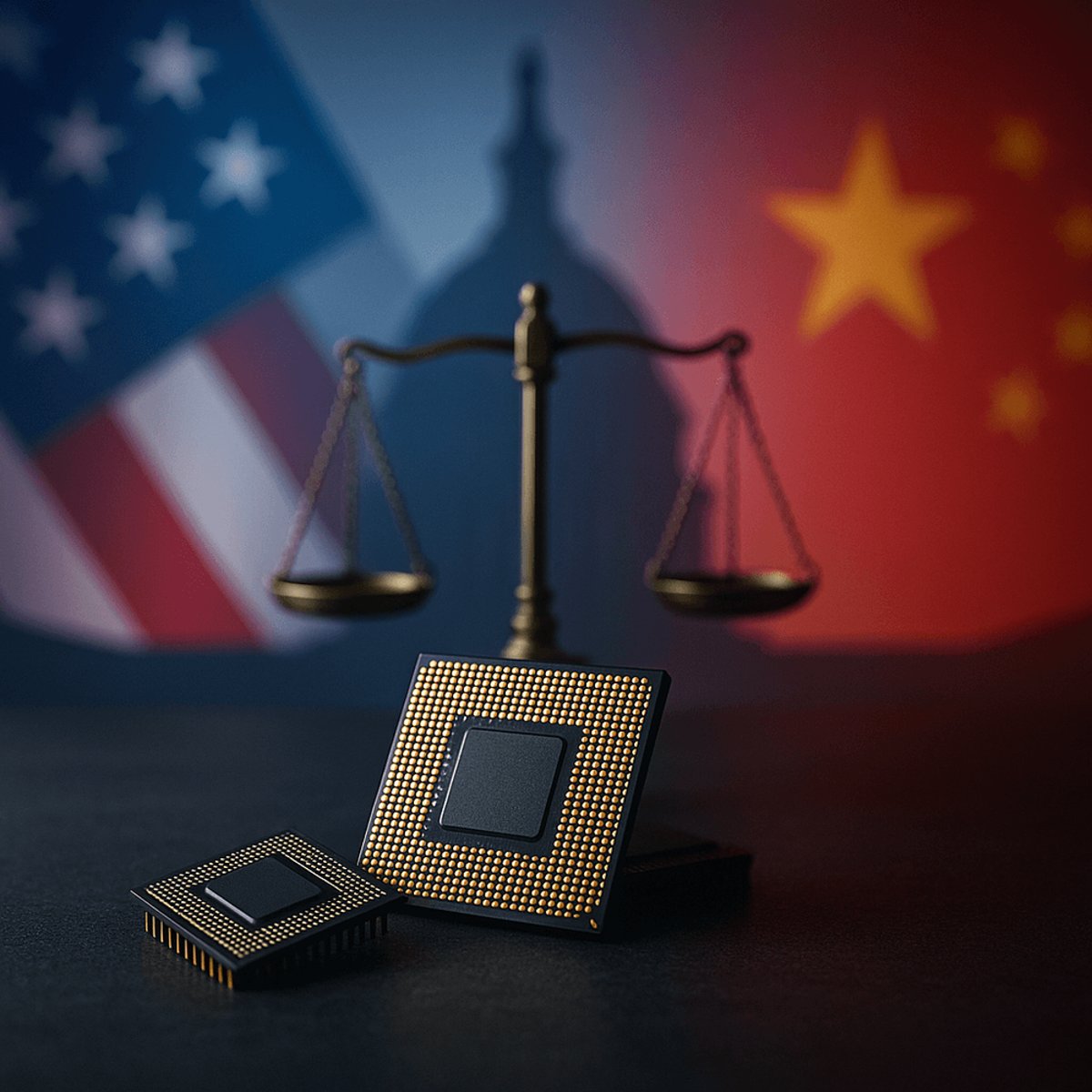
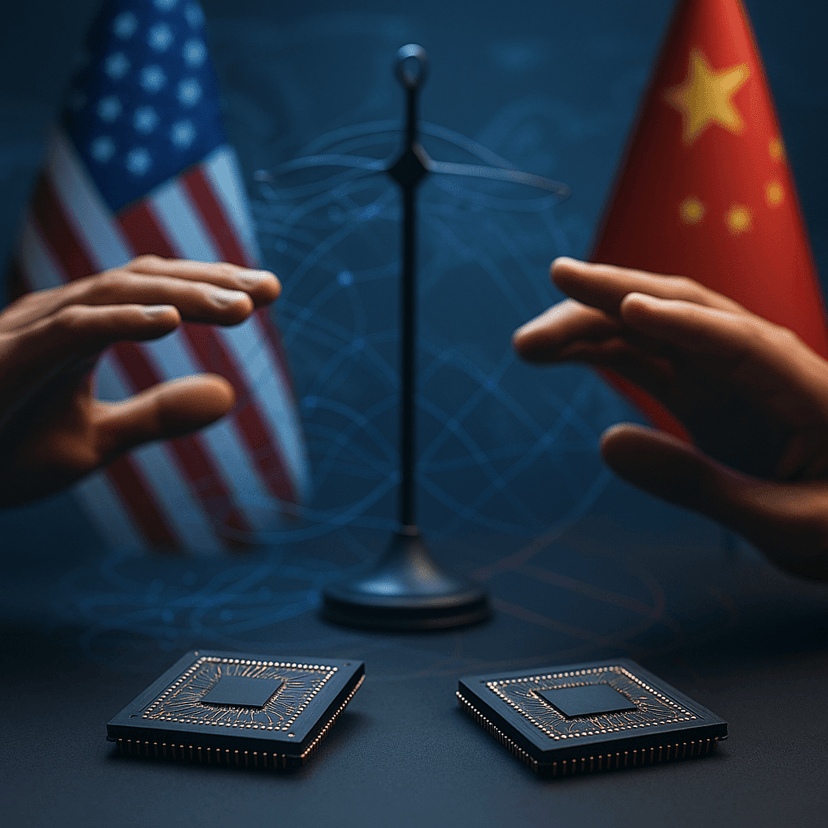
President Trump's surprise decision to let Nvidia sell advanced AI chips to China is sparking a rare bipartisan revolt on Capitol Hill. The deal would allow H200 chip sales in exchange for 25% of revenue flowing to the U.S. government, but Republicans warn it hands Beijing critical AI advantages that could undermine American security.
The political earthquake started with a Truth Social post Monday evening. President Trump announced that Chinese President Xi Jinping had "responded positively" to letting Nvidia sell H200 artificial intelligence chips to China, with the U.S. government taking a 25% cut of sales revenue.
But the deal is already fracturing Trump's own party. "Alarm bells go off in my head here," Sen. Lindsey Graham told CNBC on Tuesday. "If you can prove to me this will accelerate their military capability, I'll oppose it."
The pushback reveals how AI chips have become the new oil of geopolitics. The H200 processors aren't Nvidia's most cutting-edge - that would be the B200s powering the latest ChatGPT models - but they're significantly more powerful than the H20 chips previously approved for China. Where H20s were essentially hobbled versions designed specifically for the Chinese market, H200s pack serious compute power that could supercharge Beijing's AI ambitions.
"China's progress on AI is almost entirely parasitic on our technology, in particular on our hardware," Sen. Josh Hawley told reporters on Capitol Hill. "If we want to beat China, I think we need to constrain their ability to leverage our own technology."
The timing couldn't be more awkward. Just days before Trump's announcement, his own Department of Justice touted a crackdown on a "major China-linked AI tech smuggling network" trying to get exactly these kinds of chips. Sen. Elizabeth Warren didn't miss the irony, posting on X that "Trump is letting NVIDIA export cutting-edge AI chips that his own DOJ revealed are being illegally smuggled into China."
The policy represents a dramatic shift from the Biden administration's approach. Over the summer, the White House approved Nvidia and AMD sales of less powerful chips to China for just 15% of revenue. Beijing apparently wasn't interested - reports suggested Chinese officials told companies not to buy those chips.
Now Trump is offering better hardware for a bigger slice of the pie. The question is whether that math adds up to smart policy or dangerous precedent.
The U.S. Select Committee on China, a Republican-led panel, issued a blistering statement warning that H200s "could help China catch up to America in total compute." The committee predicted Beijing would use the chips "to strengthen its military capabilities and totalitarian surveillance" before inevitably "rip off the technology, mass produce it themselves, and seek to end Nvidia as a competitor."
Not every Republican is joining the revolt. Sen. Thom Tillis told CNBC he doesn't have "a real problem with providing them some chips" as long as there's proper oversight. But even supportive voices are cautious.
The broader context makes the stakes clear. Nvidia commands roughly 80% of the global AI chip market, making it perhaps America's most strategic tech asset. The company's chips don't just power ChatGPT and Claude - they're the foundation of military AI systems, autonomous weapons, and surveillance networks that could define the next century of warfare.
Sen. Pete Ricketts is pushing back with legislation. His bipartisan SAFE Chips Act would direct the Trump administration to deny export licenses for advanced chips to China and other adversaries for at least 30 months. "The best AI chips are made by American companies," Ricketts said. "Denying Beijing access to these AI chips is essential to our national security."
The political dynamics are fascinating. Trump, who built his first presidency on getting tough with China, now finds himself defending a deal that even his allies see as too accommodating. Hawley notably refused to directly criticize the president, saying Trump "deserves some deference" given access to classified information.
But the economics matter too. Nvidia has been largely shut out of the Chinese market since 2022, costing the company billions in potential revenue. China represents roughly 20% of global semiconductor demand, making it impossible for chip companies to ignore indefinitely.
For Nvidia, the 25% revenue split might be worth it to regain access to the world's second-largest economy. For America's national security establishment, it looks like handing Beijing the keys to the AI kingdom.
Trump's Nvidia-China chip deal exposes the fundamental tension between economic opportunity and national security in the AI age. While the 25% revenue share might look like a win for American coffers, the real question is whether giving China access to more powerful AI chips accelerates their path to technological parity. With bipartisan opposition building and legislation in the works, this fight is just beginning - and it could define whether America maintains its AI advantage or hands it away one chip at a time.