Nvidia just handed enterprise AI teams a major productivity unlock. At GTC 2026 in San Jose, CEO Jensen Huang introduced DSX Air, a simulation platform that slashes AI factory deployment time from months to mere days. The announcement signals Nvidia's aggressive push beyond chips into the full-stack infrastructure software layer, where setup complexity has become the hidden bottleneck in the AI industrial revolution.
Nvidia is attacking the AI infrastructure problem from a new angle. While the industry obsesses over chip performance and model accuracy, the company's latest reveal at GTC 2026 targets something more mundane but equally critical - the months-long slog of setting up AI factories.
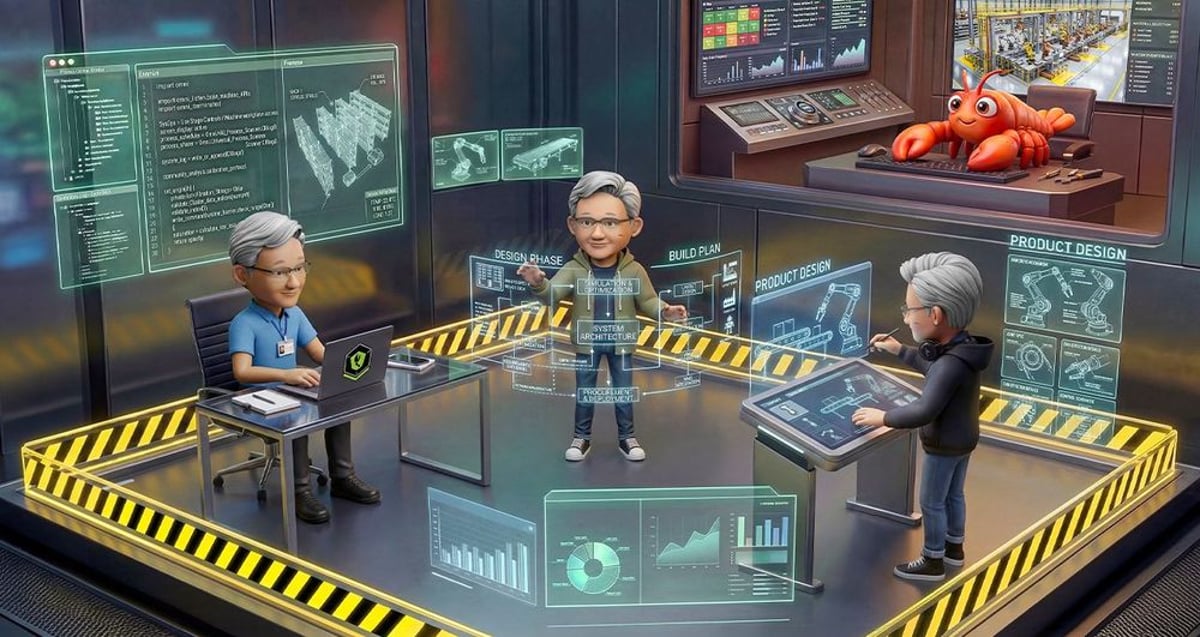
DSX Air, announced by Nvidia founder and CEO Jensen Huang during his keynote in San Jose, compresses what typically takes months of physical infrastructure planning into days of virtual simulation. According to Nvidia's official blog post, the platform is part of DSX Sim within the broader DSX platform, positioning it as Nvidia's blueprint for the next industrial revolution.
The timing isn't accidental. As enterprises race to deploy AI at scale, they're discovering that building the factory is harder than building the model. You can train a cutting-edge large language model in weeks, but provisioning data centers, configuring networking, and optimizing power distribution still eats months off deployment schedules. DSX Air aims to virtualize that entire process.
What makes this significant is Nvidia's expanding definition of its own business. The company built its empire on GPUs, then extended into complete data center solutions with DGX systems. DSX Air represents another leap - into the software layer that orchestrates how those physical resources actually get deployed. It's infrastructure planning as code.
The "time to token" framing in Nvidia's announcement is telling. In AI circles, time to first token measures how quickly a model starts generating output. By borrowing that metric for infrastructure deployment, Nvidia is positioning factory setup speed as the new competitive benchmark. Companies that can simulate, test, and deploy AI infrastructure in days rather than quarters gain months of market advantage.
Industry watchers have been tracking Nvidia's software ambitions closely. The company's CUDA moat in AI computing came from software lock-in as much as hardware performance. DSX Air follows that playbook - give enterprises tools so valuable they become dependent on the entire Nvidia stack, from simulation software down to silicon.
The AI factory concept itself reflects a broader shift in how companies think about AI deployment. Rather than one-off model deployments, enterprises are building persistent infrastructure optimized for continuous AI workloads - training, fine-tuning, inference at scale. These facilities require the kind of planning traditionally reserved for manufacturing plants, complete with power engineering, cooling systems, and network architecture.
Simulation solves a particularly painful problem in this domain. Physical infrastructure changes are expensive and time-consuming to test. You can't easily swap out networking configurations or reposition cooling systems to see what works best. DSX Air lets teams run those experiments virtually, identifying bottlenecks and optimization opportunities before a single server rack ships.
Nvidia hasn't disclosed pricing or availability details yet, but the platform likely targets the same enterprise customers already deploying DGX systems and building private AI infrastructure. For cloud providers and large enterprises planning multi-million dollar AI buildouts, shaving months off deployment timelines translates to significant competitive advantage and cost savings.
The announcement comes as Nvidia faces growing competition in AI infrastructure. AMD, Intel, and startups are all challenging Nvidia's dominance with alternative chip architectures. By expanding into deployment software, Nvidia creates another layer of stickiness - even if customers eventually test competing hardware, they're already embedded in Nvidia's planning and simulation tools.
What remains unclear is how deeply DSX Air integrates with non-Nvidia hardware. If the platform locks users into Nvidia-only infrastructure designs, it becomes a powerful sales tool but potentially limits adoption among enterprises pursuing multi-vendor strategies. If it supports heterogeneous environments, Nvidia gains broader platform adoption but potentially weakens hardware lock-in.
For AI practitioners, the real question is whether simulation can truly capture the complexity of production AI infrastructure. Data center performance depends on countless variables - power fluctuations, network congestion, thermal hotspots - that are notoriously difficult to model accurately. If DSX Air's simulations diverge significantly from real-world performance, the time savings evaporate during the inevitable troubleshooting phase.
Still, even imperfect simulation beats flying blind. Enterprises currently deploy AI infrastructure based on vendor recommendations, reference architectures, and educated guesses. A simulation layer that catches even obvious misconfigurations or capacity bottlenecks before hardware ships would pay for itself quickly.
Nvidia's DSX Air represents the company's clearest move yet into enterprise infrastructure software, extending its reach beyond silicon into the deployment planning layer that determines how AI factories actually get built. By compressing months-long setup processes into days of simulation, Nvidia isn't just selling speed - it's creating another point of lock-in for enterprises already betting billions on AI infrastructure. Whether simulation can truly model the chaos of production data centers remains to be tested, but for companies facing six-month deployment timelines, even imperfect acceleration looks appealing. The real winner here might be the entire AI industry, which desperately needs faster paths from concept to production if the next industrial revolution is going to arrive on schedule.