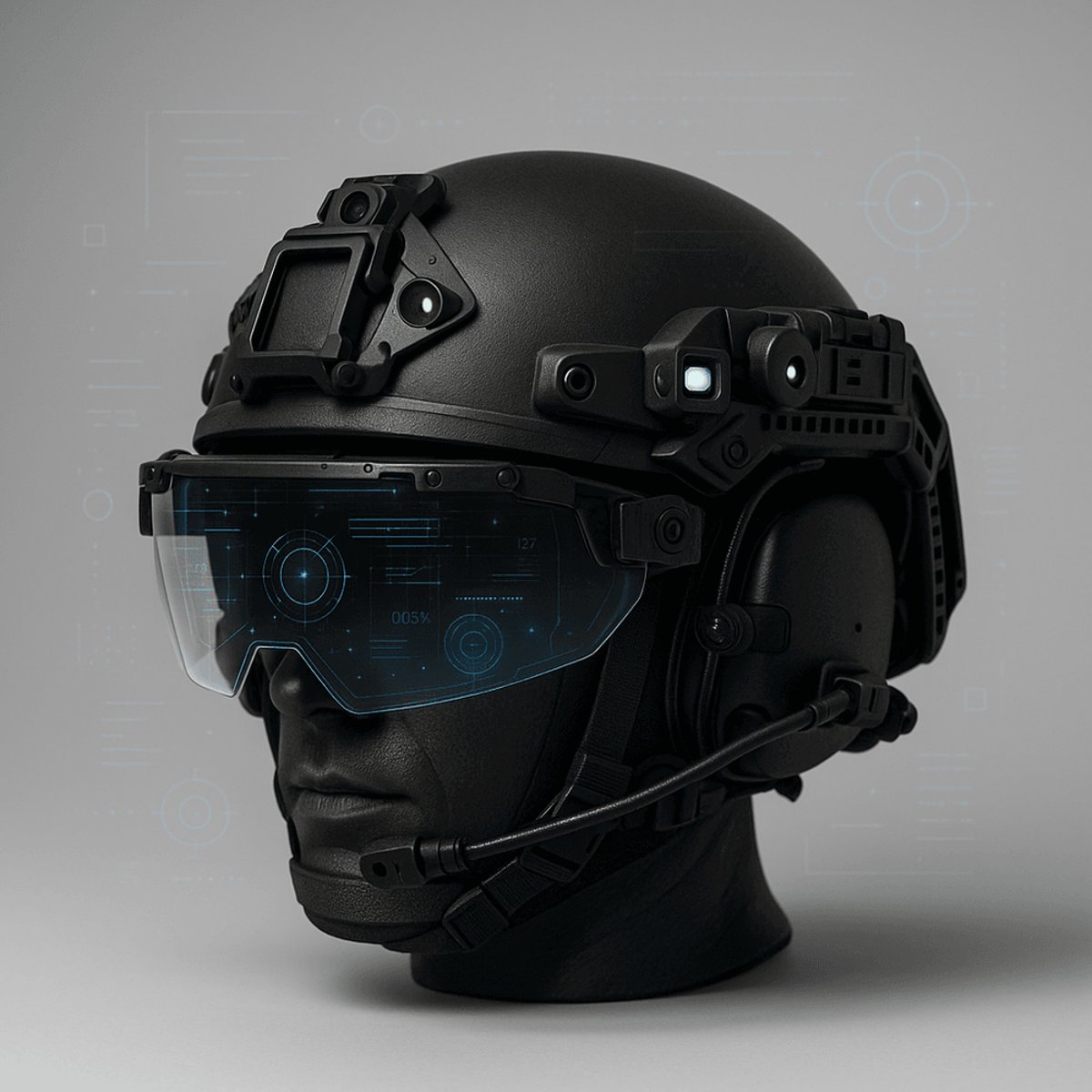
Anduril Industries just unveiled EagleEye, an AI-powered mixed reality helmet system designed to transform soldiers into "technomancers." The launch marks Palmer Luckey's return to his VR roots, now applied to military applications through his defense tech startup. The system comes as Anduril takes control of Microsoft's troubled $22 billion military headset program.
Anduril Industries is making its boldest play yet for the future of military technology. The defense startup on Monday unveiled EagleEye, a helmeted computing system that puts artificial intelligence, sensor feeds, and command tools directly into a soldier's line of sight. It's the kind of sci-fi military gear that Palmer Luckey has been dreaming about since his Oculus days.
The timing couldn't be better for Anduril. The company recently took control of Microsoft's troubled $22 billion Integrated Visual Augmentation System (IVAS) program after years of technical issues left the Army searching for alternatives. Then in September, Anduril won a massive $159 million contract to prototype new mixed-reality systems for soldiers - what the company calls "the largest effort of its kind" to give every soldier "superhuman perception and decision-making capabilities."
EagleEye isn't just another military gadget. Anduril describes it as a modular "family of systems" built on top of its Lattice software platform, offering variations from full helmets to lightweight visors and glasses. The system integrates live video feeds, features rear and side sensors for threat detection, and can track teammates in real-time across the battlefield.
"My mission has long been to turn warfighters into technomancers," Luckey said in a blog post announcing the Meta partnership earlier this year. The comment reveals how seriously he takes this technology. For Luckey, this isn't just about improving military equipment - it's about fundamentally changing how soldiers interact with information and their environment.
The concept has deep roots at Anduril. EagleEye actually appeared in the company's first pitch deck, but investors convinced the team to focus on software like Lattice instead. "Going toe-to-toe with Microsoft and Magic Leap would have been demoralizing windmill-tilting driven by magical thinking," Luckey posted on X in February. "Everything is different now. The world is ready, and so is Anduril."
What changed? The Army's growing frustration with existing solutions, for one. Microsoft's IVAS program, awarded in 2018, has struggled with technical problems and soldier acceptance issues. The Army handed control of the contract to Anduril this February, signaling a major shift toward newer defense tech companies.
But there's also an unexpected twist in this story. Earlier this year, Anduril announced a partnership with Meta to develop extended reality devices for the military. The collaboration marks an unusual reunion between Luckey and his former employer - the same company that acquired his Oculus startup and then fired him over political controversies.
"I am glad to be working with Meta once again," Luckey said. The partnership suggests both companies see military applications as a natural evolution of consumer VR technology. Meta's Quest headsets already demonstrate advanced mixed reality capabilities, while Anduril brings deep defense industry relationships and understanding of military requirements.
The broader context matters too. The U.S. Army is actively expanding its pool of mixed-reality suppliers as it recognizes these technologies could reshape modern warfare. Soldiers equipped with AI-augmented vision systems could process battlefield information faster, coordinate more effectively, and respond to threats with superhuman speed.
For Silicon Valley defense firms, military mixed reality represents a massive opportunity. Traditional defense contractors have struggled to match the innovation pace of tech startups, creating an opening for companies like Anduril to grab market share with cutting-edge solutions.
EagleEye's success will depend on whether it can solve the practical problems that plagued Microsoft's system - weight, battery life, durability, and most importantly, whether soldiers actually want to use it. Early military AR systems often looked impressive in demos but proved clunky in real-world conditions.
EagleEye represents more than just another defense contract win for Anduril - it's Palmer Luckey's vision of AI-augmented warfare finally coming to life. The system's success could reshape how armies around the world think about soldier technology, while failure might set back military mixed reality adoption for years. With the Army desperate for alternatives to Microsoft's troubled program and Anduril's growing defense industry clout, the stakes couldn't be higher for both the company and the future of military tech.