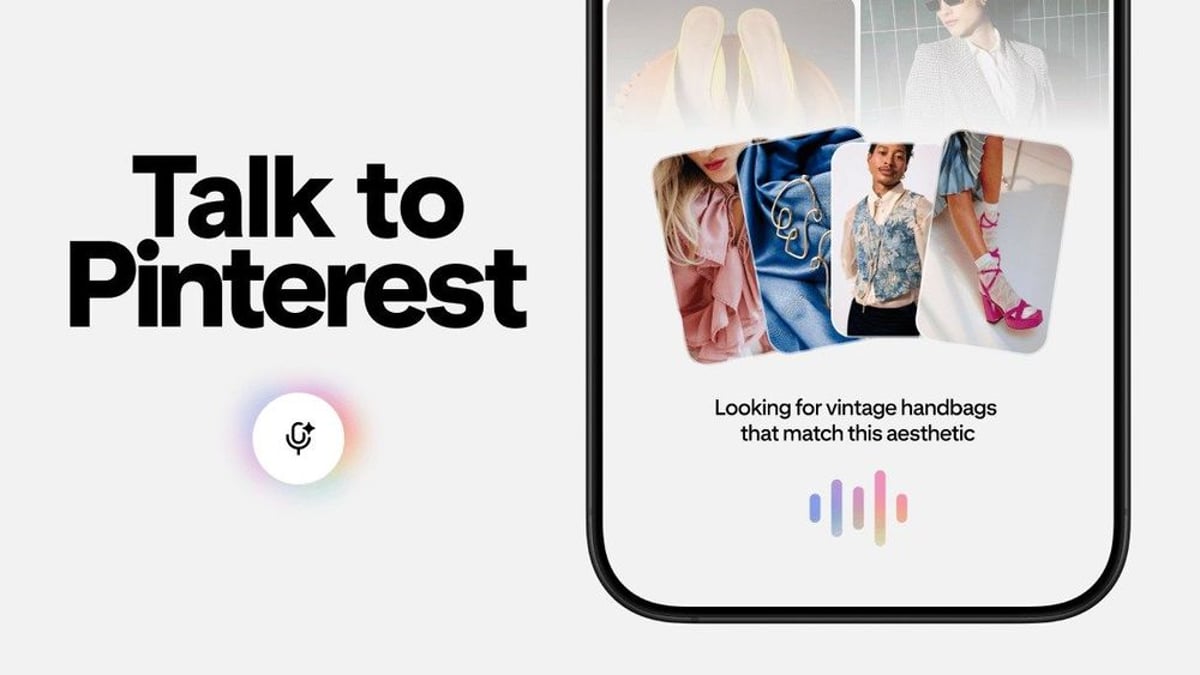
Pinterest just rolled out its most ambitious AI feature yet - a voice-powered shopping assistant that talks back to users. The Pinterest Assistant launches today for US adults, letting nearly 600 million users speak their style questions aloud and get personalized outfit recommendations narrated in real-time. This marks a major shift toward conversational commerce for the visual platform.
Pinterest just made shopping as simple as talking to a friend. The visual discovery platform launched its Pinterest Assistant today, a voice-powered AI that responds to spoken queries about fashion, home decor, and lifestyle choices with personalized visual recommendations that it narrates back to users.
The timing couldn't be more strategic. CEO Bill Ready tells The Verge that over half of Pinterest's nearly 600 million users are Gen Zers who increasingly expect conversational interfaces. "But when it's conversational, you see people speak very differently than they would type," Ready explained during the announcement.
The assistant works by holding down a mic button, similar to sending a voice note. Users can ask complex questions like finding tennis-inspired outfits based on a Wimbledon poster, and the AI responds with curated pins while verbally describing each recommendation. During The Verge's demo, Pinterest's director of AI products Ryan Galgon showed how the assistant offered to search for "more preppy or more casual ways to style the fit" after presenting initial results.
What makes this launch particularly intriguing is Pinterest's deliberate voice-only approach. Unlike competitors who offer both text and voice options, Pinterest Assistant exclusively accepts spoken queries and always responds with audio narration - users can't disable the talking feature. "The AI assistant is meant to encourage a more conversational experience," Ready told reporters, positioning this as the platform's answer to changing user behavior.
The technical infrastructure reveals Pinterest's broader AI ambitions. The assistant runs on what the company calls a "multimodal" AI model that's "visual-first," meaning it processes audio, image, and text inputs but always outputs visual results. Ready confirmed the core AI model is built in-house using proprietary user data signals, though it incorporates some third-party language processing components.
This launch comes as Pinterest works to rebuild trust after facing criticism for AI-generated content flooding the platform earlier this year. The company responded by labeling AI-generated images and launching a "tuner" feature letting users filter out AI content from specific categories like fashion and beauty.
Ready's three-year tenure has focused on transforming Pinterest from a simple mood board service into what he calls an "AI-powered shopping assistant." The voice layer represents the natural evolution of Pinterest's existing AI recommendation system, which already curates personalized content for users based on their saved pins and browsing behavior.
The conversational approach addresses a key user behavior shift Pinterest has observed. Ready notes that users are submitting longer, more detailed queries that suggest they want "a more unstructured way of interacting with the platform." A Taylor Swift fan interested in knitting might struggle to articulate their vision through traditional search, but voice allows for more nuanced expression.
Pinterest's emphasis on keeping audio responses concise reflects their commitment to visual discovery. Galgon explained that responses include "a brief description of the recommended pins" while maintaining an experience that's "really grounded in visuals." This balances the conversational element with Pinterest's core strength as a visual platform.
The beta rollout strategy targets adult US users first, with Pinterest planning broader availability over the coming weeks and months. This measured approach allows the company to refine the assistant's performance and gather user feedback before scaling to its global audience.
Pinterest's voice-first approach represents a bold bet on conversational commerce, especially as competitors like Google and Amazon focus on text-based AI shopping tools. By forcing users into voice interactions and providing audio responses, Pinterest is training both its AI and its users for a more natural shopping experience. The success of this 600-million-user experiment could reshape how we discover and shop for products online, making Pinterest a serious contender in the AI-powered retail space.