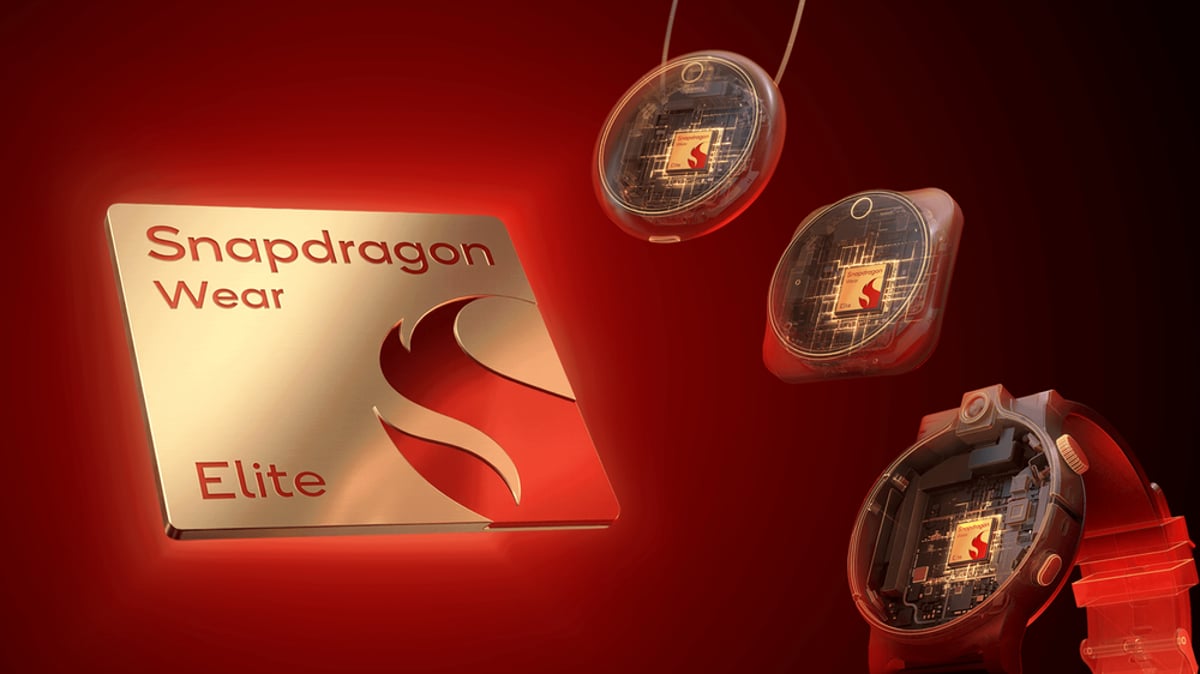
Qualcomm is making its play for the next wave of AI gadgets. The chipmaker just unveiled its Snapdragon Wear Elite processor, a 3nm chip designed specifically for the emerging category of AI-powered wearables - think pendants, pins, and display-free smart glasses rather than traditional smartwatches. It's a bet that the AI hardware gold rush extends beyond phones and laptops into a new generation of always-on, voice-first devices that live on your body.
Qualcomm is betting that AI wearables are about to explode - even if the market hasn't quite proven them right yet. The company's new Snapdragon Wear Elite chip, announced today, is purpose-built for a category that barely exists: AI-first wearables that prioritize voice interaction and ambient computing over traditional screens.
At a press briefing covered by The Verge, Qualcomm executives described the Elite as a "wrist plus" chip - a telling bit of positioning that reveals how the company sees the wearables landscape evolving. Rather than cannibalizing its existing W5 Plus smartwatch processor, the Elite will exist alongside it, targeting gadget makers who want to build pendants, pins, and display-free smart glasses.
The timing is interesting. We've already seen attempts at this category stumble - Humane's AI Pin launched to harsh reviews, while Meta's Ray-Ban smart glasses have gained traction but remain niche. But Qualcomm clearly thinks there's enough momentum (or potential) to justify dedicated silicon.
The Elite's specs suggest Qualcomm is serious about on-device AI capabilities. Built on a 3nm process - a significant upgrade that promises better power efficiency and performance - the chip packs dual neural processing units. Both an eNPU and Hexagon NPU will handle AI workloads, letting these devices process voice commands, run language models, and perform contextual tasks without constantly pinging the cloud. That's critical for wearables that need to be always-on but can't afford to drain a tiny battery in hours.
Qualcomm's strategy here mirrors what we've seen play out in smartphones. Just as Apple and Google have pushed AI features as key differentiators for their flagship phones, Qualcomm is positioning itself as the infrastructure provider for the next hardware battleground. If AI wearables do take off, being the dominant chip supplier puts Qualcomm in a lucrative position.
But the company is also hedging its bets. By keeping the W5 Plus in production for traditional smartwatches while launching the Elite for experimental form factors, Qualcomm doesn't have to pick a winner yet. Smartwatch makers like Samsung and others can stick with what works, while startups and risk-taking companies can experiment with new devices powered by the Elite.
The dual-NPU architecture is where things get technically interesting. Having both an eNPU (efficiency-focused) and Hexagon NPU (performance-focused) means devices can intelligently route workloads. Simple tasks like wake-word detection or basic contextual awareness can run on the eNPU to save power, while more complex operations - like running multimodal AI models that process both audio and visual inputs - can tap the Hexagon when needed.
Qualcomm noted that more powerful smart glasses - the kind with augmented reality overlays and advanced visual processing - will likely use its separate AR chip instead. That segmentation suggests Qualcomm sees at least three distinct wearable categories emerging: traditional smartwatches (W5 Plus), AI-first audio/ambient devices (Wear Elite), and full AR glasses (dedicated AR silicon).
The question is whether hardware makers will bite. Companies have been burned before on wearables that promised the future but delivered clunky user experiences. But with AI hype at fever pitch and companies desperate to find the next big form factor beyond smartphones, Qualcomm is betting someone will take the plunge.
What makes this announcement significant isn't just the chip itself - it's the signal it sends. When a major silicon provider like Qualcomm dedicates engineering resources and manufacturing capacity to a new category, it validates that category for investors, manufacturers, and developers. We saw this with smartwatches, true wireless earbuds, and VR headsets. Sometimes the ecosystem follows, sometimes it doesn't.
For Qualcomm, the risk is relatively contained. The company already has the core IP and manufacturing relationships in place. Adapting existing designs for this new form factor probably didn't require a massive R&D bet. And if AI wearables flop, Qualcomm still has its dominant position in smartphone chips and growing presence in laptops to fall back on.
But if AI wearables do catch on - if we're genuinely moving toward a world where people wear always-on AI assistants as jewelry or accessories - being first with purpose-built silicon could pay off enormously. Especially as privacy concerns and latency requirements push more AI processing to happen locally on devices rather than in the cloud.
Qualcomm's Snapdragon Wear Elite represents a calculated bet on an uncertain future. The chipmaker is essentially building the infrastructure for a product category that's still proving itself - AI-first wearables that break free from the smartphone-tethered smartwatch model. With dual NPU architecture on an efficient 3nm process, Qualcomm is giving hardware makers the tools to experiment with pendants, pins, and voice-first devices without making massive compromises on battery life or capability. Whether consumers actually want to wear AI assistants on their bodies remains an open question, but Qualcomm is making sure it's ready if they do. For now, the Elite's success will depend entirely on whether any manufacturer can crack the code on making these devices genuinely useful rather than just technically impressive.