Rivian's founder RJ Scaringe just grabbed the marketing reins as the electric truck maker slashes 600 jobs - a 4.5% workforce cut - ahead of its make-or-break R2 SUV launch next year. The interim CMO move signals how critical the mass-market vehicle is for the struggling startup's survival in an increasingly hostile EV landscape.
RJ Scaringe isn't just running Rivian anymore - he's now marketing it too. The electric truck startup's founder and CEO told employees Thursday he's taking over as interim chief marketing officer while the company searches for its first permanent CMO, according to an internal email obtained by TechCrunch.
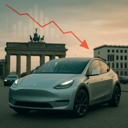
The leadership shuffle comes with a harsh reality check: Rivian is cutting roughly 600 employees, about 4.5% of its workforce, as it braces for what Scaringe called a "changing operating backdrop." Translation? The federal EV tax credit is gone, Trump-era tariffs are back, and the clean energy honeymoon is officially over.
"With the launch of R2 in front of us and the need to profitably scale our business, we have made the very difficult decision to make a number of structural adjustments to our teams," Scaringe wrote in the email. It's corporate speak for 'we're running out of runway and the R2 better work.'
This marks Rivian's third round of layoffs this year, underscoring just how brutal the EV market has become for anyone not named Tesla. The company went public in 2021 with a valuation that briefly topped $100 billion, but reality hit hard as production struggles and cash burn became impossible to ignore.
The R2 isn't just another product launch for Rivian - it's existential. While the company's R1T pickup and R1S SUV target the luxury segment with price tags starting around $75,000, the R2 aims for the mass market with an expected starting price under $45,000. That's Tesla Model Y territory, where real volume lives.
Scaringe's decision to personally oversee marketing suggests he knows exactly what's at stake. The CEO already manages what he described as a "large number" of direct reports, according to a Decoder podcast interview last year. Now he's adding the heads of Rivian's "marketing experiences" team and creative studio to that list.
But the restructuring goes deeper than just marketing. Rivian is consolidating its entire customer-facing operations, moving vehicle operations into the service division and folding delivery and mobile operations into sales. The goal, Scaringe explained, is creating "a single touchpoint throughout the entire sales process and to delivery."
It's a page from Tesla's playbook, where Elon Musk famously eliminated traditional dealerships in favor of direct sales. But Tesla had the luxury of building that system from scratch during friendlier times for EVs. Rivian is retrofitting mid-crisis.
The timing couldn't be more challenging. President Trump's return has already spooked EV investors, with his promises to eliminate federal EV incentives and impose new tariffs on battery materials. Ford recently scaled back its EV plans, while GM pushed back several electric model launches. Even Tesla saw its stock wobble on policy uncertainty.
For Rivian, which burned through $1.4 billion in cash last quarter alone, the political headwinds compound existing operational challenges. The company has struggled with production ramp-up, supply chain issues, and the basic economics of building vehicles at scale. The R2 represents a bet that lower prices can unlock the demand needed to justify those massive upfront investments.
Scaringe's marketing takeover also reflects a broader trend among startup CEOs taking direct control of customer-facing functions during tough times. When survival is on the line, founders often decide they can't delegate the message that might make or break the company.
The question now is whether Rivian can execute flawlessly on the R2 launch while managing a leaner organization. The company has until 2026 to prove that mass-market EVs can work outside of Tesla's ecosystem, but the window for error just got a lot smaller.
Scaringe's dual role as CEO and interim CMO isn't just about cost-cutting - it's about survival. With the R2 launch determining whether Rivian becomes the next Tesla challenger or another cautionary tale, the founder is betting he can personally steer both the company's strategy and its story. The next 18 months will show if that hands-on approach can overcome the brutal economics facing every EV startup not named Tesla.