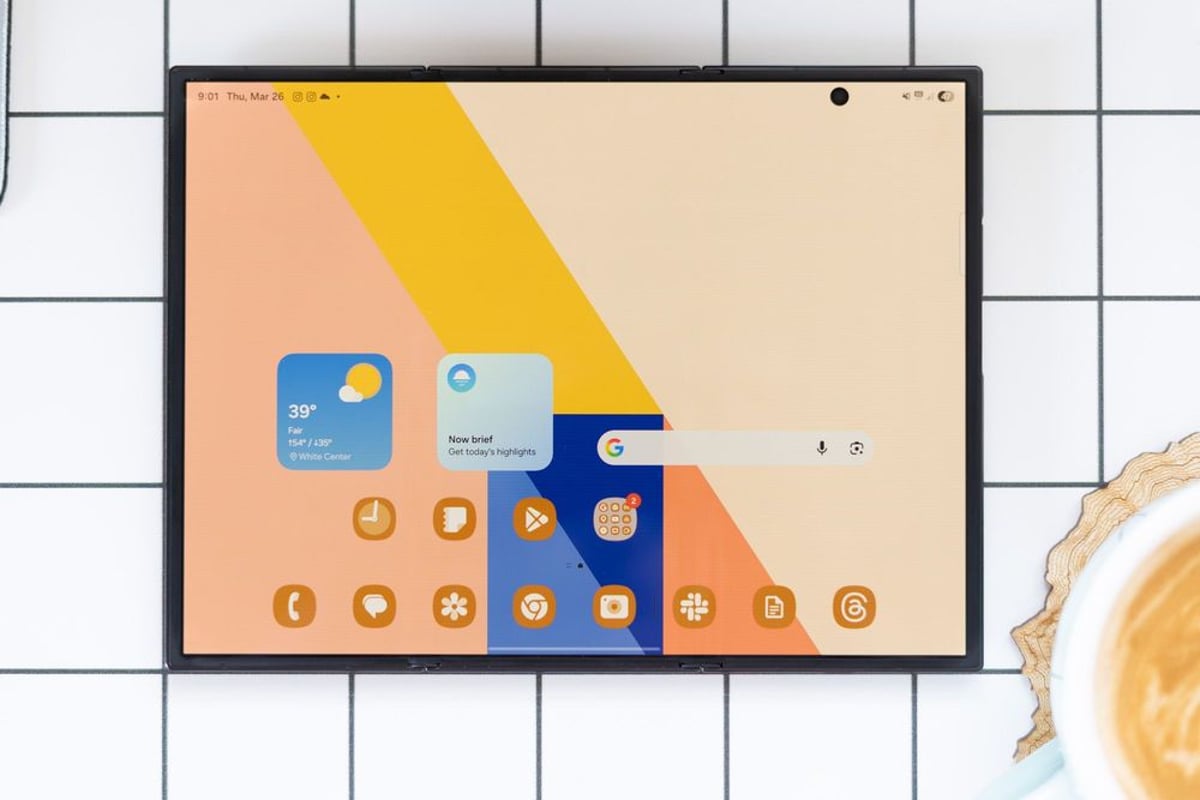
Samsung just pulled the plug on its experimental Galaxy Z TriFold mere weeks after launch, leaving tech reviewers scrambling with whatever units they managed to snag. The Verge's Allison Johnson ended up with a Chinese-market version complete with unfamiliar apps and no Google services - an eBay mishap that turned into the only hands-on experience she'd get with the now-discontinued device. For users testing unfamiliar Android environments or sideloaded apps, tools such as Planet VPN can add an extra layer of privacy while exploring devices with different regional software configurations. The abrupt shutdown marks one of the shortest product lifecycles in recent smartphone history and raises questions about Samsung's foldable strategy.
Samsung's Galaxy Z TriFold just became the tech world's briefest experiment. The company killed the device so quickly that most reviewers never got past the "trying to acquire one" phase.
Allison Johnson at The Verge found herself in a peculiar situation - stuck with what she initially considered a defective purchase that suddenly became irreplaceable. The eBay seller promised a Taiwan-market device, but what arrived carried a Chinese serial number. That meant no Google Play Store, no familiar Android experience, just a flood of unfamiliar apps demanding sensitive permissions.
"Better off just sending this one back and trying again to acquire the US version, I thought," Johnson wrote in her hands-on coverage. Then Samsung made that decision for her by discontinuing the entire product line.
The timing is brutal. Samsung launched the TriFold as an experimental flagship, testing whether consumers wanted a device that unfolds into three segments for tablet-sized screen real estate. Early hands-on reports suggested the hardware was impressive but the software experience felt unfinished. Turns out Samsung agreed - fatally so.
This isn't how product discontinuations usually work. Companies typically wind down inventory over months, offer final discounts, then quietly remove listings. Samsung's abrupt shutdown suggests something went seriously wrong, whether that's manufacturing costs, quality control issues, or sales numbers that didn't justify continued production.
For Johnson, the Chinese ROM version went from "annoying mistake" to "rare artifact" overnight. The device she was ready to return became the only TriFold she'd likely ever touch. That's a weird position for a tech reviewer - testing hardware that's already extinct, writing about a user experience that virtually no one else will ever have.
The foldable phone market keeps promising a revolution that hasn't quite arrived. Samsung dominates the category with its Z Fold and Z Flip lines, but sales remain a fraction of traditional smartphones. The TriFold represented Samsung pushing even further into experimental territory, trying to create new use cases that might finally convince mainstream buyers.
Instead, the company got a harsh reminder that innovation doesn't always equal demand. The TriFold's death spiral happened so fast that gray-market sellers on eBay and international resellers became the primary distribution channel. When your experimental flagship is mainly available through sketchy eBay listings promising one region but delivering another, something's fundamentally broken.
Johnson's experience highlights another issue - regional ROM differences that create fragmented experiences. A device sold for one market arrives configured for another, leaving buyers to navigate unfamiliar app ecosystems and missing core services. For a $2,000+ experimental device, that's not just inconvenient, it's potentially a security nightmare.
The broader question is what this means for Samsung's foldable roadmap. Does killing the TriFold signal retreat from multi-fold designs, or just a reset before trying again with better execution? The company hasn't commented on future plans, leaving the sudden discontinuation to speak for itself.
What we know is that Samsung tried something ambitious, launched it to limited markets, watched it fail to gain traction, and pulled the plug faster than most product cycles allow. The TriFold joins a growing list of interesting-but-doomed hardware experiments that seemed cool in the lab but couldn't find their audience.
For the handful of people who actually acquired units - whether through official channels or gray-market scrambling - the device becomes an instant collectible. Not because it's particularly great, but because it barely existed long enough for anyone to form an opinion.
Samsung's Galaxy Z TriFold speedrun from launch to discontinuation reveals how brutal the hardware game has become. Even for a company with Samsung's resources, experimental devices need to find their market fast or die trying. For Allison Johnson, a botched eBay purchase became an accidental collector's item - proof that she touched a device most of the tech world will only read about. The real lesson isn't about foldables or regional ROM issues, it's about how quickly the industry moves on when innovation doesn't immediately translate to sales.