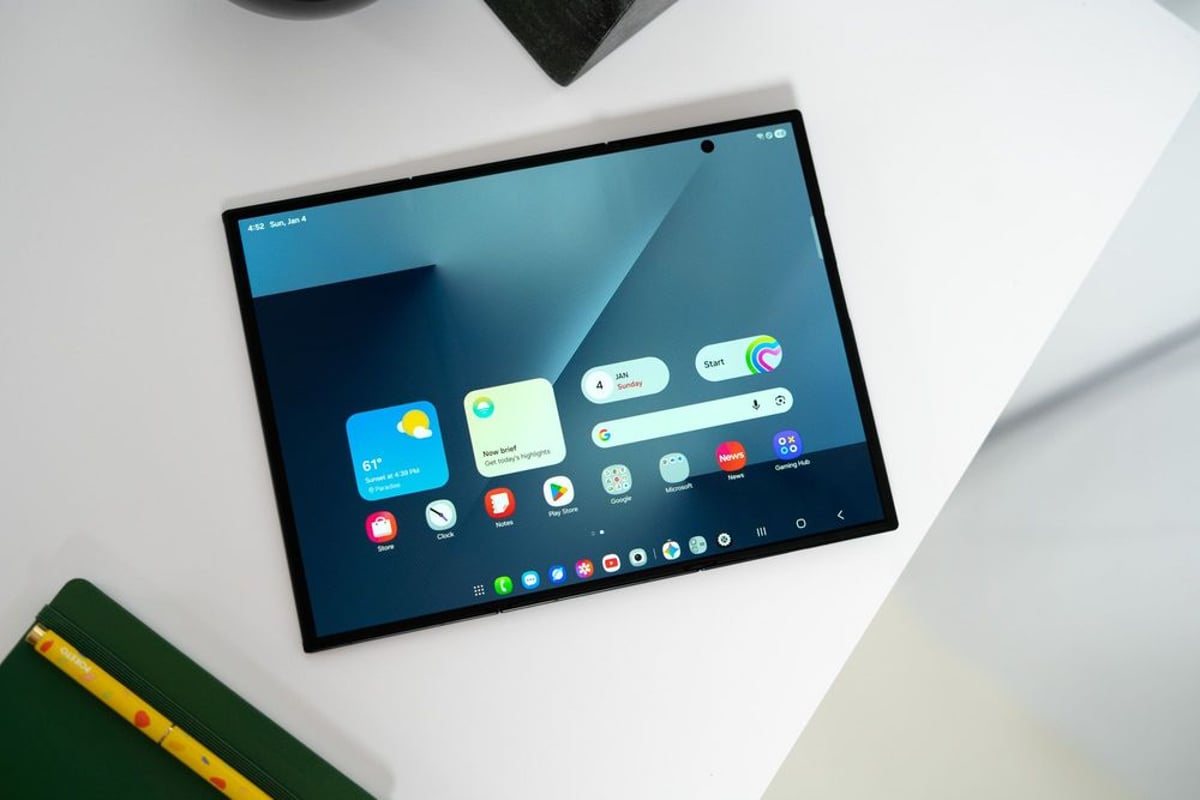
Samsung is bringing its audacious Galaxy Z Trifold to American consumers this Friday, January 26th, with a price tag that'll make even iPhone Pro Max buyers blink: $2,899 for 512GB of storage. The device, which made its debut in Korea late last year according to The Verge, represents only the second trifold smartphone commercially available globally - and the only one you can actually buy in the US without gray-market shenanigans. It's a phone that thinks it's a tablet, and Samsung's betting there's a market willing to pay nearly three grand to find out if that's brilliant or ridiculous.
Samsung is about to find out just how many people are willing to drop nearly three thousand dollars on a phone that folds twice. The Galaxy Z Trifold hits US stores this Friday at $2,899, making it one of the most expensive consumer smartphones you can buy without resorting to jewel-encrusted special editions.
The pricing shouldn't shock anyone who's been following Samsung's foldable journey. The company first teased the Trifold almost exactly a year ago, and it premiered in Korea late last year with similarly eye-watering figures. But seeing that $2,899 price tag attached to a US launch date makes it real in a way that international launches never quite do.
For that money, you get 512GB of storage and what The Verge's hands-on described as "a phone that kind of wants to be a tablet all the time." The device unfolds into a tablet-sized screen, offering a computing experience that's genuinely different from traditional smartphones or even Samsung's existing Z Fold line.
Huawei beat Samsung to market with its Mate XT trifold, but that device isn't officially sold in the US. If you want one stateside, you're looking at import costs that'll likely push you past Samsung's asking price anyway. Samsung's timing gives it a de facto monopoly on trifold phones for American consumers who don't want to deal with gray-market purchases.
The rapid development timeline stands out in an industry where hardware typically takes years from concept to consumer availability. Samsung went from tease to shipping product in roughly twelve months - impressive for a device that requires engineering two working hinges and managing the complex interplay of three display panels.
To put the $2,899 price in perspective, Apple's iPhone 17 Pro Max tops out around $2,000 for maximum storage. You could buy a high-end MacBook Air and an iPhone SE for what Samsung's asking for the Trifold. But then again, those devices don't fold into a tablet when you need more screen real estate.
The question isn't really whether $2,899 is too much for a smartphone - premium device pricing has been creeping upward for years. It's whether the trifold form factor solves a problem that enough people actually have. Do consumers need a phone that becomes a tablet, or is this a solution in search of a problem?
Samsung's betting that early adopters, tech enthusiasts, and professionals who juggle multiple devices will see the value proposition. The company has successfully carved out a niche for its Z Fold series despite skepticism about durability and practical utility. The Trifold represents the next evolution of that bet.
The Friday launch comes with the usual carrier partnerships and trade-in deals that might knock a few hundred dollars off the sticker price. But even with promotions, you're looking at a serious financial commitment for what's essentially first-generation hardware in a new form factor category.
Durability remains an open question. Folding phones have come a long way since Samsung's original Galaxy Fold debacle, but adding a second hinge introduces new mechanical complexity. How well do the screens hold up after thousands of folds? What happens to those hinges after a year of daily use? Samsung's track record with the Z Fold series inspires some confidence, but trifolds are uncharted territory.
The device's software optimization will be crucial. Android's large-screen experience has improved dramatically, but apps still need to intelligently handle the Trifold's unique aspect ratios and multitasking capabilities. Samsung's One UI typically does a solid job of adapting Google's OS for foldables, but the trifold configuration presents new challenges.
For competitors watching Samsung's launch, the Trifold represents both inspiration and cautionary tale. If it finds an audience at $2,899, expect other manufacturers to follow. If it flops, it might cool enthusiasm for folding phones' next frontier.
Samsung's $2,899 Galaxy Z Trifold launches Friday as a statement piece in mobile hardware - the only trifold phone you can actually buy in America. It's expensive even by premium smartphone standards, but it's also genuinely novel in a market that's felt stagnant for years. Whether it finds an audience beyond early adopters and enthusiasts will determine if trifolds become the next chapter in smartphone evolution or a footnote in the industry's ongoing quest to reinvent the rectangle. Either way, if you're in the US and want a phone that folds twice, your credit card better be ready.