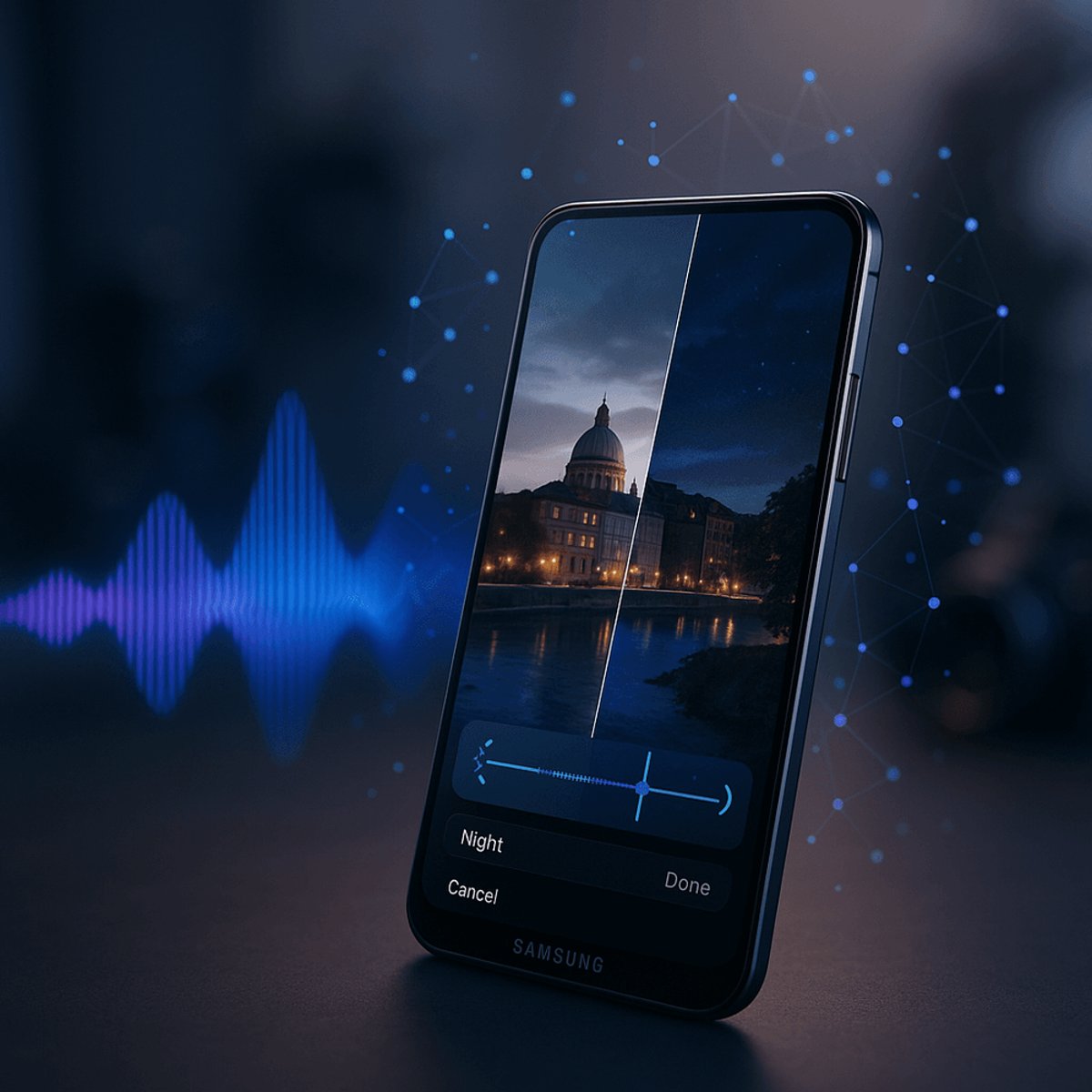
Samsung just previewed what might be the biggest shift in smartphone photography since computational imaging took off. The company's teasing an AI-powered Galaxy camera system that lets users edit photos by simply describing what they want in plain English - turning day shots into night scenes, restoring missing objects, or merging multiple images without touching a single slider. The new capabilities, set to debut at Galaxy Unpacked February 2026 next week, signal Samsung's bet that natural language will replace manual editing tools entirely.
Samsung is making its move in the AI photography race, and it's coming with a bold pitch: what if you could edit photos just by talking to your phone?
The company dropped a teaser today showing off what it's calling "the next evolution of the Galaxy camera" - an AI-powered system that unifies shooting, editing and sharing into one platform controlled by natural language prompts. According to Samsung's official announcement, users will be able to turn daytime photos into nighttime scenes, restore missing parts of objects (like a bite taken out of a cake), or seamlessly merge multiple photos "simply by asking in your own words."
It's a direct challenge to Apple's computational photography dominance and Google's Magic Editor tools, but Samsung's betting on something different: voice as the primary editing interface. The demos show users speaking commands instead of tapping through menus or dragging sliders - a friction point that's plagued mobile editing apps for years.
The timing isn't coincidental. Samsung's pushing this ahead of next week's Galaxy Unpacked February 2026 event, where the company's expected to unveil its flagship Galaxy S26 lineup. By framing the camera as an "end-to-end experience" rather than just better sensors, Samsung's positioning against competitors who've largely focused on hardware improvements and post-processing algorithms separately.
"Mobile cameras are moving beyond capture," Samsung stated in the release, describing how Galaxy AI now handles "capturing, editing and sharing in one intuitive platform." The company claims this creates "a seamless experience and a more fluid creative process - eliminating the need to switch between apps or navigate complex tools."
But the real technical achievement here isn't just the AI models doing the heavy lifting. It's the multimodal input system Samsung's built to understand context from both the image and the user's spoken intent. When someone says "make it look like nighttime," the system needs to understand lighting, shadows, color temperature and atmosphere - then apply those changes naturally without obvious AI artifacts.
Samsung's also touting what it calls "the brightest Galaxy camera system ever" as the foundation for these AI features. That suggests hardware improvements beyond just the software magic - likely larger sensors or improved computational photography pipelines that feed better data to the AI models.
The company's framing this around democratizing creativity. "At the core of this evolution is the belief that creativity should not be limited by technical skill or experience," the announcement reads. It's a familiar pitch - Adobe said something similar when launching Firefly, and Google leaned into accessibility with Magic Eraser. But Samsung's going further by making voice the primary interface, not just an alternative.
What's less clear is how much of this runs on-device versus in the cloud. Natural language processing and image generation models are notoriously resource-hungry, and Samsung's Exynos and Qualcomm's Snapdragon chips have been racing to add dedicated AI accelerators. The promotional videos show edits happening "in seconds," which suggests at least some local processing - but complex transformations like day-to-night conversion could still ping Samsung's servers.
The competitive landscape just got messier. Apple dominates premium smartphone photography with computational tricks like Deep Fusion and Photonic Engine. Google's Pixel phones lead in software-based enhancements. And now Samsung's pushing natural language as the differentiator - a interface that could matter more than megapixels if it actually works smoothly.
There's also the question of creative control. Professional photographers and serious enthusiasts might bristle at handing over editing decisions to an AI interpreter. Samsung's videos show clean, polished results, but real-world testing will reveal whether the system truly understands nuanced requests or just applies templates.
The teaser also mentions features like tracking stars across the night sky and capturing detailed low-light photos - capabilities that suggest Samsung's stacking traditional computational photography improvements alongside the AI editing tools. That's smart positioning: even if the voice editing feels gimmicky to some users, the underlying camera system needs to deliver.
Samsung's timing puts pressure on competitors ahead of the spring launch cycle. If the Galaxy S26 ships with these features next month, Apple won't respond until iPhone 17 this fall, and Google's Pixel 10 is similarly months away. That gives Samsung a potential multi-quarter window to own the "AI camera" narrative.
Samsung's natural language camera interface represents a genuine attempt to rethink mobile photography workflows, not just add more AI filters. If the execution matches the promise, we're looking at a shift from manual editing to conversational creativity - the kind of interface change that could ripple across the entire smartphone industry by year-end. But the proof arrives next week at Galaxy Unpacked, when Samsung needs to show this working in real-world conditions with actual users fumbling through voice commands. That's when we'll learn whether this is the future of phone cameras or just another demo that looks better in promotional videos than in practice.