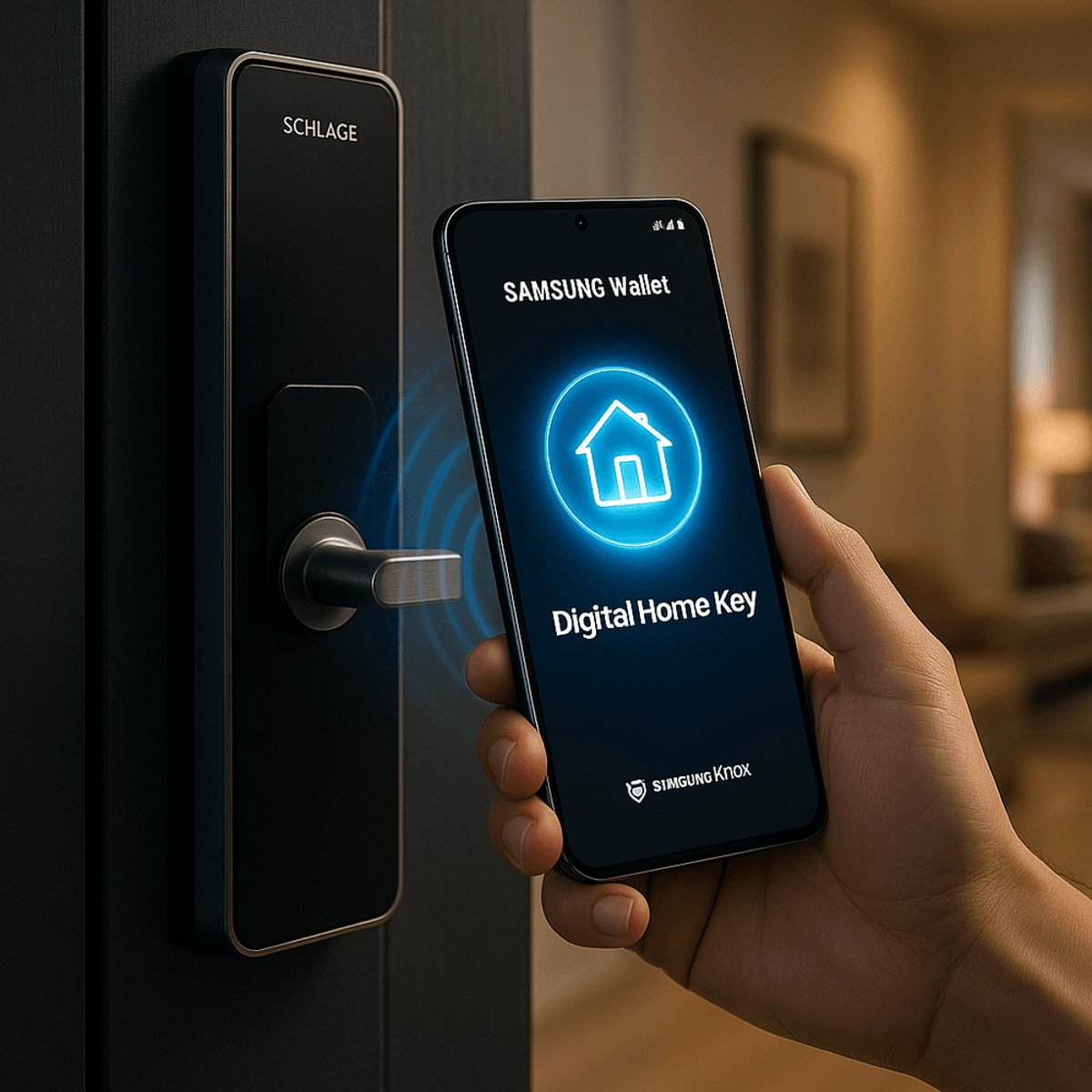
Samsung just turned millions of Galaxy phones into digital house keys. The company launched Digital Home Key inside Samsung Wallet, letting users unlock compatible smart door locks with a tap or hands-free via ultra-wideband. Built on Aliro, the new industry-standard protocol from the Connectivity Standards Alliance, the feature marks Samsung's expansion from digital car keys into the home - and signals a major push to standardize how smartphones interact with smart locks.
Samsung is betting your smartphone can replace your house key. The company launched Digital Home Key this week, a new feature inside Samsung Wallet that lets Galaxy users unlock compatible smart door locks using their phone. The move extends Samsung's digital key ambitions beyond vehicles and into the home, tapping into the Aliro standard to create what could become the default way people interact with smart locks.
The timing isn't coincidental. As the smart home market matures, fragmentation remains a persistent headache. Different lock makers use different protocols, forcing users into walled gardens. Aliro, developed by the Connectivity Standards Alliance (the same group behind Matter), aims to solve that by creating a universal language for digital keys. Samsung is among the first to adopt it at scale.
"As we continue to evolve Samsung Wallet, delivering trusted mobile experiences remains at the core of our innovation," Woncheol Chai, EVP and Head of Digital Wallet Team at Samsung Electronics, said in the company announcement. "Through close collaboration with our partners and in alignment with the Aliro standard, Digital Home Key brings the same level of security and ease Samsung Galaxy users expect from Samsung Wallet to their homes."
Here's how it works: Users set up a compatible smart lock through Samsung SmartThings using Matter, the global smart home standard that's slowly gaining traction. Once configured, a Digital Home Key gets added to Samsung Wallet during the onboarding process. From there, unlocking becomes as simple as tapping the phone against the lock via NFC. On select devices starting in April 2026, ultra-wideband proximity detection enables hands-free unlocking - walk up to your door, and it opens automatically. Remote access through the SmartThings app is also supported.
The lock manufacturer list reveals Samsung's ecosystem strategy. Aqara, Nuki, Schlage, and Xthings are confirmed partners, each planning staggered rollouts through 2026. Availability varies by region and model, but the partnerships signal broad industry buy-in for Aliro. If the standard gains momentum, it could pressure Apple, Google, and other platform holders to follow suit or risk falling behind in smart home interoperability.
Security is central to the pitch. Digital Home Keys are stored locally on the device and protected by Samsung Knox, the company's security platform that's earned government and enterprise certifications worldwide. The implementation targets EAL6+ grade certification, a rigorous standard that tests for side-channel attacks and advanced threat vectors. Translation: even if someone steals your phone, they shouldn't be able to access your home without your biometric or PIN.
Lost device scenarios get special attention. Users can remotely manage or revoke Digital Home Keys through Samsung Find, the company's device tracking service. Biometric or PIN authentication is required within Samsung Wallet before anyone can use a stored key, adding another layer of protection. It's the kind of granular control that enterprises demand, now packaged for consumer smart homes.
The launch fits into Samsung's broader wallet strategy. Samsung Wallet already stores payment cards, IDs, boarding passes, and digital car keys. Adding home access creates a centralized hub for what Samsung calls "essential items" - the daily carry list, digitized. The company isn't alone in this vision. Apple Wallet supports hotel keys and select smart locks, while Google Wallet is testing similar integrations. The race is on to become the default digital keychain.
But execution matters. Digital Home Key's success depends on lock manufacturer adoption, regional rollout speed, and whether the Aliro standard actually delivers on its interoperability promise. Early Matter launches stumbled due to device compatibility issues and slow certification processes. Aliro faces similar risks, especially as it scales across Android, iOS, and competing ecosystems.
For now, Samsung's moving first. The March 2026 rollout begins in select regions, expanding as partner locks hit the market. NFC support launches immediately on compatible Galaxy devices, with UWB hands-free unlocking following in April 2026. Regional availability and device compatibility details are still trickling out, but the infrastructure is live.
The smart lock market is projected to grow substantially over the next few years as homeowners upgrade aging hardware and new construction increasingly includes connected locks by default. If Samsung can establish Digital Home Key as the standard during this transition, it gains a significant advantage in the broader smart home race - and one more reason for users to stay inside the Galaxy ecosystem.
Samsung's Digital Home Key launch represents more than a new wallet feature - it's a play for smart home platform dominance using open standards. By embracing Aliro early and partnering with major lock manufacturers, Samsung positions Galaxy devices as universal keys for the connected home. The real test comes as users adopt the technology and competing platforms respond. If Aliro delivers on interoperability and Samsung maintains its security reputation, Digital Home Key could become as ubiquitous as tap-to-pay. If not, it risks becoming another fragmented smart home protocol in an already crowded field. Either way, the race to digitize your house keys just accelerated.