Samsung just redefined what accessible technology looks like. The company's "Samsung Inclusive Essentials" design philosophy won a Gold Award at the 2025 International Design Excellence Awards, proving that inclusive design isn't just about adding features - it's about rethinking how everyone interacts with everyday appliances.
The breakthrough came from a simple observation: modern appliances were getting harder to use, not easier. While Samsung pushed toward sleeker digital displays and touch-sensitive doors, they inadvertently created barriers for older adults and people with visual impairments.
"The latest appliance design has been moving toward simplification - doors that open with a touch instead of a handle and digital displays instead of physical buttons," Dahwe Park from Samsung's FX Design Group told Samsung Newsroom. "For older adults and those with visual impairments, these changes have made appliances harder to use."
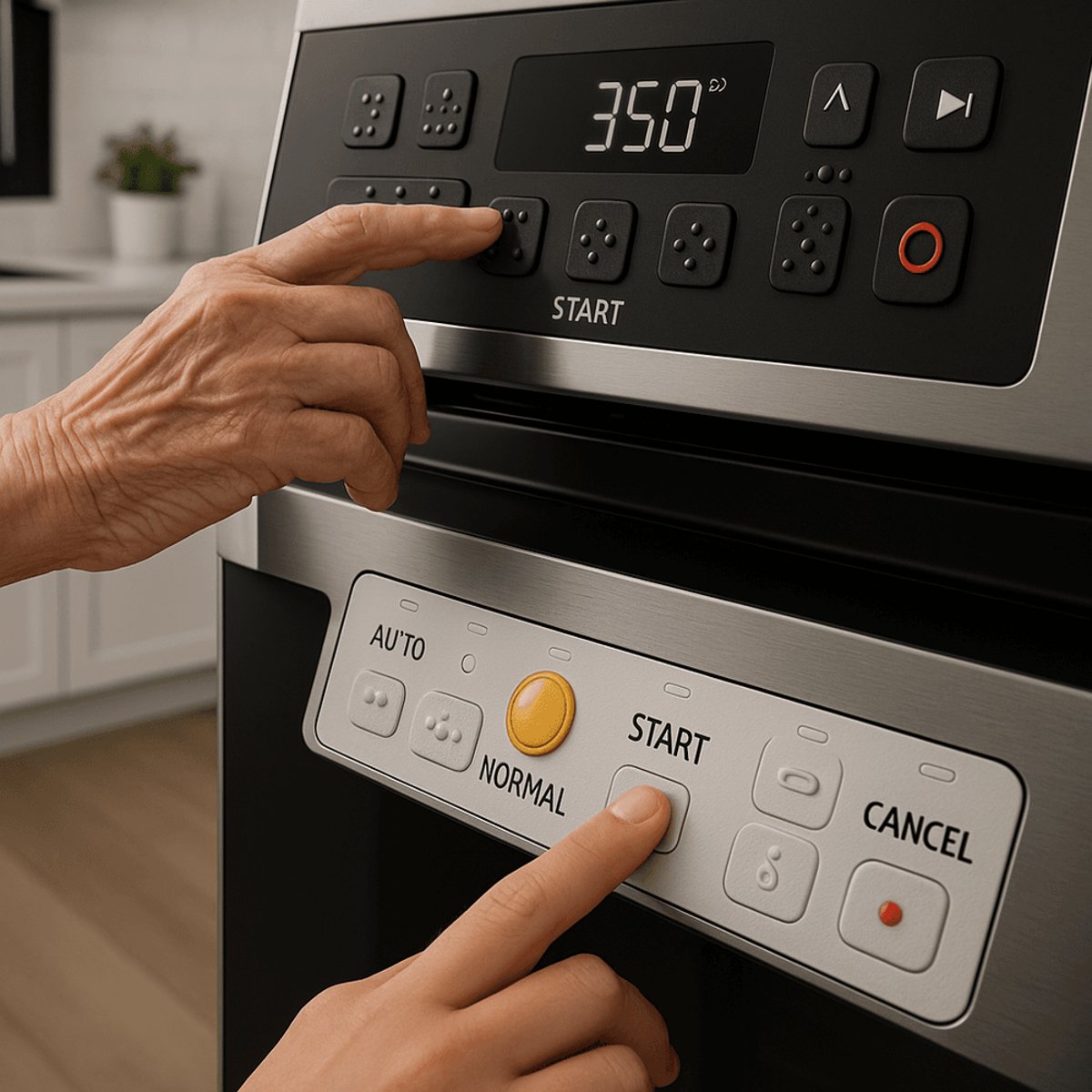
The team's solution wasn't to bolt on accessibility features after the fact. Instead, they rebuilt appliance interfaces from the ground up with what they call "Samsung Inclusive Essentials" - a design philosophy that standardizes button shapes, unifies visual cues, and incorporates multiple sensory feedback systems.
The devil was in the details that everyone else ignored. Take something as basic as the "I" symbol - Samsung discovered they were using the same marking inconsistently across products, sometimes indicating a push button and other times a pull action. "This made it difficult for users with visual impairments to operate appliances on their own," explained Hyunbin Shin from Samsung's Design Innovation Group.
Their fix involved standardizing shapes to match functions and replacing flat printed icons with embossed, outlined buttons that can be identified by touch. Color-coding replaced tiny text on detergent containers. High-contrast visual cues made controls instantly recognizable.
The real validation came during user testing at a local welfare center for people with visual impairments. One participant who had lost his sight later in life shared a moment that resonated with Samsung's entire team: "When he traced the embossed buttons with his fingers, he said, 'It may seem like a small detail, but it makes me feel respected and considered. Now I feel that I can use appliances on my own.'" Shin recalled.
But here's what makes Samsung Inclusive Essentials different from typical accessibility initiatives: it helps everyone, not just people with disabilities. "High-contrast colors help people with low vision, but they also allow other users to recognize controls more quickly," Park noted. The design philosophy addresses what Shin calls a broader reality - "about one in every 210 people in South Korea is affected" by visual impairments, plus many others struggle with decreased vision from eye disease or aging.
The approach eliminates what users actually don't want: separate accessibility devices. "User testing has shown that people with visual impairments prefer not to depend on accessories like Braille stickers or add-ons but would rather use the appliance in its original form like everyone else," Park explained.
Samsung's vision extends beyond current appliances. Park envisions washing machines that turn on by touching anywhere on the display, dishwashers that open without hunting for hidden sensors, and robot vacuums with simplified maintenance through direct water supply systems.
The 2025 IDEA Gold Award validates Samsung's bet that inclusive design isn't a niche market - it's the future of how technology should work for everyone. As Shin put it: "Samsung Inclusive Essentials goes beyond home appliances simply 'usable by everyone' - it is about enabling more dignified and autonomous lives."
Samsung's Gold Award win signals a broader shift in how tech companies approach accessibility - not as an afterthought, but as core design principle that benefits everyone. With one in 210 South Koreans affected by visual impairments and aging populations worldwide, Samsung Inclusive Essentials represents both smart business and social responsibility. The real test will be how quickly these design principles move from award-winning concept to actual products hitting store shelves.