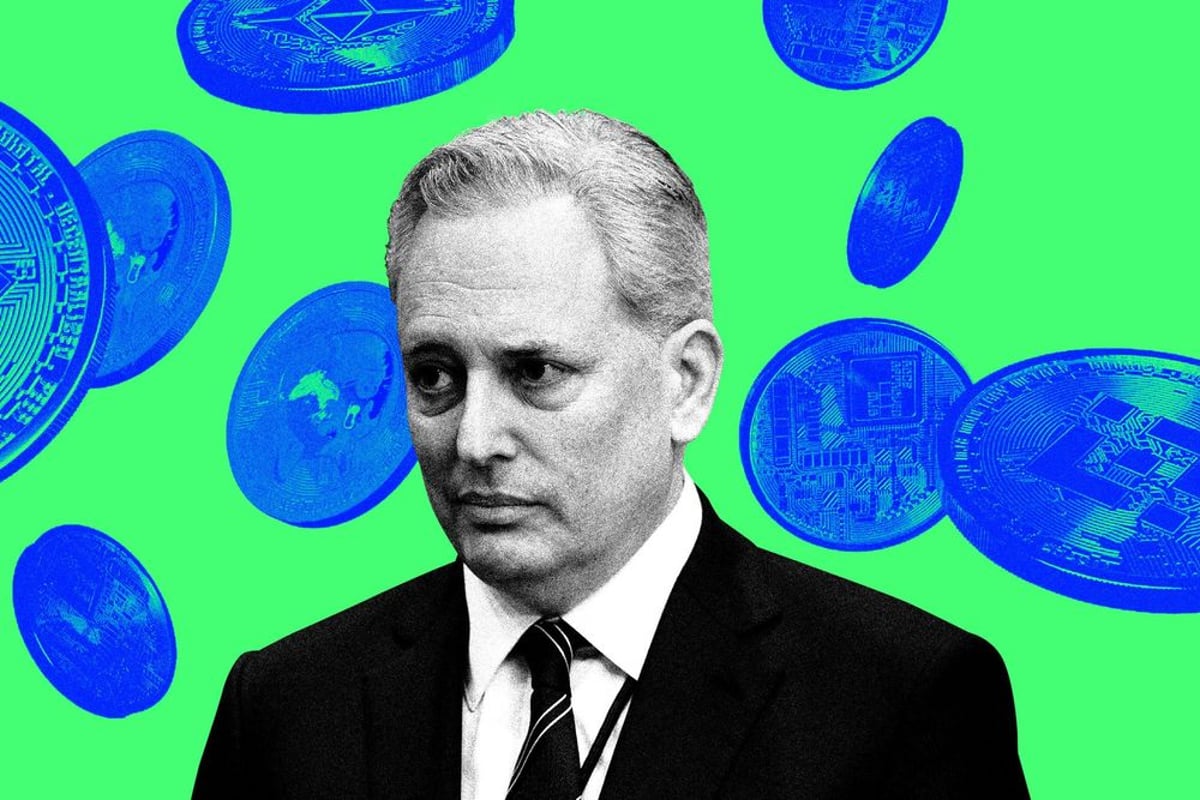
Silicon Valley's most powerful players are closing ranks around David Sacks after a bombshell New York Times investigation exposed hundreds of conflicts of interest between his White House role as AI and crypto czar and his undisclosed investments. The coordinated defense from tech titans like Sam Altman only amplifies questions about how venture capitalists have captured Trump's tech policy agenda.
The tech establishment just threw its weight behind one of its own, and the timing couldn't be more telling. Hours after The New York Times published a devastating investigation into David Sacks' conflicts of interest as Trump's AI and crypto czar, Silicon Valley's A-list started tweeting their support. OpenAI CEO Sam Altman led the charge, followed by a parade of venture capitalists and AI executives defending the man who's become their most valuable asset in Washington.
The coordinated response reveals just how much the industry has riding on Sacks' position. According to Ryan Mac's reporting in the Times, the venture capitalist holds "hundreds of stakes" in AI and crypto companies while simultaneously crafting policies that directly benefit those same sectors. It's a web of conflicts that would typically trigger ethics investigations, but in Trump's White House, it's become Silicon Valley's secret weapon.
"You're seeing what happens when tech realizes that something is influenceable," Mac told The Verge's Tina Nguyen in an interview following the story's publication. That influence has already paid dividends. Sacks has successfully killed state-level AI regulation attempts, pushed through crypto-friendly legislation like the GENIUS Act, and helped craft an AI executive order that reads like a Silicon Valley wish list.
The industry's defensive posture isn't just about protecting Sacks - it's about protecting a pipeline of influence that took years to build. Unlike tech's previous political pariahs like Peter Thiel, who was ostracized for supporting Trump in 2016, Sacks has managed to maintain his standing in both Silicon Valley and MAGA circles. His podcast "All In" gives him cultural credibility, while his fundraising prowess - including a massive Trump event at his San Francisco home - bought him political access.
But the arrangement isn't without risks. Steve Bannon and other MAGA loyalists have repeatedly tried to purge tech billionaires from Trump's inner circle, successfully ousting figures like Jared Isaacman over past Democratic donations. Sacks survived similar scrutiny despite supporting Hillary Clinton in 2016 and initially backing Ron DeSantis in 2024's Republican primary.
The key difference? Timing and strategy. When Elon Musk fell from Trump's favor earlier this year, it was partly due to a coordinated effort by MAGA operatives who compiled opposition research on his team's loyalty. Sacks, by contrast, has managed to fly under that radar while accumulating unprecedented influence over AI policy.
His response to the Times investigation offers a masterclass in Silicon Valley crisis management. Rather than disputing the facts - which Mac notes no one has been able to do - Sacks hired a defamation firm to make legally questionable demands that the Times "abandon" and "reconsider" the story. The threats generated additional coverage while allowing Sacks to play victim to his MAGA-curious audience on X.
The strategy worked exactly as intended. "I don't think the same amount of people would have read or engaged with the story if he hadn't brought attention to it," Mac observed. "It's kind of a classic Streisand effect." Every supportive tweet from a tech CEO, every defiant post from Sacks himself, draws more eyeballs to a story that documents precisely what critics fear: the complete capture of federal AI policy by private interests.
The broader implications extend far beyond one venture capitalist's ethics problems. As Mac explained, tech companies felt "shut out by the Biden administration" and have found in Trumpism an alliance that delivers wins at unprecedented speed. The traditional Washington approach of gradual persuasion has been replaced by Silicon Valley's "move fast and break things" mentality, applied to federal legislation.
This represents a fundamental shift in how tech engages with government. Previous generations of Silicon Valley leaders preferred to avoid Washington entirely, focusing on disrupting industries rather than lobbying lawmakers. The current cohort has learned that regulatory capture is more efficient than regulatory evasion.
The Silicon Valley defense of David Sacks reveals an industry that's found its political strategy: when you can't beat the system, buy yourself a seat at the table. Whether this approach survives the inevitable backlash from MAGA purists remains to be seen, but for now, venture capital has successfully purchased the most valuable commodity in Washington - the ear of the president on the technologies that will define the next decade.