India just dropped a bombshell that could reshape how OpenAI and Google operate in one of their fastest-growing markets. The country's Department for Promotion of Industry and Internal Trade has proposed a mandatory royalty system for AI companies training on copyrighted content, giving major AI firms just 30 days to respond to what could become one of the world's most interventionist approaches to AI regulation.
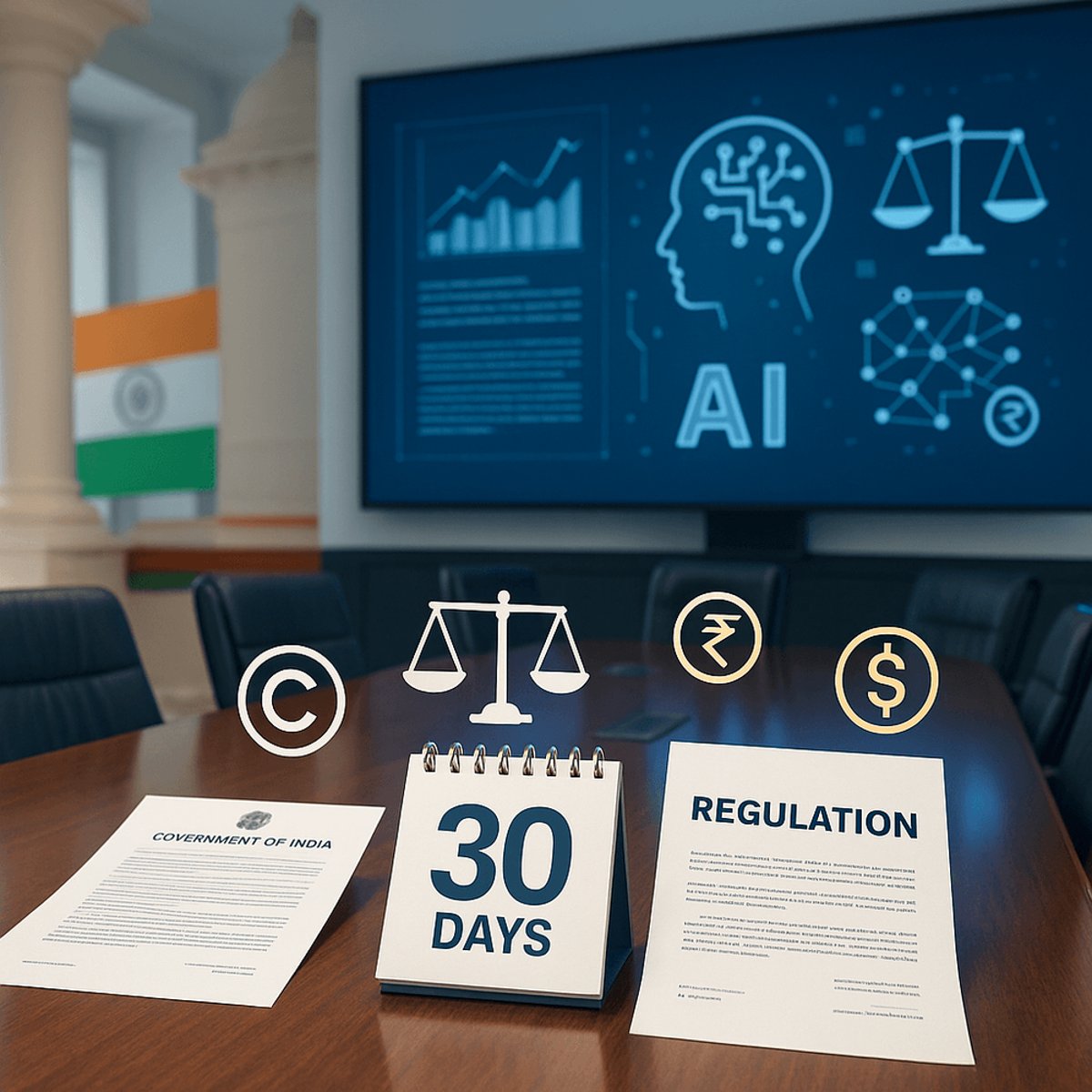
India's government isn't waiting for the global copyright debate to sort itself out. On Tuesday, the country's Department for Promotion of Industry and Internal Trade released a framework that would fundamentally change how AI companies access training data - and it's giving OpenAI, Google, and other major players exactly 30 days to weigh in.
The proposal centers on what India calls a "mandatory blanket license" system. AI companies would get automatic access to all copyrighted works for training, but they'd have to pay royalties to a new collecting body made up of rights-holding organizations. That money would then flow to creators whose work gets scraped into commercial models.
It's a striking departure from how the US and Europe are handling the copyright crisis in AI training. While American courts debate fair use and European regulators focus on transparency requirements, India is proposing to skip the legal uncertainty entirely by making payment mandatory upfront. The eight-member committee behind the proposal, formed in April, argues this approach would "avoid years of legal uncertainty while ensuring creators are compensated from the outset."
The timing isn't coincidental. India has become a critical market for AI companies, with OpenAI CEO Sam Altman calling it the company's second-largest market after the US and noting it "may well become our largest." According to the committee's 125-page submission, AI firms are deriving significant revenue from Indian users while relying on Indian creators' work to train their models - making it logical that "a portion of that value should flow back to those creators."
But the tech industry isn't buying it. Nasscom, which represents technology firms including Google and Microsoft, has filed a formal dissent arguing India should adopt a broad text-and-data-mining exception instead. The group warns that a mandatory licensing regime could slow innovation and suggests rightsholders who object should be allowed to opt out rather than forcing companies to pay for all training data.
The Business Software Alliance, representing giants like Adobe, Amazon Web Services, and Microsoft, pressed even harder against the proposal. The organization warned that "relying solely on direct or statutory licensing for AI training data may be impractical and may not yield the best outcomes," arguing that limiting AI models to smaller sets of licensed material could reduce quality and "increase the risk that outputs simply reflect trends and biases of the limited training data sets."
These concerns reflect broader tensions playing out in courtrooms worldwide. In India itself, news agency ANI is suing OpenAI in Delhi High Court, claiming its articles were used without permission. Similar battles are raging in the US and Europe, where creators allege tech companies have built their models on unlicensed content.
The Indian committee dismissed alternative approaches, arguing that broad text-and-data-mining exceptions or opt-out models either "undermine copyright protections or are impossible to enforce." Instead, it's betting on what it calls a "hybrid model" - automatic access paired with mandatory payment through a central collecting body that would function as a "single window" for negotiations.
What makes India's approach particularly significant is the country's growing leverage in the global AI market. The proposal specifically cites the country's importance to AI companies' bottom lines, noting that OpenAI and others are generating substantial revenue from Indian users. That economic relationship, the committee argues, justifies requiring compensation for Indian creators whose work powers these systems.
The 30-day consultation period that started this week will likely see intense lobbying from both sides. Rights holders and creator organizations will push for the strongest possible protections, while tech companies will argue for exemptions or opt-out mechanisms that preserve their current training practices.
For AI companies, the stakes couldn't be higher. India represents not just a massive current market but potentially their largest future opportunity. If the country moves forward with mandatory royalties, it could set a precedent that other major markets follow - fundamentally changing the economics of AI development globally.
India's move to mandate royalty payments for AI training represents the most direct government intervention yet in the global copyright battle over AI development. With major players like OpenAI and Google facing a 30-day deadline to respond, and India's status as a critical growth market for AI companies, this proposal could reshape how the entire industry approaches training data. Whether other countries follow India's lead or tech companies successfully push for exemptions will likely determine if we're seeing the future of AI regulation or an ambitious experiment that gets watered down in practice.