OpenAI just delivered a stark warning to the White House: America is losing the AI arms race because China is building power infrastructure nearly 10 times faster. The company's 11-page policy brief calls for 100 gigawatts of new energy capacity annually, framing electricity as the new strategic resource that will determine AI supremacy between superpowers.
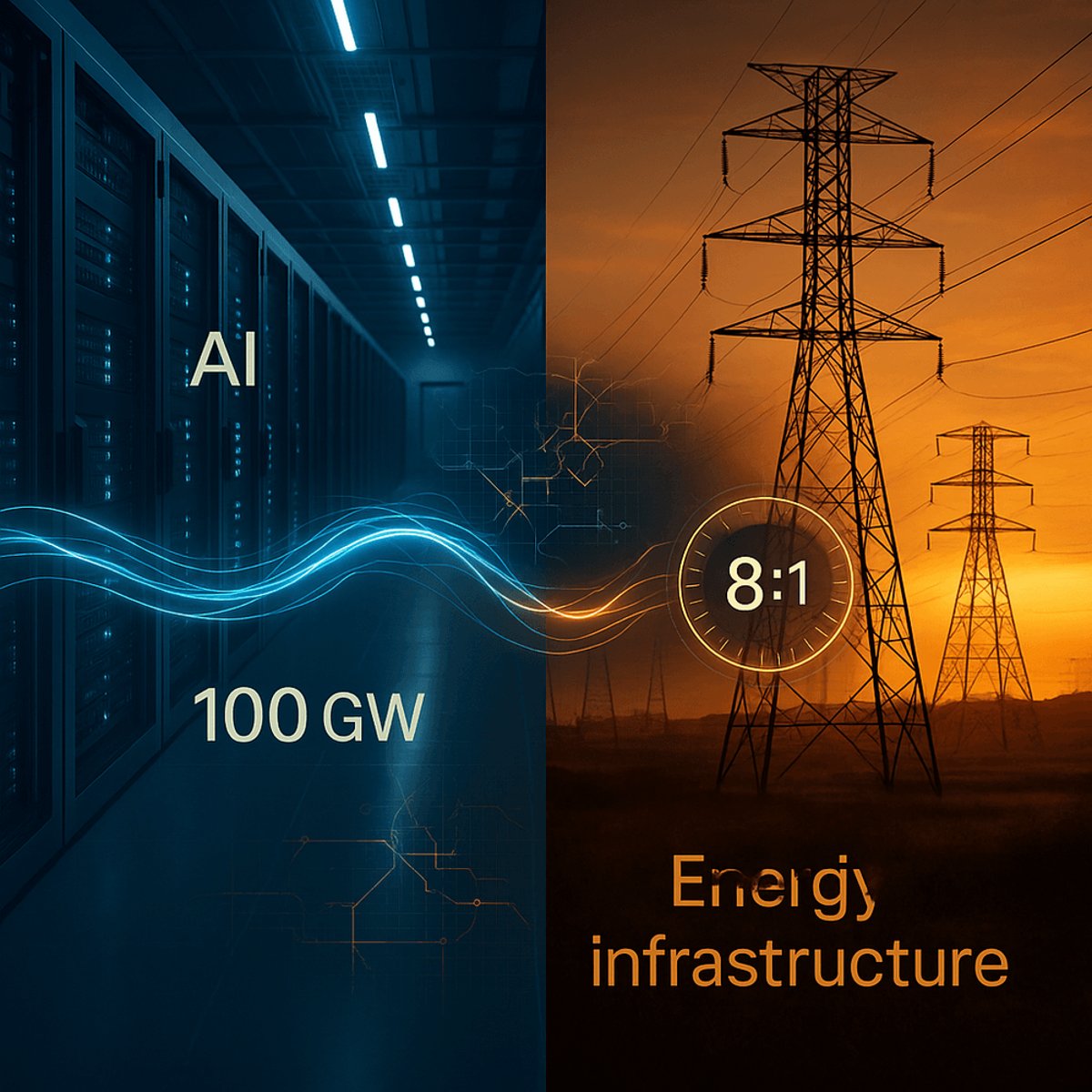
The math is sobering, and OpenAI isn't mincing words about it. While the U.S. added 51 gigawatts of power capacity last year, China built 429 gigawatts - enough to power roughly 343 million American households. That 8-to-1 disparity has the AI frontrunner sounding alarm bells in Washington.
"Electrons are the new oil," OpenAI declared in a blog post that accompanied its formal submission to the White House Office of Science and Technology Policy. The company's message is clear: America's AI dominance hinges on solving an energy infrastructure crisis that most policymakers haven't fully grasped yet.
The timing of this policy push isn't coincidental. OpenAI has been on an infrastructure spending spree, inking deals for sprawling data centers that will demand unprecedented amounts of electricity. The company's recent partnership with Microsoft and other tech giants for data center buildouts represents billions in capital expenditure - all dependent on reliable power supply that America increasingly can't guarantee.
"Electricity is not simply a utility," the company wrote. "It's a strategic asset that is critical to building the AI infrastructure that will secure our leadership on the most consequential technology since electricity itself." That framing transforms what seems like a technical infrastructure issue into a national security imperative.
The 11-page brief reveals the scale of OpenAI's ambition and concern. The company wants America to commit to building 100 gigawatts of new capacity annually - nearly double what the country managed last year. To put that in perspective, 10 gigawatts powers roughly 8 million U.S. households, according to Energy Information Administration data.
But China's energy advantage goes beyond raw numbers. The country's centralized planning system lets it deploy massive infrastructure projects at speeds that leave American utilities scrambling. While U.S. power companies navigate regulatory hurdles and community opposition for years, China can greenlight and build gigawatt-scale facilities in months.
This "electron gap" - OpenAI's term for the growing energy disparity - threatens to undermine America's AI leadership just as the technology reaches an inflection point. The next generation of AI models will require exponentially more computational power, and that means exponentially more electricity.
The competitive stakes couldn't be higher. China has made AI a cornerstone of its technological sovereignty strategy, pouring state resources into both chip manufacturing and the power infrastructure needed to run massive AI training operations. While American companies like OpenAI lead in AI capabilities today, that advantage means nothing if they can't access the electricity needed to train tomorrow's models.
Wall Street is already taking notice of the infrastructure demands. OpenAI's capital expenditure has become a focal point for analysts tracking big tech earnings, with energy costs emerging as a key factor in AI company valuations. The company's Stargate data center project in Texas exemplifies the scale - a facility that will consume more power than many small cities.
The policy brief arrives as America's power grid faces unprecedented strain from multiple sources. Data centers, electric vehicles, and industrial reshoring are all driving electricity demand higher, while aging infrastructure struggles to keep pace. OpenAI's call for 100 gigawatts annually would require a fundamental reimagining of how America builds and deploys energy infrastructure.
For policymakers, the choice is becoming stark: treat electricity as just another commodity, or recognize it as the strategic resource that will determine which country leads the AI revolution. OpenAI's submission suggests the window for that decision is closing fast.
OpenAI's stark warning about America's "electron gap" with China transforms AI competition from a software race into an infrastructure battle. The company's call for 100 gigawatts of annual energy capacity isn't just about powering data centers - it's about maintaining technological sovereignty in an era where electricity determines which nation leads the most important technology since the internet. As AI models demand exponentially more power, America's response to this energy challenge will likely determine whether Silicon Valley or Shenzhen becomes the global AI capital.