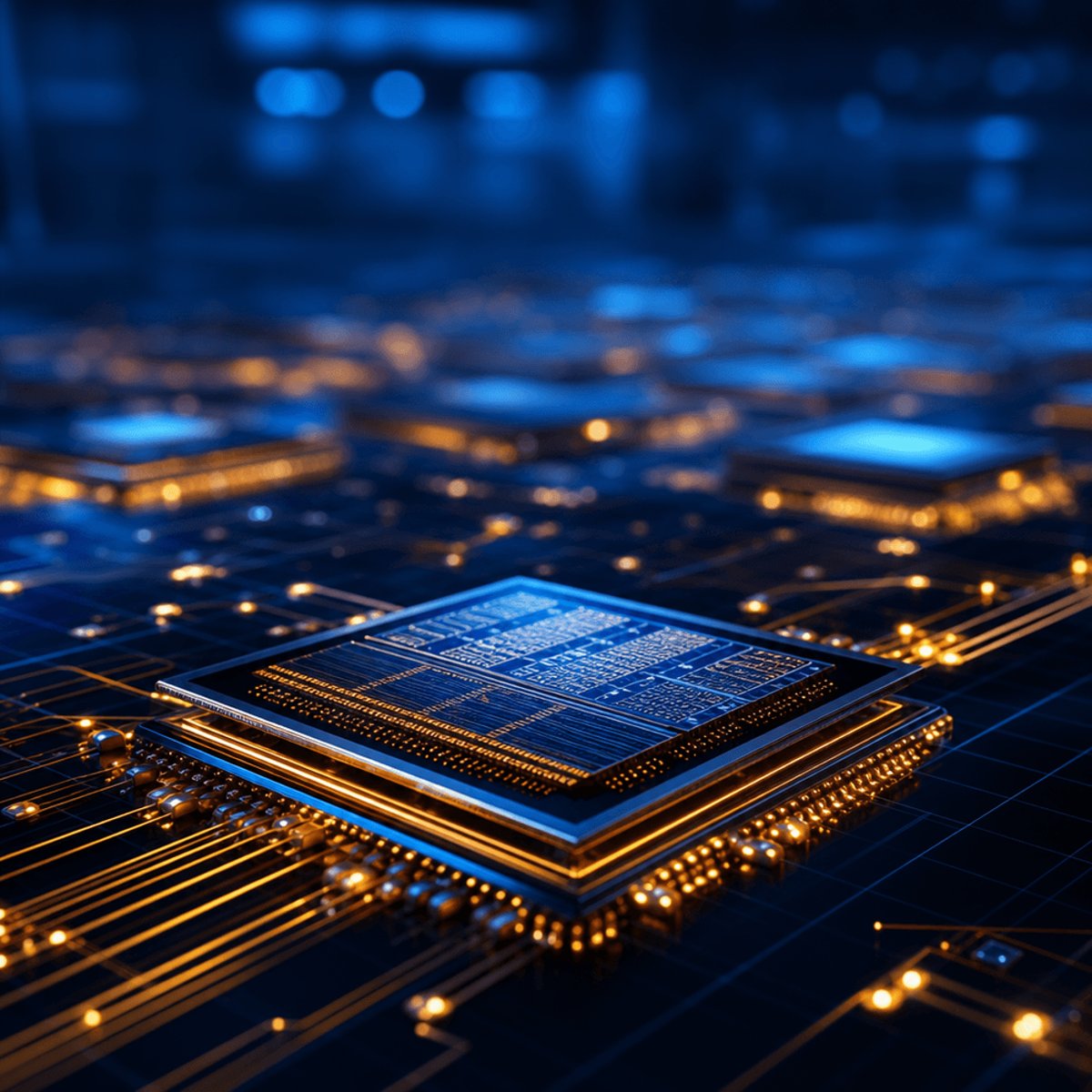
South Korea's SK Hynix is making its Nasdaq debut today after a stunning sevenfold rally in its stock price over the past year, cementing its position as one of the world's most valuable chipmakers. The listing gives U.S. investors direct access to a company that's become indispensable to the AI revolution, supplying the high-bandwidth memory chips that power everything from ChatGPT to autonomous vehicles. With a valuation crossing the trillion-dollar threshold, SK Hynix joins an elite club of semiconductor giants at a moment when memory chips have become the bottleneck for AI development.
SK Hynix is officially trading on the Nasdaq today, capping a remarkable transformation from a struggling memory chipmaker into one of the most sought-after plays in the AI infrastructure boom. The South Korean giant's stock has skyrocketed more than 700% over the past year, according to market data, as investors bet big on the company's dominance in high-bandwidth memory - the specialized chips that have become the unsung heroes of artificial intelligence.
The timing couldn't be more strategic. While Nvidia grabs headlines for its AI processors, SK Hynix has quietly positioned itself as the critical supplier of HBM3 memory chips that sit alongside those GPUs in data centers worldwide. Every major AI training run - whether it's OpenAI training GPT models or Google refining its Gemini systems - depends on the kind of ultra-fast memory that SK Hynix manufactures better than almost anyone else.
"We've been preparing for this moment as U.S. demand for our technology reached unprecedented levels," the company stated in materials accompanying the listing. The move reflects broader recognition that AI infrastructure has become a geopolitical priority, with Washington eager to ensure American access to critical chip supplies that have historically been concentrated in Asia.
The numbers tell the story of an industry in hypergrowth. SK Hynix's HBM revenue reportedly jumped over 400% year-over-year in recent quarters, with production lines running at full capacity and customers like Nvidia, Amazon, and Microsoft scrambling to secure supply. The company's advanced HBM3E chips - capable of moving data at speeds exceeding 1 terabyte per second - have become allocation items, with tech giants placing orders months in advance.
But the Nasdaq listing isn't just about giving U.S. investors a new ticker to trade. It represents SK Hynix's bet that being closer to its largest customers will help it navigate an increasingly complex semiconductor landscape. The company competes directly with Samsung in the HBM market and faces emerging competition from Micron, which is ramping its own high-bandwidth memory production with U.S. government support.
Industry analysts see the listing as validation of how critical memory has become to AI economics. While cutting-edge logic chips from Nvidia or AMD grab attention, the reality is that AI models are increasingly memory-bound - meaning the speed and capacity of HBM often determines how fast a system can train or run inference. SK Hynix's technological lead in this area, built through years of R&D investment, has translated directly into pricing power and margin expansion.
The company's valuation crossing the trillion-dollar mark puts it in rarefied company alongside semiconductor giants like Nvidia and TSMC. That's remarkable for a business that was losing money just a few years ago during the memory chip downturn. The turnaround mirrors the broader shift in how markets value semiconductor companies - not just as cyclical manufacturers but as strategic infrastructure providers for the AI era.
For U.S. institutional investors, the Nasdaq listing solves a practical problem. While SK Hynix shares traded on the Korean Stock Exchange, time zone differences and regulatory complexities made it difficult for American funds to build significant positions. Direct U.S. trading access is expected to bring substantial institutional capital into the stock, potentially driving further appreciation even after its dramatic run-up.
The broader context is an AI hardware market that shows no signs of slowing. Microsoft and Google are both reportedly planning massive data center expansions through 2027, while Meta has committed to spending over $60 billion on AI infrastructure. All of that translates to demand for the kind of specialized memory chips that SK Hynix produces.
There are risks, of course. Memory chip markets have historically been brutally cyclical, and any slowdown in AI investment could hit HBM demand hard. Competition is intensifying as Samsung pours resources into catching up technologically, and Micron benefits from U.S. manufacturing incentives that SK Hynix can't access. The company also faces questions about how it'll maintain its technological edge as customers like Amazon explore designing their own memory solutions.
But for now, SK Hynix is riding a wave that seems to have years left to run. The company's roadmap includes even more advanced HBM4 chips coming next year, with bandwidth improvements that could enable entirely new categories of AI applications. As long as the AI boom continues, the chipmaker that supplies the memory to power it looks positioned to keep growing.
What happens next will depend partly on how U.S. investors embrace this new opportunity. Early trading will signal whether the 700% rally has room to run or if profit-taking dominates. Either way, SK Hynix's Nasdaq debut marks a milestone in the globalization of AI infrastructure investment - and a recognition that the picks and shovels of the AI gold rush include memory chips just as much as flashy GPUs.
SK Hynix's Nasdaq debut represents more than just another stock listing - it's a signal that AI infrastructure has become the defining investment theme of this decade. The company's journey from cyclical chipmaker to trillion-dollar AI enabler mirrors the broader transformation of how we think about semiconductors in the age of large language models and machine learning. For U.S. investors who've watched Nvidia soar while feeling locked out of other AI infrastructure plays, SK Hynix offers direct exposure to the memory bottleneck that's shaping how fast AI can advance. Whether the stock can sustain its momentum after a 700% run is the question traders will answer in coming weeks, but the strategic importance of what SK Hynix manufactures isn't in doubt.