SoftBank is making a jaw-dropping $33 billion bet on American energy infrastructure, announcing plans to build one of the largest natural gas power plants in U.S. history. The move signals how seriously tech investors are taking the AI data center power crunch - and how they're willing to bypass traditional energy companies to solve it themselves. If completed, the project would rank among the most expensive power generation facilities ever built, dwarfing typical gas plant budgets by nearly 10x.
SoftBank just made the energy industry sit up straight. The Japanese conglomerate's $33 billion commitment to build a massive natural gas power plant in the United States isn't just another infrastructure deal - it's a signal that tech's energy crisis has reached a tipping point where investors are willing to become power companies themselves.
The numbers are staggering. Typical large-scale natural gas power plants cost between $1 billion and $4 billion to construct. SoftBank's proposed facility would cost nearly ten times that amount, suggesting either unprecedented scale, cutting-edge technology, or both. The company hasn't disclosed the plant's exact capacity or location, but the price tag alone places it in rarefied air among global energy infrastructure projects.
This move comes as AI companies face a brutal reality: their data centers are running headlong into power constraints. Microsoft, Google, and Amazon have all acknowledged that energy availability is becoming a primary bottleneck for AI expansion. Training large language models and running inference at scale requires massive amounts of electricity - far more than existing grid infrastructure was designed to handle.
SoftBank's decision to build generation capacity rather than simply signing power purchase agreements marks a strategic shift. Traditional approaches have tech companies negotiating with utilities for guaranteed power supplies. But with data center energy demand projected to triple by 2030 according to industry analysts, waiting for utility companies to build new capacity isn't fast enough for companies racing to dominate AI.
The natural gas choice is telling. While renewable energy has become the preferred option for tech companies' climate commitments, gas offers something solar and wind can't: reliable baseload power that runs 24/7 regardless of weather. Data centers can't afford downtime when cloud services and AI inference need to respond instantly. Battery storage technology isn't yet mature enough to bridge multi-day renewable energy gaps at the scale these facilities require.
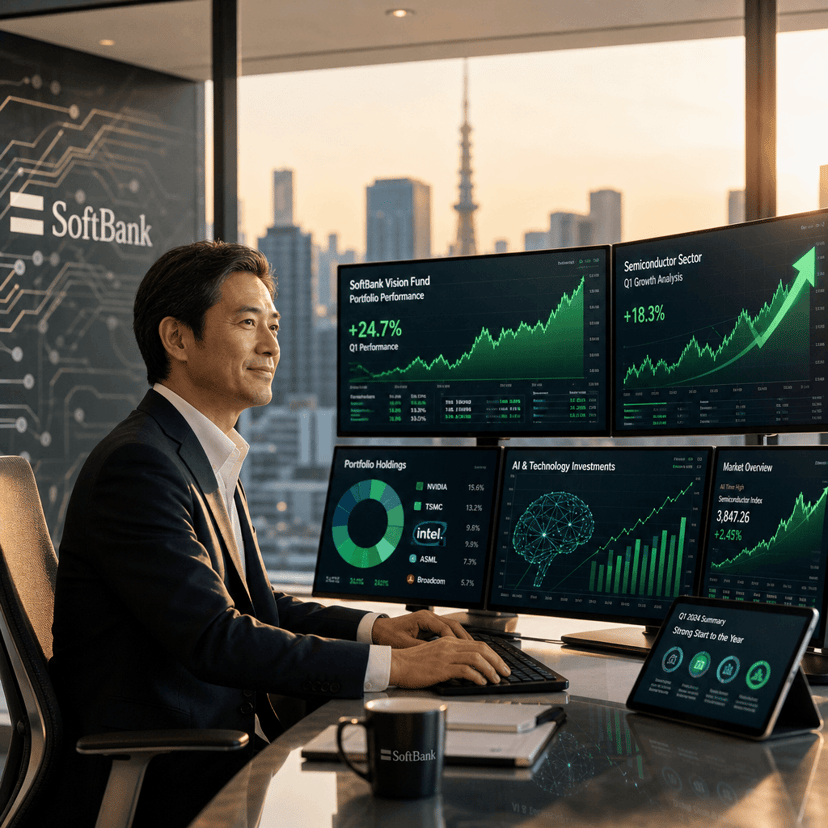
SoftBank's energy play also reflects founder Masayoshi Son's well-documented obsession with artificial intelligence. He's called AI the most important revolution in human history and has been repositioning SoftBank's portfolio accordingly. The company's $100 billion commitment to U.S. AI infrastructure, announced earlier this year, now has a power generation component that could give SoftBank-backed AI companies a competitive advantage in the energy-constrained market.
The project faces significant hurdles. Environmental permits for new gas plants have become increasingly difficult to secure as states pursue decarbonization goals. Local opposition to large industrial facilities can delay projects for years. And the sheer construction timeline - likely 4-6 years for a project of this magnitude - means the plant won't solve today's immediate power shortages.
But SoftBank isn't alone in recognizing the opportunity. Amazon recently invested in small modular nuclear reactor technology, while Microsoft signed a deal to restart a unit at Three Mile Island. The tech industry is essentially rebuilding America's power generation capacity to fuel AI's exponential growth, with or without traditional energy companies.
The $33 billion question is whether this represents smart infrastructure investment or another SoftBank gamble. The company's track record includes both visionary bets like early investments in Alibaba and spectacular failures like WeWork. Energy infrastructure traditionally offers stable but modest returns - not exactly SoftBank's typical high-risk, high-reward playbook.
What's clear is that the AI power crisis is forcing unprecedented moves from tech investors. When a company known for backing software startups is willing to spend $33 billion on physical power generation infrastructure, it signals that energy has become the new limiting factor in tech's growth trajectory. The cloud runs on electricity, and right now there's not nearly enough of it.
SoftBank's $33 billion power plant gambit reveals just how seriously the tech industry is taking the AI energy crisis. This isn't a hedge or a diversification play - it's a recognition that controlling energy generation may be as strategically important as owning chip fabs or cloud infrastructure. Whether other tech giants follow SoftBank's lead or pursue alternative solutions like nuclear and renewables will define not just who wins the AI race, but how America's entire energy landscape gets rebuilt for the next computing era. The message is unmistakable: in the AI age, power isn't just about algorithms and chips anymore. It's about actual electrical power, and companies will spend whatever it takes to secure it.