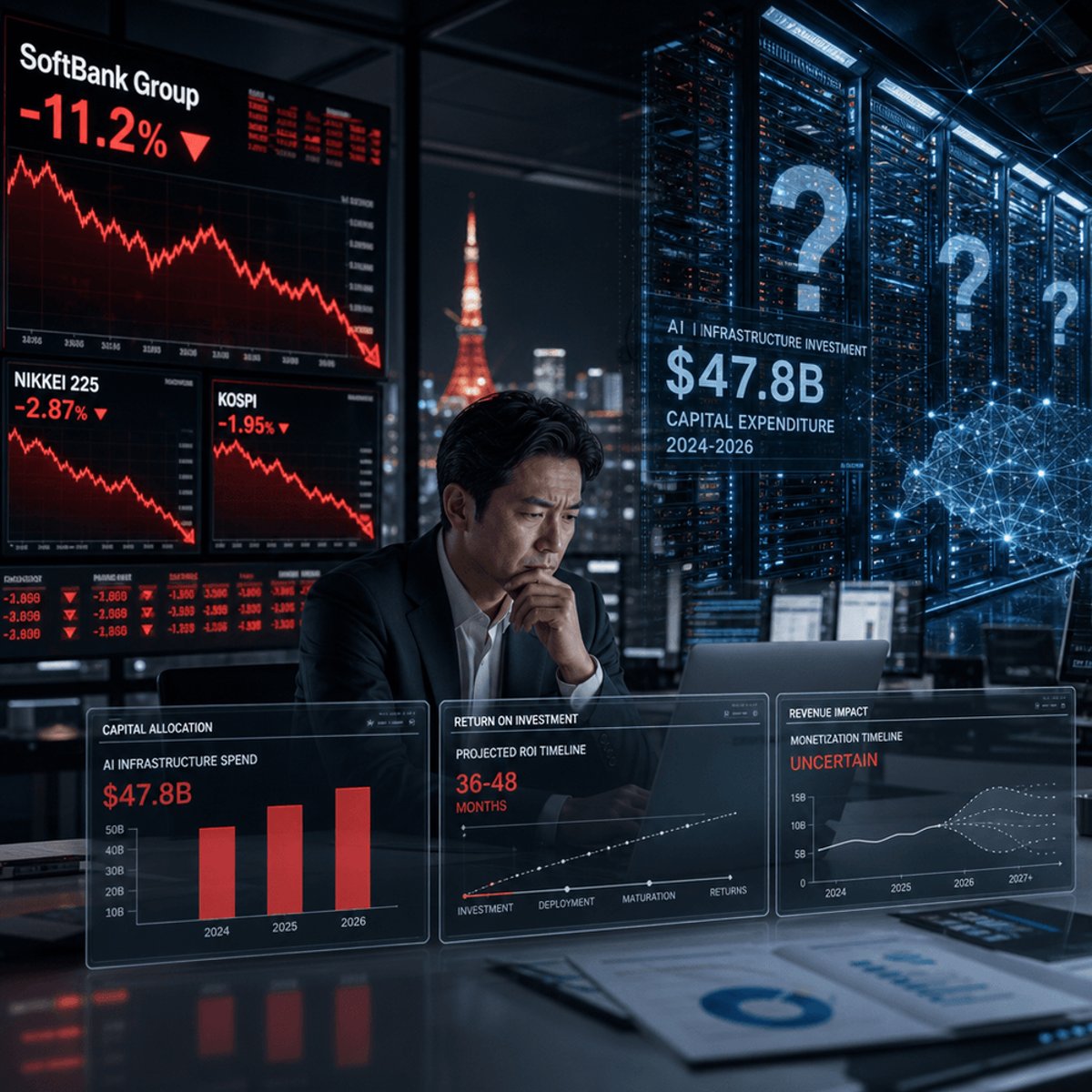
SoftBank Group just suffered its worst single-day plunge in months, dropping 11% and dragging Asian tech markets into a brutal selloff. The catalyst? Growing anxiety over how much companies are actually spending to build out AI infrastructure - and whether the returns will ever justify the massive capital outlays. It's a reality check that's now rippling across global markets, with investors suddenly questioning the economics behind the AI boom that's driven tech valuations to record highs.
SoftBank Group got hammered Friday, sinking 11% in Tokyo trading as a wave of selling crashed through Asian technology markets. The culprit isn't a single earnings miss or regulatory crackdown - it's something potentially more troubling: investors are finally doing the math on AI infrastructure costs and they don't like what they're seeing.
The selloff tracks overnight declines in U.S. tech markets, where concerns about the economic viability of massive AI buildouts have been simmering for weeks. Companies across the sector are pouring tens of billions into data centers, specialized chips, and computing infrastructure, all betting that AI will eventually generate revenues to match. But as those capital expenditure numbers keep climbing, the timeline for returns keeps getting hazier.
SoftBank, with its heavy exposure to AI investments through its Vision Fund and stakes in companies like Arm Holdings - the chip designer whose technology powers much of the AI infrastructure being built - found itself particularly vulnerable. The company's bet on AI has been central to founder Masayoshi Son's strategy, but that concentration now looks risky as sentiment shifts.
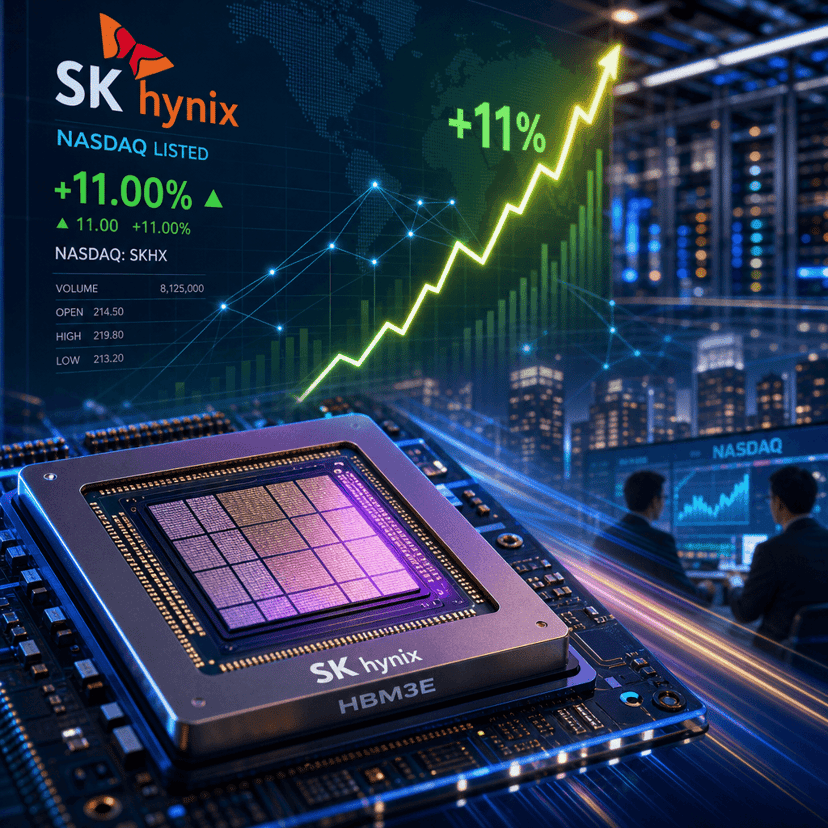
The broader Asian tech complex followed SoftBank lower, with chip manufacturers and cloud infrastructure providers taking hits as the market repriced AI growth expectations. It's not that investors think AI is a bust - it's that they're questioning whether the current spending levels make financial sense, especially as interest rates remain elevated and capital becomes more expensive.
What's striking is how quickly this anxiety spread from Wall Street to Asian markets. The synchronized selloff suggests investors globally are reaching similar conclusions about AI economics at roughly the same time. That kind of coordinated reassessment can accelerate market moves, as we're seeing now.
The infrastructure cost problem is real. Building the computing power to train and run advanced AI models requires enormous capital investments - we're talking hundreds of billions collectively across the industry. Microsoft, Google, Amazon, and Meta have all signaled they're increasing their infrastructure spending, but haven't provided clarity on when those investments will translate to meaningful AI revenue.
For SoftBank specifically, the company's investment approach has always been about placing big bets on transformative technologies. That worked brilliantly with early Alibaba investments but led to spectacular failures with WeWork. Now the question is whether AI infrastructure represents the former or the latter - and today's market action suggests investors are getting nervous.
The selloff also reflects concerns about a potential correction in chip stocks, which have been among the biggest beneficiaries of AI hype. If companies start pulling back on infrastructure spending or extending their buildout timelines, chip demand could soften faster than expected. That's particularly relevant for SoftBank's Arm stake, given how much of Arm's valuation depends on continued growth in AI chip deployment.
What happens next depends largely on what major tech companies say in their upcoming earnings calls. If executives maintain aggressive infrastructure spending guidance and provide concrete examples of AI revenue generation, markets could stabilize. But if the narrative shifts to "we're extending our investment timeline" or "we're taking a more measured approach," expect more volatility.
The irony is that the fundamental AI technology keeps advancing - the models keep getting better, the use cases keep expanding. But there's often a disconnect between technological progress and market timing. Investors who bought into the AI infrastructure story at peak valuations are now confronting the possibility they were too early, or that the payoff timeline is longer than anticipated.
This selloff marks a pivotal moment in the AI investment narrative. Markets are forcing a conversation that's been brewing beneath the surface for months - do the economics of AI infrastructure actually work at the scale companies are building it? For SoftBank and other AI-heavy portfolios, the next few quarters will be crucial. Either companies start demonstrating real revenue traction that justifies the infrastructure spend, or we're looking at a broader repricing across the entire AI sector. The technology isn't going away, but the valuations might need to come back down to earth.