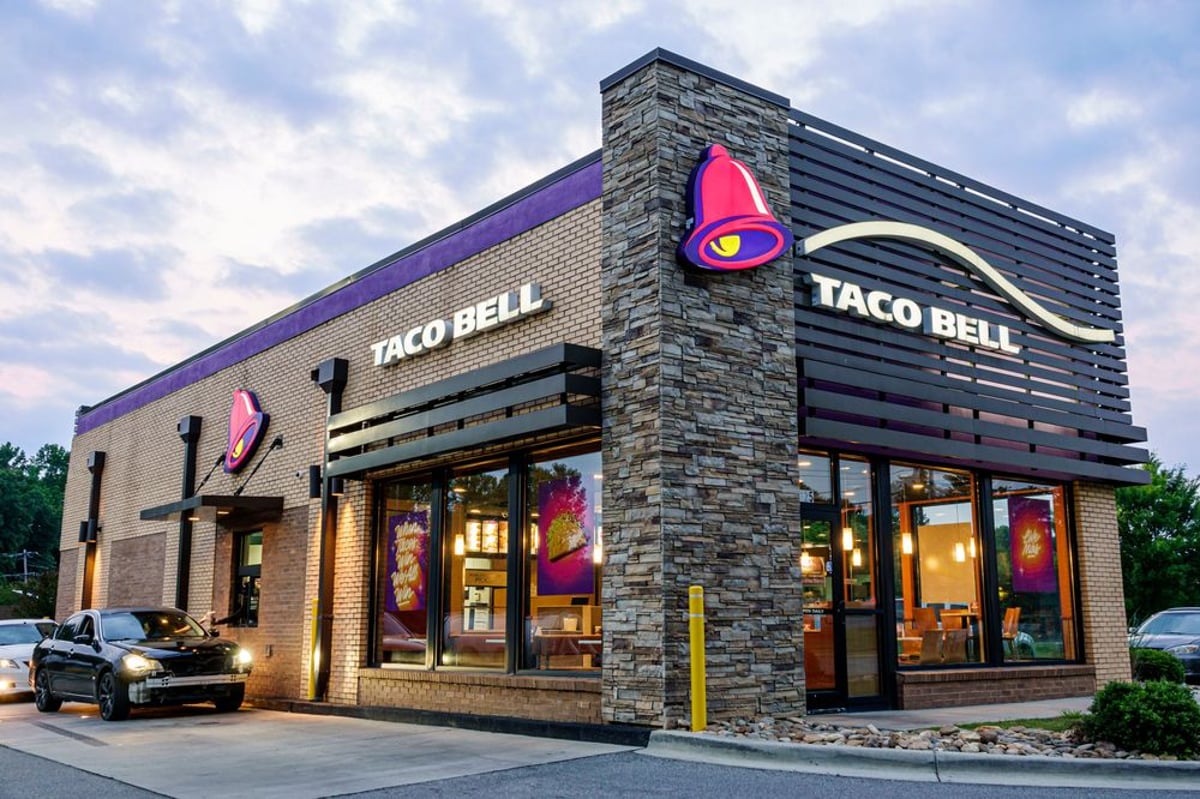
Taco Bell's ambitious plan to automate hundreds of drive-thrus with AI voice assistants is running into a reality check. Chief Digital Officer Dane Mathews admits the company is re-evaluating its deployment strategy after customers turned the technology into viral entertainment, with TikTok videos showing people ordering 18,000 water cups and other impossible requests that break the system.
Taco Bell's drive-thru AI experiment just got a reality check from the internet. The fast-food giant's ambitious plan to automate ordering with voice assistants across hundreds of locations is hitting unexpected turbulence as customers discover the entertainment value of confusing artificial intelligence. Chief Digital and Technology Officer Dane Mathews candidly told The Wall Street Journal that the company is rethinking its deployment strategy after rolling out the technology to over 500 US restaurants.
The admission comes as social media fills with videos of customers deliberately trying to break the AI system. One viral clip shows someone ordering 18,000 water cups, while others document frustrated interactions where the AI mishears orders or gets stuck in conversational loops. These clips have turned Taco Bell's technology showcase into an unintended stress test broadcast to millions.
"We're learning a lot, I'm going to be honest with you," Mathews admitted in the interview. "I think like everybody, sometimes it lets me down, but sometimes it really surprises me." The frank assessment reveals how even sophisticated AI voice systems struggle with the chaotic reality of fast-food service, where background noise, accents, and creative customer behavior create perfect storms for technological failure.
The challenges expose a broader issue facing the fast-food industry's AI adoption wave. While McDonald's has been testing AI voice ordering and competitors like Wendy's and White Castle have launched their own pilots, the technology still struggles with the unpredictable nature of human-AI interaction in high-stress, high-volume environments.
Taco Bell first announced its drive-thru AI plans last year, positioning the technology as a solution to labor shortages and a way to improve order accuracy. The system was designed to handle routine transactions, freeing human employees for more complex tasks. But the viral trolling videos reveal how customers can weaponize the technology's limitations, turning what should be efficiency gains into customer experience nightmares.
Mathews indicated that the company's learning curve includes recognizing when and where AI makes sense. "Using AI exclusively in the drive-thru at very busy restaurants might not be such a great idea after all," he told the Journal. This suggests Taco Bell may shift toward a hybrid model, deploying AI selectively based on location traffic patterns and complexity rather than as a blanket replacement for human workers.
The social media backlash also highlights a cultural dimension that restaurant chains didn't fully anticipate. For Gen Z customers, AI systems aren't just tools—they're entertainment. The same generation that made "OK Boomer" viral has discovered that AI voice assistants make excellent targets for creative mischief, turning routine transactions into content creation opportunities.
Industry analysts suggest this growing pains phase was inevitable. Voice AI technology has advanced rapidly, but the controlled environments where these systems excel—like smart speakers at home—differ dramatically from busy drive-thrus with competing audio sources, stressed customers, and time pressure. The gap between laboratory performance and real-world chaos is proving larger than anticipated.
For now, Taco Bell continues pushing forward with voice AI technology while refining its approach. The company's willingness to publicly acknowledge the challenges, rather than spinning them as minor hiccups, signals a more mature approach to AI deployment. Mathews' honesty about the technology's limitations may actually build more customer trust than corporate happy talk about seamless automation.
The fast-food AI race isn't slowing down despite these setbacks. Labor costs continue rising, and the potential efficiency gains from successful automation remain compelling. But Taco Bell's experience suggests that winning strategies will require more nuanced deployment, better failure recovery systems, and perhaps most importantly, designing for the reality that some customers will always try to break your robots.
Taco Bell's AI drive-thru stumble offers valuable lessons for the broader automation wave hitting consumer services. While the technology will inevitably improve, the company's experience shows that successful AI deployment requires understanding not just what the technology can do, but how real customers—including trolls—will actually use it. The fast-food giant's candid acknowledgment of these challenges may ultimately position it better for long-term success than competitors still overselling AI's current capabilities.