Trump's anti-EV agenda is backfiring on American car buyers. The administration's regulatory whiplash - repeatedly changing efficiency standards every few years - is forcing automakers to spend billions redesigning vehicles and pushing those costs onto consumers. Average new car prices just topped $50,000 for the first time, while households face an extra $310 billion in gasoline costs by 2050 if current deregulation continues.
The $1.6 trillion US auto industry is caught in a regulatory storm that's making cars more expensive for everyone. Tesla stock may have surged on Trump's victory, but the broader automotive sector is grappling with policy whiplash that's driving up costs across the board.
Trump's EPA began dismantling the legal foundation for vehicle emissions standards in July, reversing course on regulations that automakers had spent years and billions preparing to meet. The move removes EPA authority to require cleaner vehicles, hampering efforts to reduce transportation's role as one of America's biggest carbon emission sources.
"Particularly in the last six months, I think 'chaos' is a good word because they're getting hit from every angle," David Cooke, senior associate director at Ohio State's Center for Automotive Research, told reporters about the industry's predicament.
The Alliance for Automotive Innovation, representing Ford, Toyota, and Volkswagen, sent a blunt letter to EPA in September declaring that current pollution rules stretching to 2027 "are simply not achievable" given the administration's policy reversals and EV incentive cuts.
But here's the twist: Transportation Secretary Sean Duffy claimed these moves would "lower vehicle costs and ensure Americans can purchase the cars they want." The reality tells a different story.
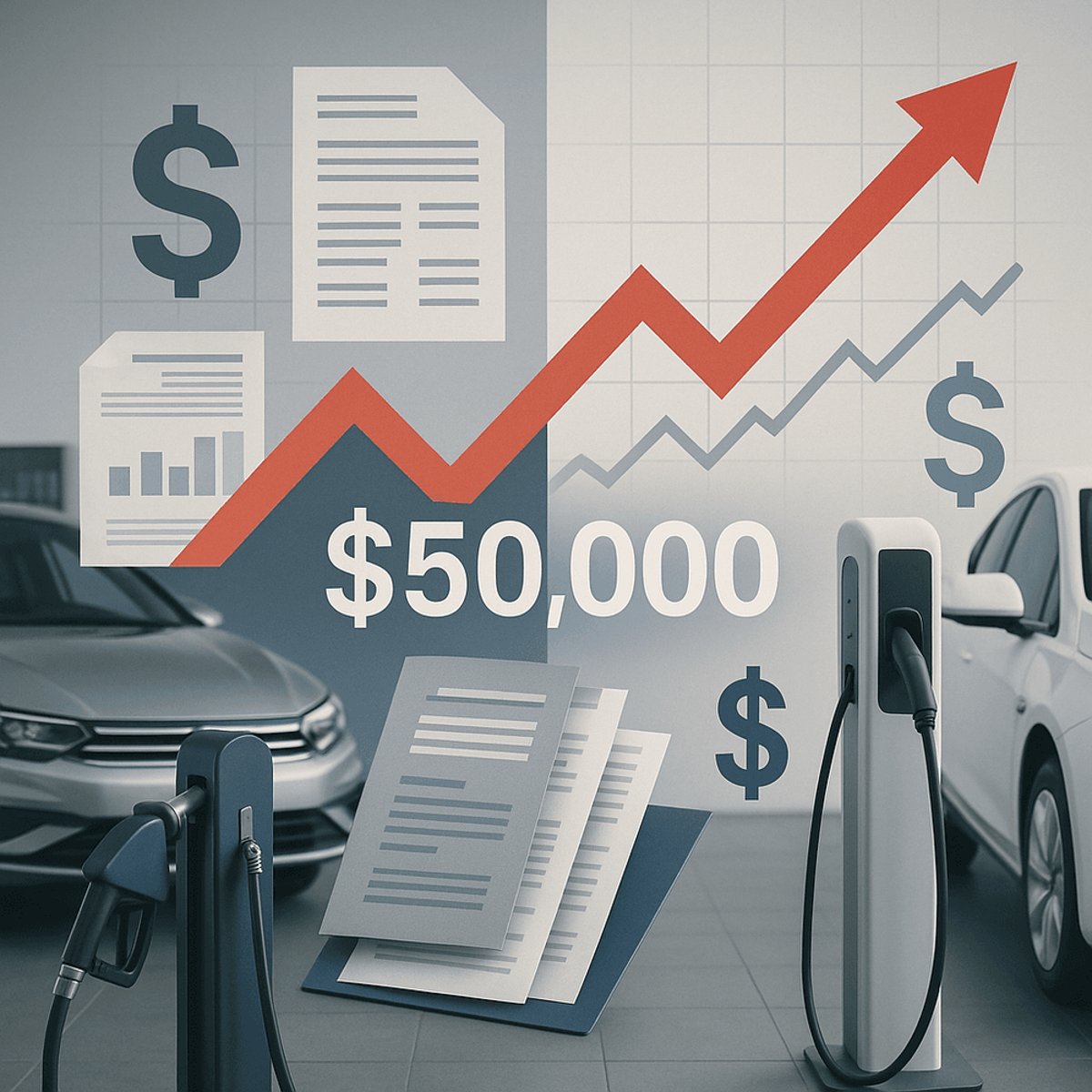
Kelley Blue Book data shows average new car sticker prices topped $50,000 for the first time in September. Every regulatory flip forces automakers to restart development cycles that typically span five years and cost billions. Those expenses get baked directly into vehicle prices.
"Every rule change adds time and expense to the development lifecycle, which ultimately gets baked into a car's price tag," according to industry analysis. The Trump administration responded to automaker complaints by zeroing out efficiency penalties - but companies are already planning for post-2028 scenarios where rules could flip again.
The cost impact extends beyond sticker prices. Energy Innovation's research found that repealing tailpipe standards could saddle households with an extra $310 billion by 2050, primarily through increased gasoline consumption. Even Trump's own EPA analysis admitted his moves would drive up gas prices due to less efficient vehicles burning more fuel.
For most Americans, gasoline represents their largest energy expense - around $2,930 per household annually. As efficiency progress stalls, that number climbs higher.
The regulatory chaos is particularly punishing for EV manufacturers whose models are gaining global traction. The administration ended tax incentives for electric vehicles while pulling support for domestic battery production that would help US automakers compete with Chinese EV makers producing some of the world's cheapest electric cars.
Ford announced plans for a $30,000 electric pickup truck earlier this year, signaling the company sees massive potential in affordable EVs despite domestic policy headwinds. The move reflects a broader industry reality: global markets aren't waiting for US policy clarity.
Europe plans to ban internal combustion vehicle sales by 2035, while China dominates the affordable EV segment. American automakers serve these markets too, creating a split-brain scenario where they develop different vehicle lineups for different regulatory environments - adding complexity and cost.
"These changes in regulations are really disruptive to the industry and are hurting our global economic competitiveness," Gregory Keoleian, co-director of the University of Michigan's Center for Sustainable Systems, explained. "It's not only hurting decarbonization but the cost to US consumers."
The irony runs deep: EVs are mechanically simpler than gas cars, requiring less maintenance and faster development cycles since manufacturers don't need complex pollution control systems. But regulatory uncertainty is preventing automakers from capitalizing on these advantages in their home market.
Meanwhile, gasoline-powered cars being designed today won't reach dealer lots until 2030 - when a different administration will likely occupy the White House, potentially triggering another regulatory reversal.
"Sara Baldwin, senior director for electrification at Energy Innovation, warns that "repealing these standards would set America back decades" while other nations accelerate their clean transportation transitions.
Trump's deregulation agenda intended to lower car costs is achieving the opposite effect. Regulatory uncertainty forces automakers to restart expensive development cycles while removing incentives for more efficient vehicles, driving up both purchase prices and operating costs. As the administration rolls back efficiency standards, American consumers face higher sticker prices today and hundreds of billions in extra fuel costs tomorrow, while US automakers lose competitive ground to countries maintaining consistent clean vehicle policies.