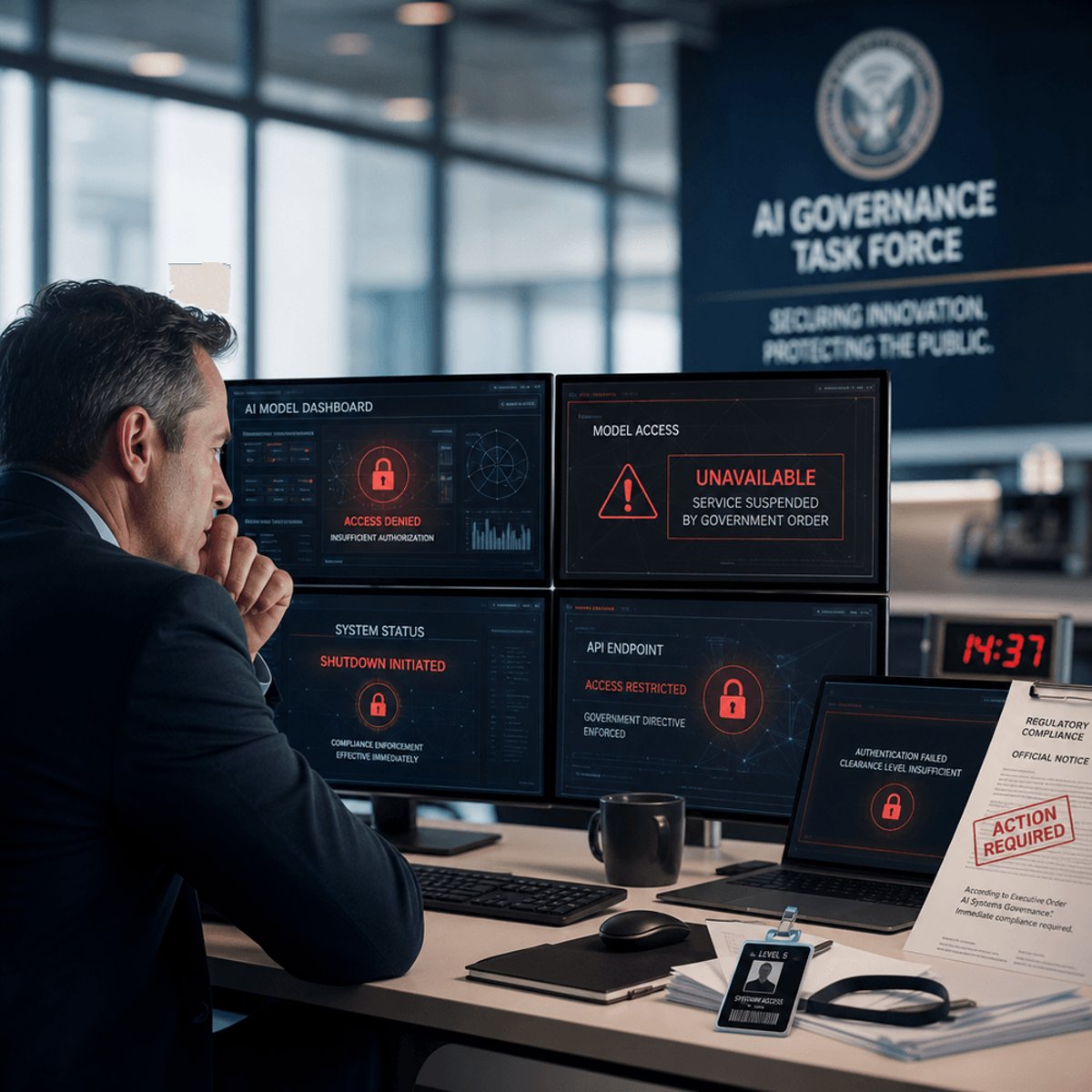
In an unprecedented move that's sending shockwaves through the AI industry, the US government has ordered Anthropic to immediately pull its flagship Claude Fable 5 and Mythos 5 models from public access. The directive, issued Monday morning, marks the first time federal authorities have directly intervened to shut down frontier AI models already in commercial deployment, raising urgent questions about national security protocols and the future of AI regulation.
Anthropic customers logging in Monday morning were met with an unexpected message: Claude Fable 5 and Mythos 5 are no longer available. The San Francisco-based AI company, backed by Google and valued at over $18 billion, had no choice in the matter. According to ZDNet's reporting, a US government directive forced the immediate shutdown.
The timing couldn't be more jarring. Just last week, Anthropic was touting these models as breakthrough achievements in safe AI deployment, with Fable 5 powering enterprise applications across healthcare, finance, and legal sectors. Thousands of businesses built critical workflows around these systems. Now they're scrambling to migrate to earlier Claude versions or competitor models from OpenAI and Google's Gemini.
This marks the first time federal authorities have directly ordered the removal of commercial AI models already in widespread use. Previous government interventions in AI have focused on export controls and research restrictions, but never an emergency shutdown of live systems serving paying customers. The move signals a dramatic escalation in how Washington views risks from frontier AI systems.
While Anthropic hasn't issued a detailed public statement, sources familiar with the situation suggest the directive stems from concerns about unauthorized access to the models. This aligns with recent reporting about potential security vulnerabilities in how advanced AI systems can be accessed or replicated. The government's decision to act so swiftly suggests officials discovered something serious enough to override normal regulatory processes.
The impact ripples across the entire AI ecosystem. Fable 5 and Mythos 5 represented Anthropic's most advanced publicly available models, competing directly with OpenAI's GPT-4 and Google's Gemini Pro. Enterprise customers paying premium rates for API access suddenly find themselves without the capabilities they built entire product features around. One CTO at a healthcare AI startup told colleagues the shutdown could delay their product launch by months.
For Anthropic, the timing is particularly painful. The company has built its brand around being the responsible AI player, emphasizing safety and security in every release. Now it faces the embarrassment of having its flagship models yanked by government order. The company's relationship with enterprise customers, carefully cultivated over years, faces its biggest test. How quickly can they restore trust while complying with federal demands?
The regulatory implications extend far beyond one company. If the government can order immediate shutdowns of AI models based on security concerns, every AI lab now faces new uncertainty about deployment. Microsoft, Amazon, and Meta all have advanced models in various stages of release. Do they face similar risks? Will there be new mandatory security reviews before launch?
Competitors are watching closely. OpenAI and Google have reportedly reached out to Anthropic customers, offering migration paths to their platforms. But they're also quietly reviewing their own security protocols, knowing they could face similar scrutiny. The message from Washington is clear: frontier AI systems are now subject to national security oversight at a level previously reserved for weapons systems and critical infrastructure.
What remains unclear is whether this is a temporary measure while Anthropic addresses specific vulnerabilities, or a permanent ban on these particular model architectures. The company hasn't provided a timeline for potential restoration of service. Some analysts speculate the models might return with additional security layers and access restrictions, possibly limiting international availability or requiring enhanced verification for users.
This isn't just about two AI models going offline. It's about the government asserting direct control over frontier AI deployment in real-time, setting a precedent that will reshape how every AI company thinks about release strategies. For enterprise customers, the message is equally stark: even the most established AI services can disappear overnight based on federal security concerns. The AI industry just entered a new era where innovation速度 meets national security reality, and the balance between the two remains dangerously unclear. Every AI executive is now asking the same question: are we next?