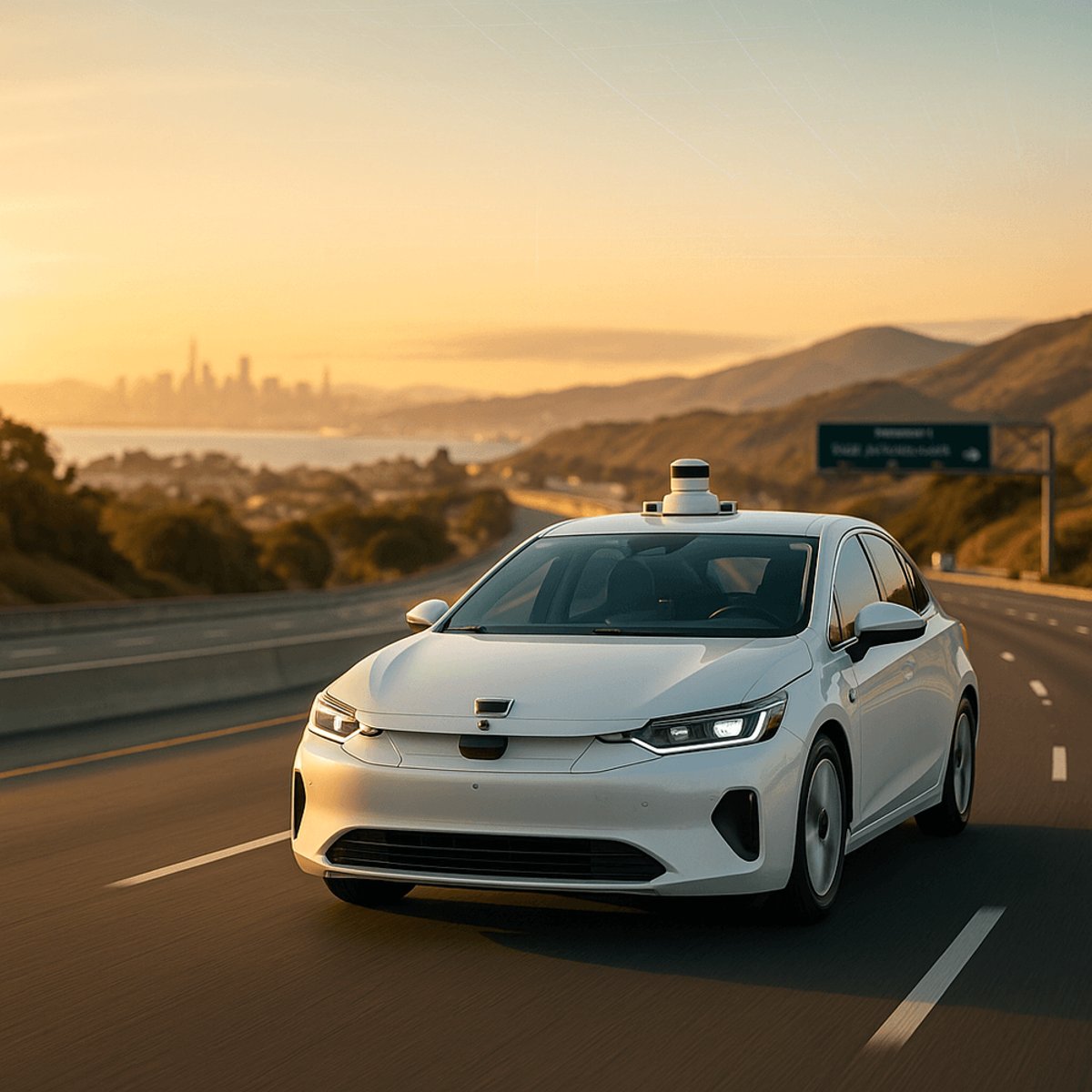
Waymo just secured a massive regulatory win that could reshape California's transportation landscape. The Google-owned robotaxi company announced Friday it's now officially authorized to drive fully autonomously across vast swaths of the Golden State, marking the biggest expansion in autonomous vehicle deployment to date.
Waymo just pulled off what might be the most significant regulatory victory in autonomous vehicle history. The Google-owned robotaxi company announced Friday it's now officially authorized to operate fully autonomous vehicles across massive new territories in California, fundamentally changing the competitive landscape for self-driving cars.
The approval represents a quantum leap from Waymo's current footprint. While the company already operates in San Francisco, Silicon Valley, and Los Angeles, along with Phoenix, Austin, and Atlanta, the new California Department of Motor Vehicles authorization covers territory that dwarfs its existing operations.
In the Bay Area alone, Waymo can now test and deploy across most of the East Bay and North Bay, including Napa's wine country, plus Sacramento. That's not just incremental expansion - it's opening up entirely new demographic and economic zones that represent millions of potential riders. Down south, the approved territory stretches from Santa Clarita north of Los Angeles all the way to San Diego, essentially covering the entire Southern California megalopolis.
The timing couldn't be more strategic. While competitors like Tesla continue promising full self-driving capabilities 'next year' and others struggle with basic city operations, Waymo is quietly securing the regulatory foundation for massive scale. According to the San Francisco Chronicle, the company will still need additional approvals before carrying paying passengers in some regions, but the testing authorization alone represents a crucial first step.
Waymo's expansion timeline reveals careful strategic planning. The company wrote on social media, 'Next stop: welcoming riders in San Diego in mid-2026!' - part of an ambitious rollout that includes Dallas, Denver, Detroit, Houston, Las Vegas, Miami, Nashville, Orlando, San Antonio, Seattle, and Washington D.C. That's not just growth; it's a coordinated assault on the entire American transportation market.
The regulatory win comes amid a flurry of Waymo announcements that suggest the company is hitting an inflection point. Just this month, they've announced entry into Minneapolis, New Orleans, and Tampa, started removing safety drivers in Miami, and began offering freeway rides in Los Angeles, San Francisco, and Phoenix.
But the California expansion carries unique risks alongside the opportunities. As TechCrunch's Sean O'Kane noted on the Equity podcast, giving people unfettered access across such vast territories means they'll likely spend significantly more time in robotaxis - potentially leading to new and unpredictable use cases that could challenge both the technology and regulatory framework.
The geographic scope also presents technical challenges that go far beyond Waymo's current urban focus. Sacramento's sprawling suburbs, Napa's winding mountain roads, and San Diego's beach communities each present distinct driving scenarios that will test the limits of autonomous vehicle AI in real-world conditions with paying passengers at stake.
Waymo's California regulatory victory represents more than geographic expansion - it's a strategic positioning for the next phase of autonomous vehicle adoption. With the infrastructure to test across diverse terrain and demographics, from wine country to beach cities, Waymo is building the data foundation needed for nationwide scaling. The real test isn't just whether the technology works in these new environments, but whether consumers will embrace robotaxis as a primary transportation mode when they have access across entire metropolitan regions rather than just downtown cores.