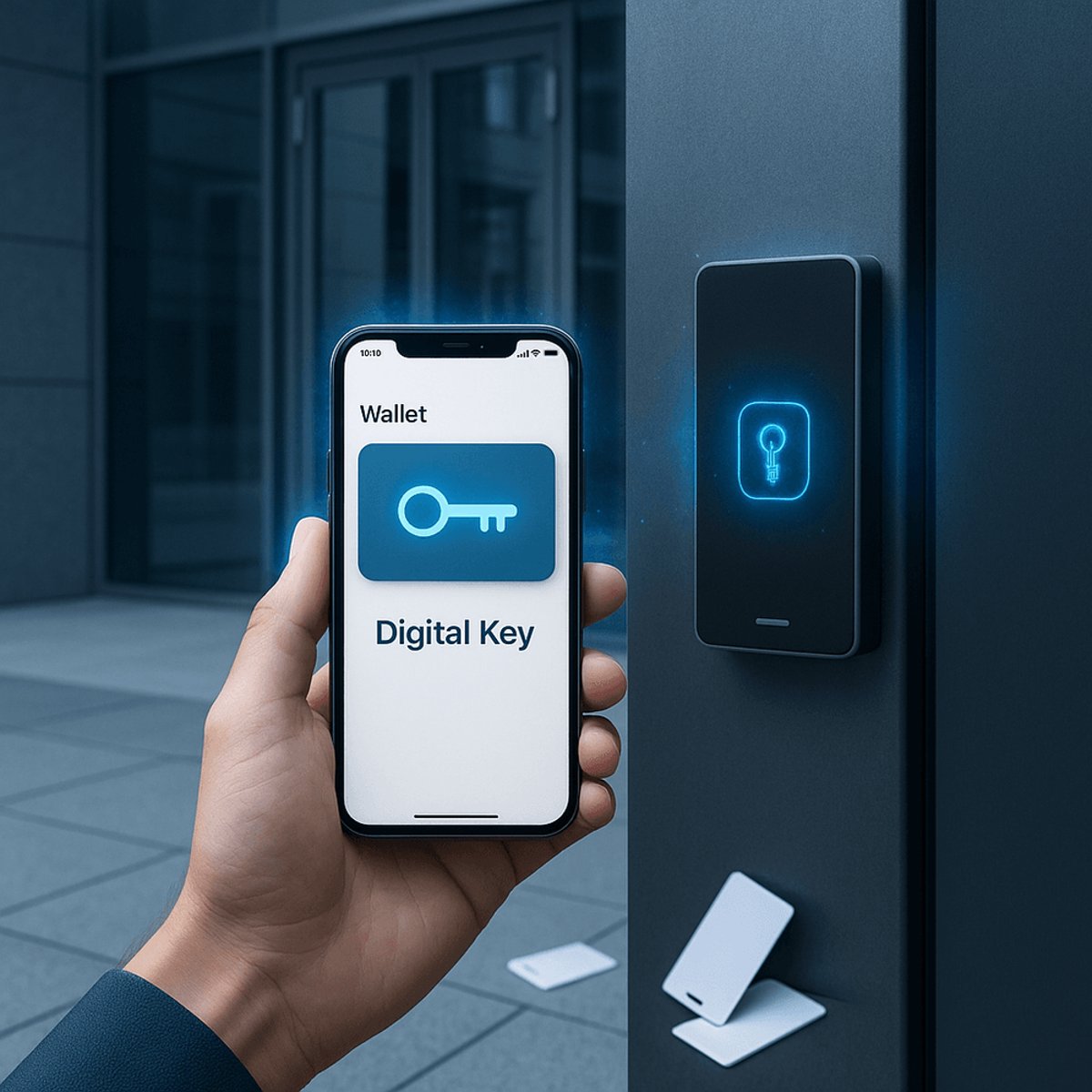
AccessGrid just closed a $4.4 million seed round to modernize an industry stuck in the 1990s. The startup's API platform lets companies turn smartphones into secure digital key fobs that work directly through Apple and Google wallet apps, eliminating physical cards and outdated access control systems that plague most buildings today.
AccessGrid just scored $4.4 million to kill the plastic key card once and for all. The startup announced its seed round Tuesday, led by Harlem Capital, with a simple but ambitious mission: turn every smartphone into an unbreachable digital key that works even when your phone dies.
Founder Auston Bunsen knows a thing or two about building developer platforms. His previous company QuickNode raised around $60 million as a blockchain infrastructure play before he stepped away last October. But it was a conversation with Apple that sparked his next venture. "I eventually met with some folks at Apple and they decided to make a bet that I could help further their goals to enable every company to bring the power of Apple Wallet to their door," Bunsen told TechCrunch.
The timing couldn't be better. Most access control systems are embarrassingly outdated - think unencrypted communications, easily cloned ID cards, and on-premises infrastructure that can't talk to the cloud. "The access control industry is stuck in the late 1990s," Bunsen explained. His API platform changes that by issuing what he calls "uncloneable credentials using encrypted payloads that can be instantly revoked via the cloud."
Here's where it gets interesting: the digital keys work when your iPhone is locked, automatically sync to your Apple Watch, and in a neat trick that physical cards can't match, they'll still unlock doors even if your phone battery dies. Google Wallet users get similar functionality through AccessGrid's cross-platform approach.
The security infrastructure runs deep. Bunsen says they're using "military-grade" encryption with dual-encryption layers, multi-factor authentication for all server access, and other enterprise-grade cybersecurity practices. That's crucial when you're essentially replacing every building's front door security.
Bunsen's going solo this time, unlike his QuickNode days with three co-founders. He calls fundraising a "distraction" from serving customers, but connected with Harlem Capital's Henri Pierre-Jacques through Miami connections. Other investors include familiar faces from his QuickNode network: Marell Evans from Exceptional Capital and Maya Bakhai from Spice Capital. The HF0 accelerator provided AccessGrid's first check.
The competitive landscape includes startups like SwiftConnect and Sharry, but Bunsen positions AccessGrid differently. "We are a 'pure play', API-only," he emphasizes, meaning no service contracts or middleware – just a developer platform that companies can plug directly into their systems.
The fresh capital fuels continued security development and new product features. Automobile access is next on the roadmap, which makes sense given how car manufacturers are racing toward digital key adoption. Tesla and others already offer phone-based entry, but AccessGrid wants to standardize this across the entire auto industry.
Bunsen's ultimate vision borders on science fiction: "Our hope is to create a world where everything you normally need a key for opens just because you're nearby. You'll never lose your key because it's always with you." That means upgrading every access control reader in America – apartment buildings, offices, parking garages, even hotel rooms.
The market opportunity is massive. Physical access control is a $9 billion industry that's been slow to modernize, partly because swapping out hardware infrastructure is expensive and complicated. But AccessGrid's API-first approach means companies can upgrade their systems without ripping out existing readers, just adding new software layers.
What's particularly smart about the timing is how both Apple and Google are pushing wallet platform adoption. Apple Pay and Google Pay conditioned consumers to trust their phones for payments; digital keys feel like the logical next step. The COVID pandemic also accelerated touchless technology adoption, making smartphone-based access feel less futuristic and more necessary.
AccessGrid's $4.4 million seed positions the startup to capture a massive market transition that's been decades in the making. With Apple and Google pushing wallet platform adoption and enterprises finally ready to ditch outdated card-based systems, the timing looks perfect. Bunsen's track record at QuickNode and his API-first approach could make AccessGrid the infrastructure layer that powers the next generation of physical access control – assuming they can execute on security and scale before bigger players muscle into the space.