The humanoid robotics battle just got personal. Agility Robotics is opening a new training center for its Digit robots in Fremont, California - the same city where Tesla operates its massive factory and has been developing its competing Optimus humanoid robot. The move signals that the race to commercialize bipedal robots for warehouse and factory work is heating up, with Agility making a bold territorial play right in Elon Musk's backyard.
Agility Robotics just made its boldest competitive move yet. The Oregon-based robotics startup is planting its flag in Fremont, California with a new training center for its Digit humanoid robots - a calculated expansion that puts the company squarely in Tesla's backyard.
The location choice isn't accidental. Fremont is home to Tesla's sprawling factory where the electric vehicle maker has been quietly developing and testing its Optimus humanoid robot. By opening a training facility in the same city, Agility is sending a clear message: the race to commercialize bipedal robots is on, and it's not ceding any ground to Musk's operation.
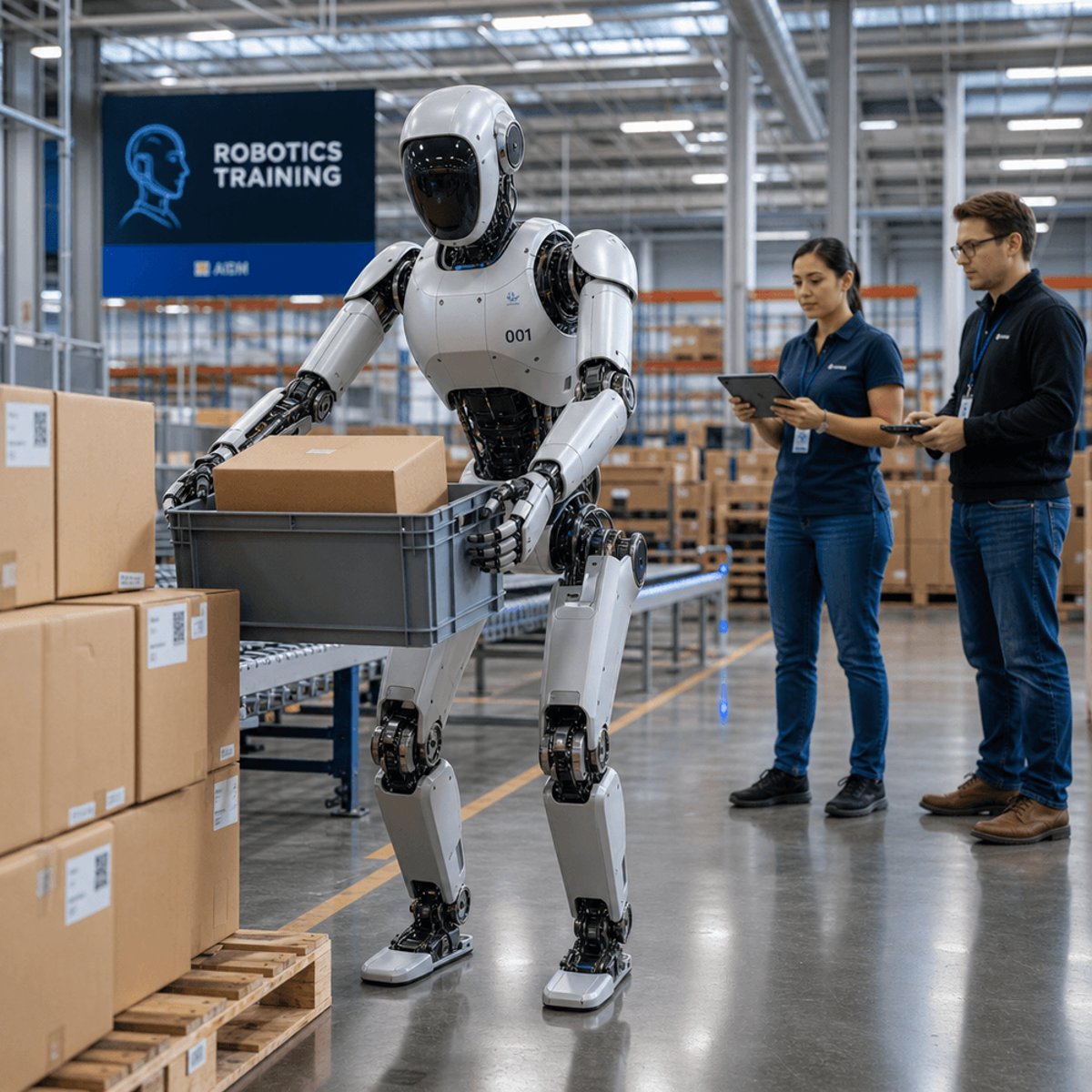
Agility's Digit robots have been making steady inroads into commercial deployment over the past year. The two-legged machines, designed to handle repetitive tasks like moving totes and packages in warehouses, have been piloted at customer sites including Amazon's fulfillment centers and logistics operations. But scaling from pilot programs to widespread deployment requires infrastructure - and that's exactly what this new training center represents.
The facility will serve as a hub for preparing Digit robots before they ship to customer sites, as well as training the human workers who'll collaborate with them. It's a crucial piece of operational infrastructure that suggests Agility is moving beyond the proof-of-concept phase and into serious commercial scaling. The company already operates a robot manufacturing facility in Salem, Oregon, dubbed RoboFab, which it claims can produce over 10,000 humanoid robots annually.
Meanwhile, Tesla has been ramping up its own humanoid robot ambitions. Musk has repeatedly claimed that Optimus could eventually become more valuable than Tesla's car business, projecting that the robots could perform dangerous or repetitive work in factories and beyond. Tesla showcased updated Optimus prototypes at its AI Day events, demonstrating improvements in dexterity and autonomy, though the robots haven't yet achieved the commercial deployment that Agility has.
The competitive dynamics are fascinating because the two companies are taking fundamentally different approaches. Agility has focused intensely on a single use case - warehouse and logistics work - and has iterated relentlessly to make Digit commercially viable for those specific tasks. Tesla is pursuing a more general-purpose vision, betting that its advantages in AI, manufacturing scale, and vertical integration will eventually win out.
Both companies face the same fundamental challenge: making humanoid robots economically viable compared to purpose-built machines or human workers. Wheeled robots are cheaper and more efficient for many warehouse tasks, but humanoid robots offer a key advantage - they can navigate environments designed for humans without requiring infrastructure modifications. That flexibility could justify the higher cost if the robots become reliable and affordable enough.
The broader humanoid robotics space is getting increasingly crowded. Boston Dynamics' Atlas robot has demonstrated remarkable agility but remains focused on research rather than commercial deployment. Chinese robotics companies are also racing to develop their own humanoid platforms, with government backing accelerating development timelines.
For Agility, the Fremont expansion represents more than just competitive posturing. It's a practical response to growing customer demand and the operational realities of deploying robots at scale. Every robot needs configuration, testing, and integration work before it can function effectively at a customer site. Having a West Coast training hub makes logistical sense for serving customers in California and beyond.
The timing is particularly interesting given the broader economic pressures facing the warehouse and logistics industry. Companies are wrestling with labor shortages, rising wages, and pressure to improve efficiency. Automation has been a constant promise, but humanoid robots represent a fundamentally new approach - machines that can slot into existing workflows and facilities without massive retrofitting.
What happens next will depend on execution. Agility needs to prove that Digit can deliver meaningful ROI at customer sites, maintaining reliability while handling diverse tasks. Tesla needs to show that Optimus can move from flashy demos to practical deployment. The Fremont training center is Agility's way of demonstrating it's serious about winning this race - and doing it right in Tesla's hometown.
Agility's Fremont move is more than geographic expansion - it's a statement about who's winning the humanoid robotics race right now. While Tesla has the brand power and Musk's megaphone, Agility has actual robots working in actual warehouses. This training center represents the unglamorous but essential infrastructure needed to scale from dozens of robots to thousands. The question isn't whether humanoid robots will transform warehouse work - it's which company will dominate that transformation. By setting up shop in Tesla's backyard, Agility is betting it'll be them.