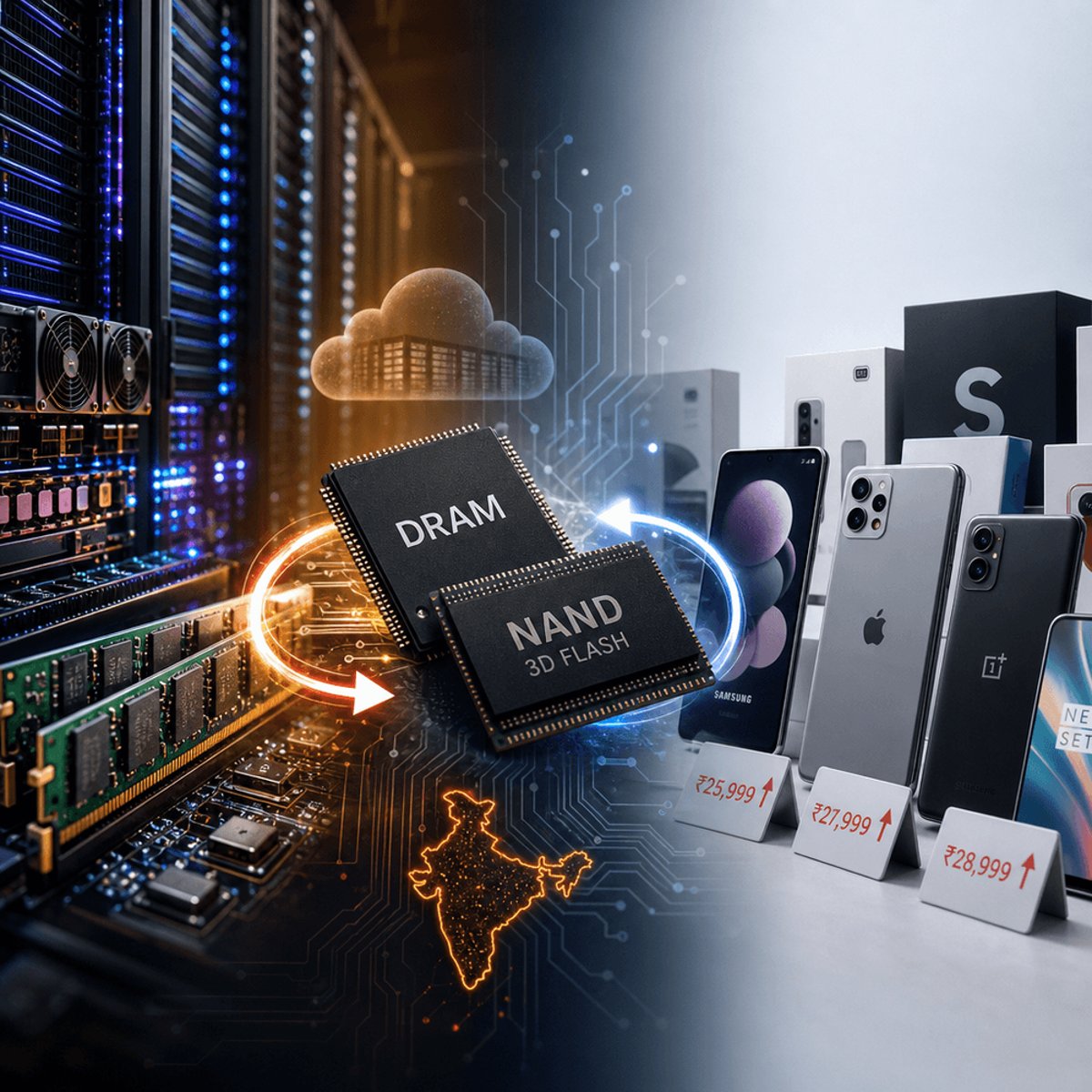
India's smartphone market just hit an unexpected wall. The global AI infrastructure boom is creating a memory chip shortage that's driving up smartphone prices and stalling sales in the world's second-largest mobile market. Apple, Samsung, and OnePlus are all feeling the squeeze as data center operators outbid consumer electronics makers for limited DRAM and NAND flash supplies, according to TechCrunch.
The collision between AI's insatiable appetite for memory and consumer electronics is playing out in real-time across India's massive smartphone market. What started as a data center procurement issue has cascaded into a consumer pricing crisis that's reshaping how Indians buy phones.
Samsung and Apple aren't just competing with each other anymore - they're competing with Microsoft, Google, and every AI startup racing to build out GPU clusters. The math is brutal: a single AI training server can consume as much high-bandwidth memory as 50 flagship smartphones. When OpenAI or Meta places an order for their next compute cluster, it can absorb an entire quarter's worth of memory production that would have gone to consumer devices.
The impact hit India first because it's a price-sensitive market where even small component cost increases translate directly to consumer pushback. A mid-range phone that would have launched at ₹25,000 six months ago now costs ₹28,000 or more, pricing out millions of potential buyers in a market where affordability drives volume.
OnePlus has been particularly vocal about the constraints. The company's usual strategy of packing flagship specs into mid-tier prices depends on securing memory chips at competitive rates - a calculus that's completely upended when enterprise buyers are willing to pay premiums that consumer electronics margins can't support. Industry insiders say memory module costs have jumped 40-60% year-over-year, with AI demand absorbing what would traditionally be considered excess capacity.
The shortage isn't just about quantity - it's about priority. Memory manufacturers are allocating their most advanced, highest-capacity chips to AI infrastructure customers because those buyers purchase in bulk, pay premium prices, and offer long-term contracts. Consumer electronics get what's left, which increasingly means older-generation chips or reduced specifications.
Apple has some insulation thanks to its massive purchasing power and long-term supplier agreements, but even Cupertino isn't immune. Reports suggest the company's upcoming iPhone models may feature less aggressive memory upgrades than originally planned, a rare concession to supply realities. Samsung, which both makes memory chips and uses them in its phones, faces its own internal allocation decisions - sell high-margin memory to AI customers or reserve it for lower-margin consumer devices?
India's smartphone market had been projected to grow 8-10% this year, but that's now looking optimistic. Consumers are holding onto devices longer when replacement options cost more, creating a ripple effect through the entire ecosystem. Accessory makers, repair shops, and mobile carriers all feel the slowdown when phone upgrade cycles extend.
The corporate strategy implications extend beyond just pricing. Phone makers are redesigning products around memory availability rather than pure performance targets. That means more models with 6GB RAM instead of 8GB, or 128GB storage instead of 256GB - compromises that wouldn't have been necessary in a balanced supply environment. Some manufacturers are exploring alternative memory technologies or suppliers, but those qualification processes take months or years.
What makes this particularly challenging is the timeline mismatch. AI infrastructure buildout is a multi-year boom cycle that shows no signs of slowing - every major tech company is racing to expand compute capacity for training and inference. But smartphone product cycles work in quarters, and consumer patience works in weeks. Brands can't tell customers to wait 18 months for supply to rebalance.
The situation has exposed how deeply interconnected seemingly separate tech sectors have become. A decision by Nvidia to increase GPU production for AI training doesn't just affect data centers - it ripples through to memory allocation, which affects smartphone specs, which affects consumer purchasing, which affects India's digital economy transformation. The smartphone became India's primary computing device for hundreds of millions of people, and anything that slows smartphone adoption has broader economic implications.
Some market observers see this as a temporary adjustment as memory manufacturers bring new fabrication capacity online specifically for AI workloads. Others worry it represents a more permanent reordering of priorities in semiconductor supply chains, where enterprise and infrastructure customers simply outrank consumer electronics in the pecking order. Memory makers are certainly investing billions in new fab capacity, but that takes 2-3 years to come online, and by then AI memory requirements may have grown even more.
For now, Indian consumers are the ones experiencing the most immediate impact - higher prices, fewer options, and delayed purchases. Phone brands are scrambling to adjust product roadmaps and pricing strategies. And memory chip makers are enjoying record profits while trying to balance competing demands from very different customer bases with very different economics.
The AI memory crunch in India's smartphone market isn't just a supply chain hiccup - it's a preview of how enterprise AI expansion will reshape consumer technology in unexpected ways. As data centers and smartphones compete for the same silicon, consumers in price-sensitive markets feel the impact first. The next year will test whether memory manufacturers can scale production fast enough to serve both AI infrastructure and consumer electronics, or whether this marks a fundamental shift in how semiconductors get allocated across the tech industry. For India's digital transformation story, which depends heavily on affordable smartphone access, the stakes couldn't be higher.