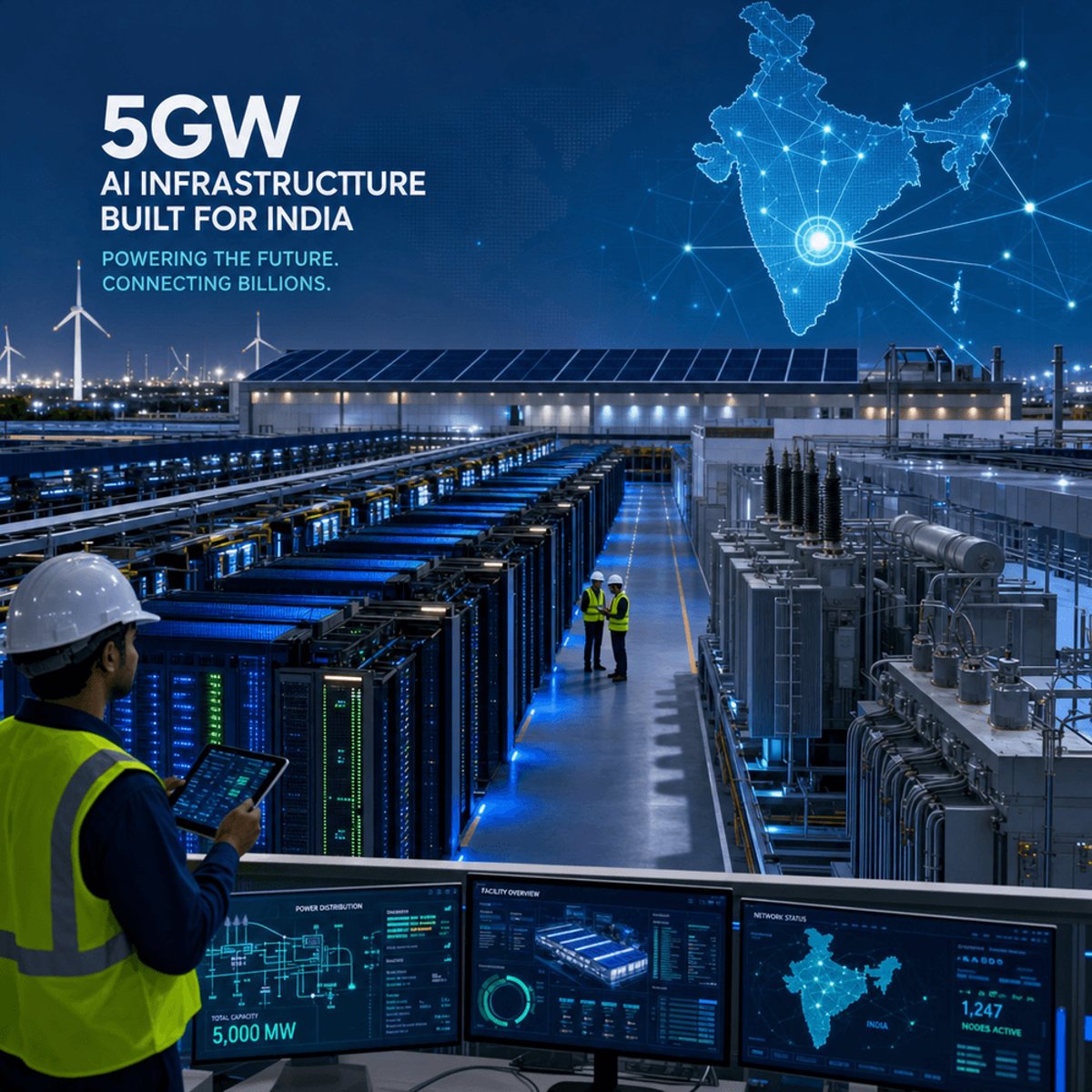
AirTrunk, the Australian data center operator backed by Blackstone, just dropped a $30 billion bet on India's AI future. The company plans to build a staggering 5 gigawatts of data center capacity across the subcontinent, marking one of the largest infrastructure commitments to India's burgeoning AI economy. The move positions India as a critical hub for global AI compute as hyperscalers race to secure power-hungry infrastructure outside traditional markets.
AirTrunk is placing a massive bet that India will become the next battleground for AI infrastructure. The Australian data center operator's $30 billion commitment to build 5 gigawatts of capacity across India signals a dramatic shift in how the global tech industry thinks about compute geography. According to TechCrunch, the planned expansion would make AirTrunk one of the largest data center operators in Asia, just as AI workloads push infrastructure demands to unprecedented levels.
The timing couldn't be more strategic. India's digital economy has been growing at double-digit rates, but the country has historically lagged behind Singapore, Tokyo, and Sydney in hyperscale data center capacity. That's changing fast as Microsoft, Google, and Amazon Web Services race to capture India's 1.4 billion potential users. AirTrunk's 5GW buildout dwarfs most existing facilities and positions the company to capture enterprise AI workloads that simply can't find power and space in saturated markets like Northern Virginia or Frankfurt.
The $30 billion investment figure is staggering even by data center standards. For context, that's roughly equivalent to what Meta spent on capital expenditures across all its infrastructure in 2025. The commitment suggests AirTrunk, which was acquired by Blackstone in a $24 billion deal last year, sees India as critical to its Asia-Pacific dominance strategy. The company already operates major facilities in Sydney, Melbourne, Singapore, Tokyo, and Hong Kong, but the India expansion would represent its largest single-country bet.
India's appeal goes beyond just market size. The country offers relatively abundant land, improving power infrastructure, and a government eager to position itself as an AI superpower. Prime Minister Modi's administration has been aggressively courting data center investments with tax incentives and fast-track approvals. But challenges remain, particularly around power reliability and cooling costs in India's tropical climate. AirTrunk will need to navigate complex state-level regulations and secure reliable renewable energy sources to hit its 5GW target without blowing carbon budgets.
The competitive implications are massive. Google recently announced plans to invest $10 billion in India's digital infrastructure over the next seven years, while Microsoft committed $2.5 billion to expand its cloud regions. AirTrunk's wholesale model means it'll likely partner with these hyperscalers rather than compete directly, but the sheer scale of capacity coming online could reshape pricing dynamics across Asia. Singapore's land constraints have kept data center costs sky-high; India could offer a pressure valve.
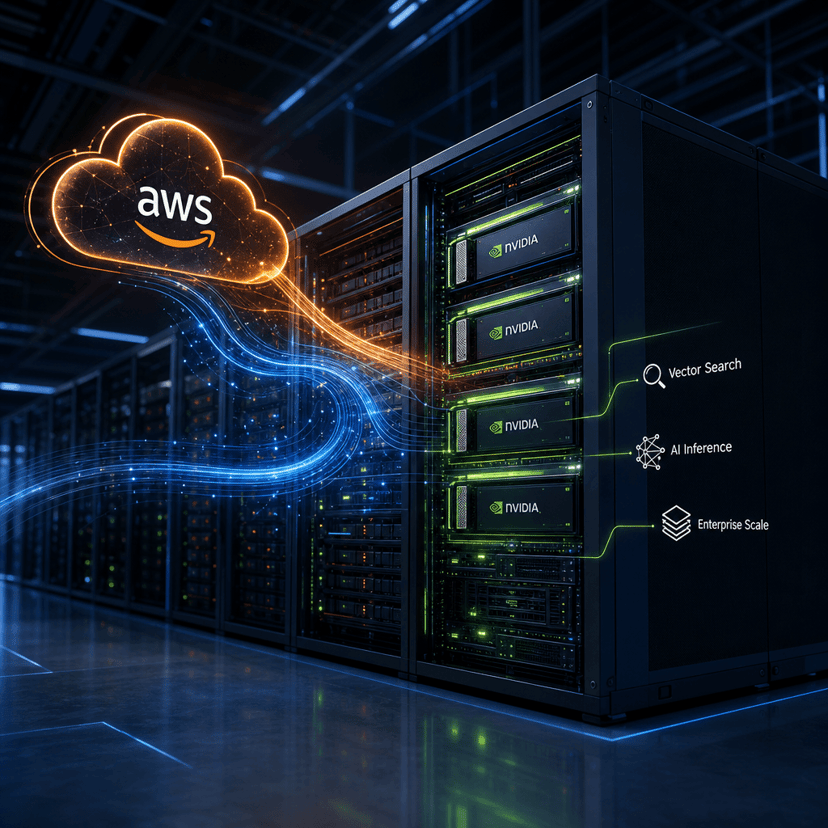
What makes this particularly relevant now is the explosion in AI training and inference workloads. Large language models like those powering OpenAI's ChatGPT or Google's Gemini require unprecedented amounts of compute power. Nvidia's latest Blackwell GPUs pull so much electricity that data centers are scrambling to upgrade power delivery systems. AirTrunk's 5GW commitment suggests the company expects AI workloads to dominate Indian data centers within years, not decades.
The announcement also reflects a broader geographic diversification happening across the data center industry. Political tensions between the U.S. and China have made companies nervous about concentrating infrastructure in single regions. India offers a massive English-speaking market with deepening ties to Western tech ecosystems but without the geopolitical risks of China or the space constraints of Singapore. It's a Goldilocks scenario that's attracting billions in infrastructure capital.
For Indian startups and enterprises, AirTrunk's commitment could be transformative. Local AI companies have struggled to access the kind of compute infrastructure available to their Silicon Valley counterparts. With 5GW of modern, AI-optimized data center capacity coming online, Indian developers could train and deploy models at scales previously impossible. That could accelerate everything from vernacular language AI to healthcare diagnostics tailored to Indian populations.
The financial engineering behind a $30 billion commitment of this scale is complex. AirTrunk will likely phase construction over years, securing anchor tenant commitments from hyperscalers before breaking ground on each facility. The company's Blackstone backing gives it access to essentially unlimited capital, but even deep-pocketed investors want to see utilization rates justify the spend. Watch for announcements of long-term contracts with major cloud providers as the first indicator this buildout is moving beyond press release into reality.
AirTrunk's $30 billion India commitment is a signal that the geography of AI compute is fundamentally shifting. As Western markets saturate and hyperscalers hunt for power and space, India's combination of market size, improving infrastructure, and government support makes it the logical next frontier. The question now isn't whether India becomes a major AI infrastructure hub, but how quickly AirTrunk can build out capacity before competitors flood in. For the global AI race, this means compute resources are becoming less concentrated in Silicon Valley and more distributed across emerging markets - with all the geopolitical and economic implications that entails.