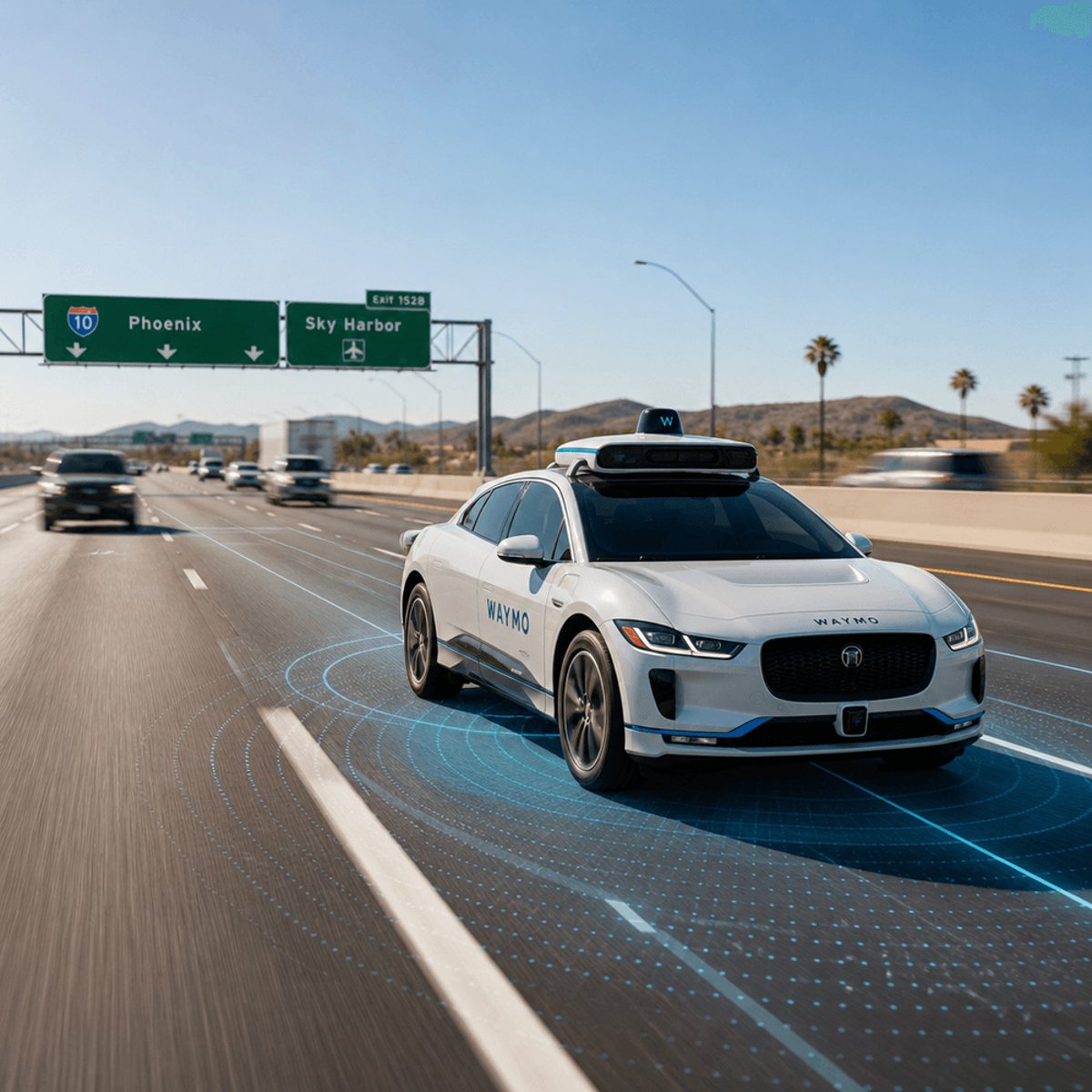
Waymo is putting its robotaxis back on Phoenix freeways, marking a critical expansion of its autonomous driving capabilities. The Alphabet-owned company confirmed that its driverless vehicles are now navigating high-speed interstate routes in Arizona's capital, with additional cities set to follow in the coming days. The move signals growing confidence in the company's ability to handle one of the most challenging environments for self-driving technology.
Waymo just cleared a major hurdle in the autonomous vehicle race. The company's robotaxis are back on Phoenix freeways, navigating the high-speed arteries that connect Arizona's sprawling metro area. It's a notable shift from the cautious surface-street operations that have defined most robotaxi deployments to date.
The timing matters. While competitors like Cruise have stumbled with safety incidents and regulatory pushback, Waymo is quietly expanding the operational envelope for driverless vehicles. Freeway driving demands a different caliber of decision-making from autonomous systems - vehicles need to merge at 65 mph, anticipate aggressive lane changes, and navigate the unpredictable behavior of human drivers at highway speeds.
According to industry sources familiar with autonomous vehicle development, freeway operations require sensor fusion and predictive algorithms that go far beyond what's needed for urban driving. The vehicles must process data from multiple cameras, lidar, and radar systems simultaneously while predicting the trajectories of dozens of surrounding vehicles traveling at high speeds.
What makes this development particularly interesting is the phrase "return to freeways." That suggests Waymo had previously tested or operated on highways before pulling back, likely to refine its systems. The company has been operating its fully autonomous ride-hailing service in Phoenix since 2020, but largely restricted to surface streets where speeds and complexity are more manageable.
The Phoenix market has become Waymo's proving ground. The city's wide roads, predictable weather, and relatively simple grid layout make it ideal for testing autonomous technology before expanding to more challenging environments. But freeways add a new dimension - one that's essential for making robotaxis economically viable. Riders don't just want to putter around neighborhoods at 35 mph. They want fast, efficient trips across metro areas.
Waymo isn't disclosing which additional cities will get freeway access in the coming days, but the company currently operates in San Francisco, Los Angeles, and Austin beyond Phoenix. Each market presents unique challenges. San Francisco's congested highways and aggressive drivers differ dramatically from Phoenix's relatively orderly traffic patterns.
The competitive implications are significant. Tesla has long promoted its Full Self-Driving software's highway capabilities, though that system still requires human supervision. Waymo's approach is fundamentally different - true driverless operation with no safety driver behind the wheel. That's the holy grail of autonomous technology, and highway speeds represent the final frontier.
For riders, freeway access means faster trips and broader service areas. A robotaxi that can hop on Interstate 10 in Phoenix can suddenly connect distant suburbs that would be impractical to serve via surface streets alone. That expanded coverage area could be the difference between a niche service and a genuine alternative to car ownership.
The technical achievement shouldn't be understated. Highway merging requires split-second decisions about gap acceptance - whether there's enough space to safely slide into fast-moving traffic. Human drivers do this instinctively. Teaching an AI system to do it safely, consistently, and without being overly cautious requires massive amounts of training data and sophisticated neural networks.
Waymo has been accumulating that data for years. The company recently announced it's now providing over 150,000 paid robotaxi rides per week across its operating cities, generating a constant stream of real-world driving scenarios that feed back into its machine learning models. Every lane change, every merge, every close call becomes training data for the next generation of the system.
What's less clear is whether regulators in other states will be as accommodating as Arizona. California's Department of Motor Vehicles and Public Utilities Commission have been far more cautious about approving expanded robotaxi operations, particularly after Cruise's highly publicized safety incidents last year. Waymo will need to demonstrate consistent safety performance on Phoenix freeways before other jurisdictions greenlight similar expansions.
Waymo's return to freeway operations represents more than just faster rides - it's a statement about the maturity of autonomous driving technology. If the company can successfully scale this capability across multiple cities without safety incidents, it'll force regulators and competitors to recalibrate their timelines for when truly driverless vehicles become mainstream. The next few weeks will reveal whether this is a measured expansion based on proven capability or an ambitious bet that the technology is ready for prime time. Either way, the robotaxi race just shifted into a higher gear.