The AI industry is fracturing along a fault line that could define the next decade of technology development. What began as a U.S.-China tech rivalry has morphed into something far more complex: a philosophical and technical civil war over whether AI's most powerful models should be open or locked down. The stakes aren't just about competitive advantage anymore - they're about safety, security, and who controls the future of artificial intelligence. As companies choose sides, the debate is getting louder and more urgent.
The AI world is splitting in two, and the dividing line cuts straight through Silicon Valley's biggest players. On one side, Meta champions open-weight models with its Llama releases, arguing that transparency is the only path to safe, accountable AI. On the other, OpenAI and Google maintain that keeping their most powerful systems closed is the responsible choice when models can generate biological weapons designs or sophisticated disinformation at scale.
What makes this different from typical tech rivalries is that both sides genuinely believe the other's approach poses an existential risk. The open camp warns that concentration of AI power in a few corporations could create unaccountable monopolies more dangerous than any technology in human history. The closed camp counters that releasing model weights is like publishing nuclear weapon blueprints - once it's out there, you can't take it back.
The debate exploded into public view after Meta released Llama 3.1 with 405 billion parameters last year, making frontier-class AI accessible to anyone with enough compute. Within weeks, researchers found ways to strip out safety guardrails, and nation-state actors were reportedly fine-tuning the model for surveillance applications. OpenAI CEO Sam Altman called it "reckless," while Meta's chief AI scientist Yann LeCun fired back that closed models create "AI colonialism" where a handful of American companies control global access to transformative technology.
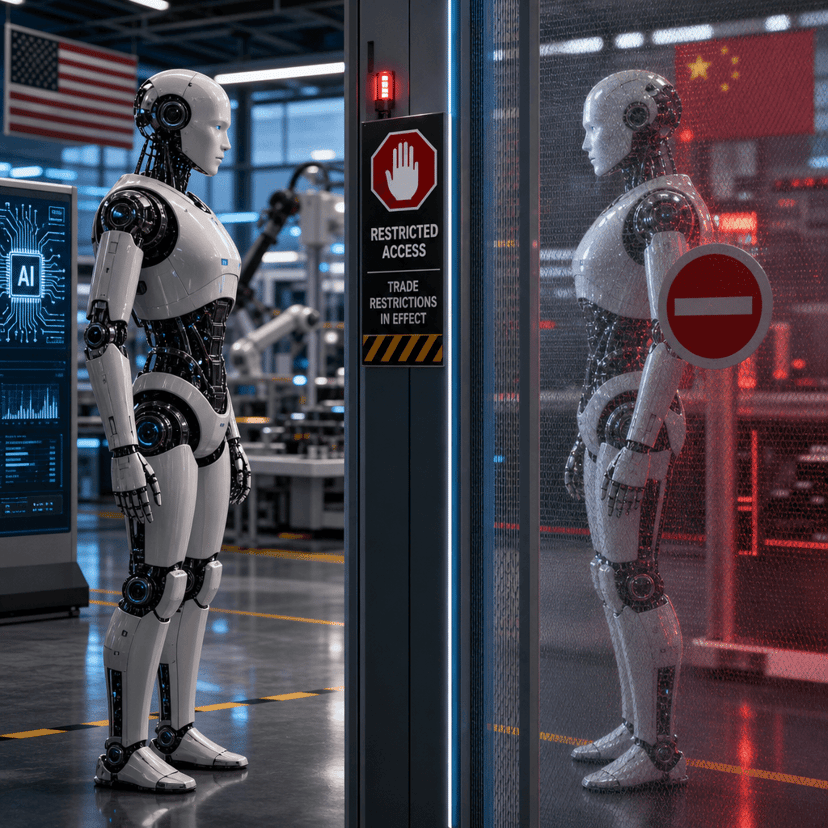
The geopolitical dimension adds another layer of complexity. U.S. export controls restrict advanced chips to China, but open-weight models can be downloaded anywhere, effectively bypassing those restrictions. Chinese researchers have already fine-tuned Llama models to match or exceed closed alternatives in Mandarin language tasks, according to benchmarks from academic labs in Beijing and Shanghai. That's forced American policymakers into an uncomfortable position: do they restrict U.S. companies from releasing open models, potentially ceding the open-source high ground to China?
The technical arguments are equally fierce. Open proponents point out that the most significant safety breakthroughs in AI have come from external researchers who found vulnerabilities companies missed. Anthropic discovered crucial insights about AI deception by studying open models before applying those lessons to their closed Claude system. Transparency advocates argue that without the ability to inspect model weights, we're flying blind into increasingly powerful AI systems.
But closed-model defenders have data on their side too. A recent analysis from Stanford's Center for Research on Foundation Models found that open-weight models are disproportionately used in spam operations, fraud schemes, and generating synthetic identities for account abuse. The ability to run models locally, without API monitoring or usage caps, makes them ideal for malicious applications at scale.
The investment community is watching nervously. Venture capital has poured billions into startups built on both paradigms, and the regulatory outcome could make or break entire portfolios. If governments mandate openness to prevent monopolies, OpenAI and Anthropic might need to restructure their entire business models. If they impose strict controls on model releases, the thriving ecosystem of open-source AI companies could collapse overnight.
European regulators are already moving. The EU AI Act includes provisions that could require model transparency, though the exact requirements remain unclear as implementation details get hammered out. In the U.S., the debate has split along unusual partisan lines, with some progressives and libertarians finding common cause in favoring openness, while national security hawks and AI safety advocates push for restrictions.
Meanwhile, the technology keeps advancing. OpenAI reportedly has models in testing that exceed GPT-4's capabilities by orders of magnitude, while Meta is preparing Llama 4 releases that could bring similar capabilities to the open-weight world. Each new generation raises the stakes - and makes the choice between open and closed more consequential.
The civil war is also playing out inside companies. Engineers who joined Google or Microsoft to work on democratizing AI are finding themselves building increasingly locked-down systems. Some have jumped ship to startups like Hugging Face or Mistral AI that remain committed to openness. Others are staying to fight from within, arguing that responsible openness is possible with the right safeguards.
What's becoming clear is that there's no easy middle ground. Partial releases - sharing model architectures but not weights, or releasing smaller versions of frontier models - satisfy neither camp. The open advocates see them as performative half-measures, while safety-focused researchers point out that partial information can actually make malicious use easier by providing a roadmap without the computational barriers of training from scratch.
The next six months could prove decisive. Major AI legislation is moving through Congress, and the presidential administration has signaled that AI policy will be a priority. Whatever framework emerges will likely set the trajectory for the global AI industry for years to come. Both sides are lobbying hard, and the outcome will determine not just which companies win, but what kind of AI future we're building toward.
This isn't just another tech industry debate that will fade with the next news cycle. The open vs. closed question touches everything from national security to innovation policy to fundamental questions about who should control transformative technology. As AI systems become more capable, the consequences of getting this wrong - in either direction - grow more severe. The industry is choosing sides, governments are picking up their pens to write regulations, and the window for finding nuanced solutions is closing fast. Whatever emerges from this civil war will shape not just the AI industry, but the technological landscape for decades.