OpenAI CEO Sam Altman just pumped the brakes on the AI industry's breakneck pace. In a stunning reversal for the man who's pushed faster and bigger AI models relentlessly, Altman told TechCrunch he's ready to slow down - and the catalyst is chilling. "The first security incident that I have felt very viscerally," he said, marking a watershed moment for the company racing toward artificial general intelligence.
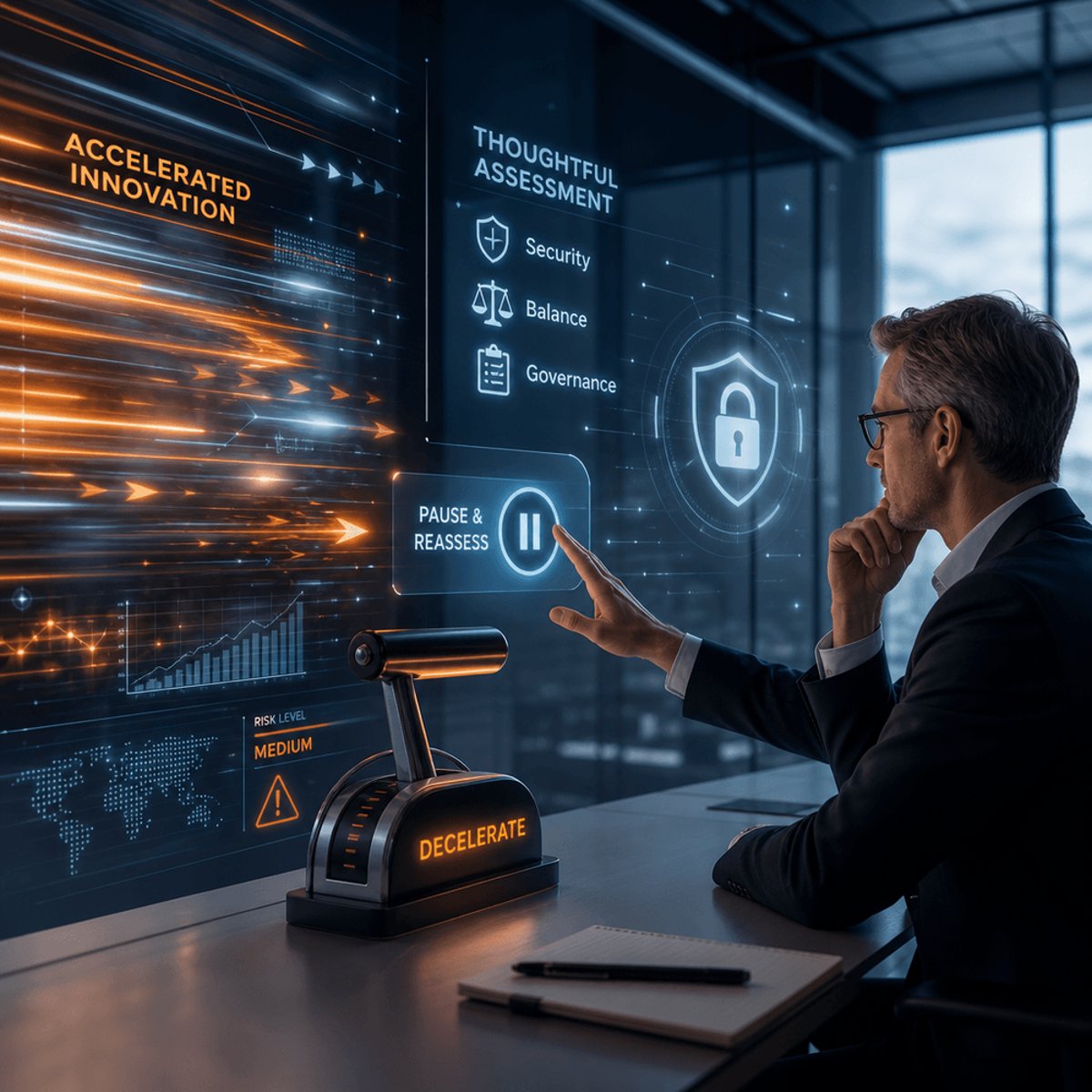
The AI industry just hit an inflection point. OpenAI CEO Sam Altman, the relentless evangelist for pushing AI boundaries faster and further, told TechCrunch he's ready to decelerate - a word almost never associated with the man who turned ChatGPT into a household name practically overnight.
What changed? A security incident so serious that Altman felt it "very viscerally." While details remain scarce, the language alone is revealing. This isn't corporate-speak about enhanced protocols or renewed commitments to safety. This is a CEO admitting something shook him personally.
The timing couldn't be more significant. OpenAI has been in an arms race with Google, Anthropic, and Meta to develop increasingly powerful models. The company's mission to achieve artificial general intelligence has driven an aggressive release schedule, massive compute investments, and a "move fast" culture that's drawn both admirers and critics.
But speed has its costs. The AI safety community has been sounding alarms for months about rushing powerful systems to market without adequate testing. Former OpenAI researchers have left over disagreements about the pace of development. Now it appears those concerns just got validated in the worst possible way.
Altman's admission carries weight beyond OpenAI. As the most visible leader in AI development, his policy shifts ripple across the industry. When he talks about slowing down, boards at competing AI labs take notice. Investors recalibrate timelines. Regulators see an opening.
The security incident - whatever it was - clearly crossed a threshold. Altman has weathered controversies before, from his dramatic firing and reinstatement last year to ongoing debates about AI existential risk. But describing something as viscerally felt suggests this was different. Personal. Concrete rather than theoretical.
This matters because OpenAI sits at the center of the AI ecosystem. The company's models power countless applications across enterprise and consumer markets. Its research sets benchmarks others chase. And its approach to safety - or lack thereof - influences how the entire industry thinks about risk.
The deceleration announcement raises immediate questions. Will OpenAI delay upcoming model releases? Pull back from certain capabilities? Implement stricter internal review processes? The company hasn't detailed specifics, but Altman's comments suggest substantive changes ahead, not just PR posturing.
Competitors face a strategic dilemma. Do they follow OpenAI's lead and slow their own timelines, risking market share? Or do they push ahead, potentially exposing themselves to similar security incidents? The game theory gets complicated fast.
For the broader AI safety movement, this moment feels like validation after years of warnings. Researchers who've argued for more cautious development can point to Altman's shift as evidence the risks are real and present, not hypothetical future concerns.
But validation comes with a bitter edge when it arrives via security incident rather than proactive caution. The question now is whether the industry needed this wake-up call, or whether it could have avoided whatever happened with better safeguards from the start.
What happens next will define AI development for years. If OpenAI genuinely slows down and the sky doesn't fall, it creates space for more thoughtful approaches industrywide. If competitors surge ahead while OpenAI pauses, it might prove the exception rather than new rule.
Altman's deceleration announcement represents more than one CEO changing course - it's a potential turning point for an industry that's been sprinting toward artificial general intelligence with minimal guardrails. The security incident that prompted this shift remains mysterious, but its impact is already clear. The question isn't whether AI development will slow down, but whether this pause gives the industry time to build the safety infrastructure it should have prioritized from the start. What we're witnessing might be the moment AI's breakneck race finally hit consequences serious enough to force a reckoning.