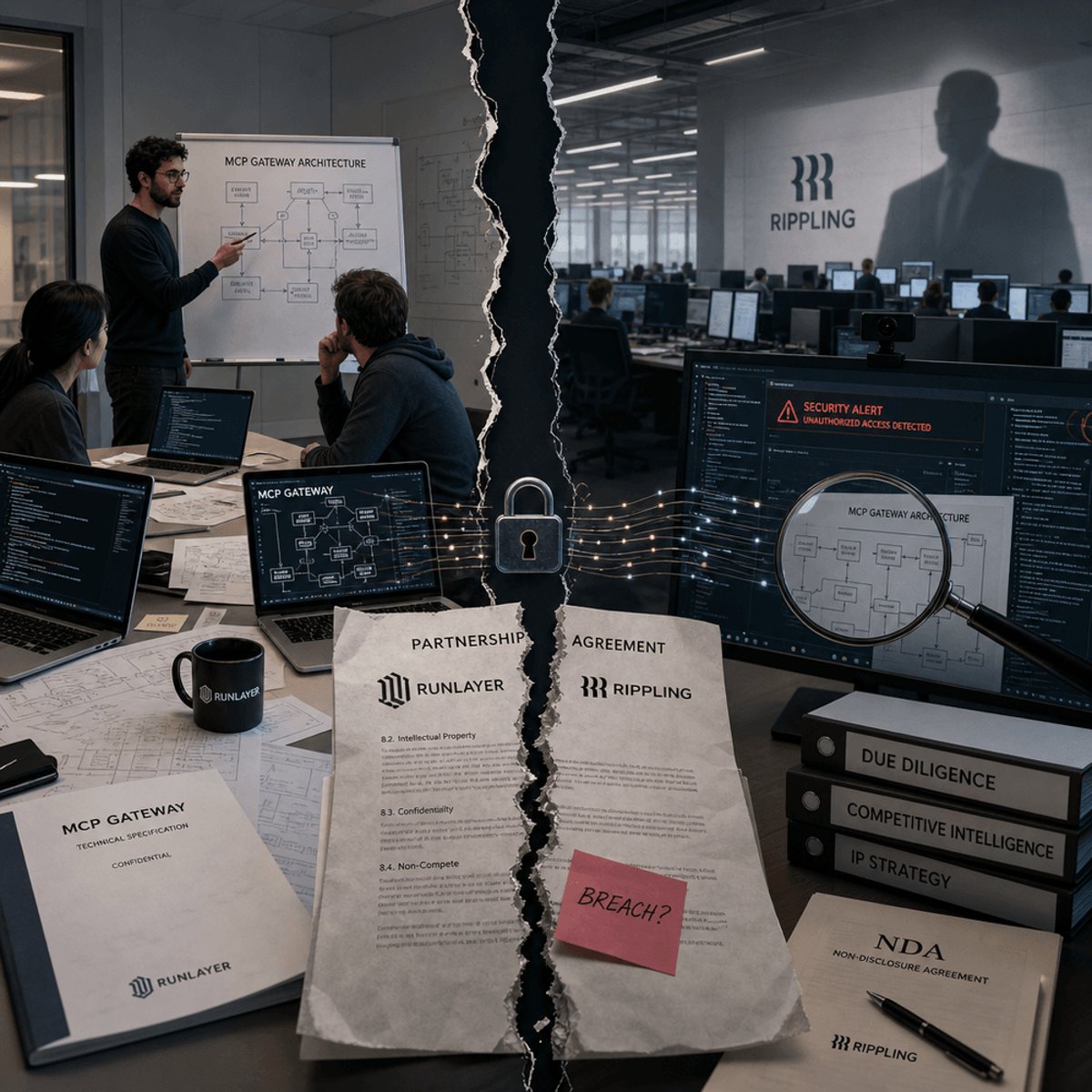
A David-versus-Goliath legal battle just erupted in the enterprise AI world. Runlayer, a startup building MCP gateway products, filed suit against Rippling today, alleging the $13.5 billion HR platform evaluated their technology during partnership talks - then ghosted them to build a competing product. The lawsuit raises urgent questions about how enterprise giants handle startup IP during evaluation periods, and it could reshape how AI infrastructure deals get done.
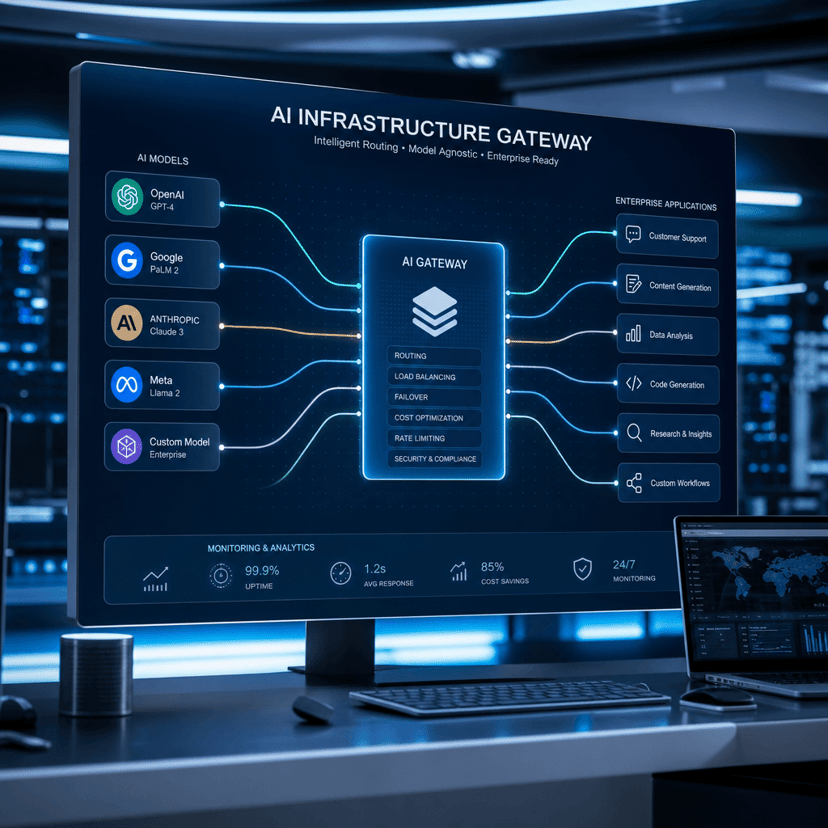
The complaint lands at a pivotal moment for AI infrastructure. Rippling, which manages HR, payroll, and IT systems for over 20,000 companies, has been aggressively building AI capabilities into its platform. MCP gateways - the technology at the heart of this dispute - serve as critical connective tissue, letting AI agents securely access and interact with enterprise data systems.
According to the lawsuit filed in California Superior Court, Runlayer alleges it entered discussions with Rippling earlier this year about integrating its MCP gateway product into Rippling's platform. During the evaluation period, Runlayer claims it provided detailed product demonstrations, technical documentation, and architectural insights to Rippling's engineering and product teams.
Then the talks went silent. Weeks later, Runlayer alleges, Rippling announced plans to launch its own MCP gateway product with remarkably similar functionality and architecture to what the startup had presented.
"This is exactly the nightmare scenario every startup founder fears when talking to potential enterprise partners," says Sarah Chen, a venture capital partner at Threshold Ventures who specializes in infrastructure investments. "You need access to evaluate product-market fit, but you're essentially handing over your playbook to a company with 100x your resources."
The Model Context Protocol itself is an open standard developed by Anthropic to help AI systems interact with external tools and data sources. But building production-ready MCP gateways for enterprise environments requires solving complex authentication, security, and data governance challenges - the kind of specialized work that takes startups months to perfect.
Runlayer's complaint doesn't just allege idea theft. The startup claims Rippling violated non-disclosure agreements signed during the evaluation period and misappropriated trade secrets related to its proprietary implementation of MCP technology. The suit seeks injunctive relief to block Rippling's competing product launch, plus damages that could exceed $10 million.
Rippling declined to comment on pending litigation. But the company's recent product roadmap presentations show MCP integration as a cornerstone of its AI strategy for 2026. The company has positioned its platform as an "AI-native" workforce management system, with automated workflows that tap into everything from payroll data to employee permissions.
For Runlayer, the stakes couldn't be higher. The startup raised a seed round earlier this year and has been positioning itself as the infrastructure layer for enterprise AI adoption. Losing a marquee partnership with Rippling would be painful enough - competing against a well-funded clone of their own product could be existential.
The case echoes similar disputes that have roiled the tech industry. Salesforce faced accusations of copying startup features after AppExchange evaluations. Google settled with a mapping startup that claimed the search giant appropriated its technology. These cases rarely make it to trial, but they've created an unofficial playbook for how evaluation periods should work.
"Smart enterprise companies now use clean rooms and limited information sharing during early-stage evaluations," explains Michael Torres, an intellectual property attorney at Fenwick & West. "The question here will be what Rippling actually saw, what was protected under NDA, and whether they built something genuinely different or just reverse-engineered Runlayer's approach."
The lawsuit arrives as competition in AI infrastructure reaches fever pitch. Every major enterprise software company is racing to embed AI capabilities, and MCP gateways represent a potential bottleneck. Companies that control this layer could gain outsized influence over how AI agents interact with corporate data.
Industry insiders say partnership negotiations between startups and enterprise platforms have grown increasingly tense. Startups need distribution and validation from established players. But handing over detailed technical information to companies that could easily build competing products creates obvious risks.
What happens next could reshape these dynamics. If Runlayer wins injunctive relief, it would send a clear signal that courts will protect startups from alleged IP appropriation during partnership talks. A loss could embolden enterprise companies to take a more aggressive approach to competitive intelligence gathering during evaluations.
Meanwhile, both companies are racing against the clock. The MCP gateway market is heating up fast, with multiple startups and established players announcing products. Whoever ships first with enterprise-ready features could lock in customers and set the standard for how this technology gets deployed.
This lawsuit is about more than two companies fighting over a product. It's a test case for how the AI infrastructure gold rush will play out - whether startups can safely partner with enterprise giants, or whether every evaluation meeting is really just competitive intelligence gathering. For founders building in the AI space, the message is clear: document everything, limit what you share, and prepare for the possibility that your potential partner might become your biggest competitor. The Runlayer-Rippling battle will be watched closely across Sand Hill Road and startup hubs worldwide, because the outcome could determine whether David ever gets to partner with Goliath, or just gets copied by him.