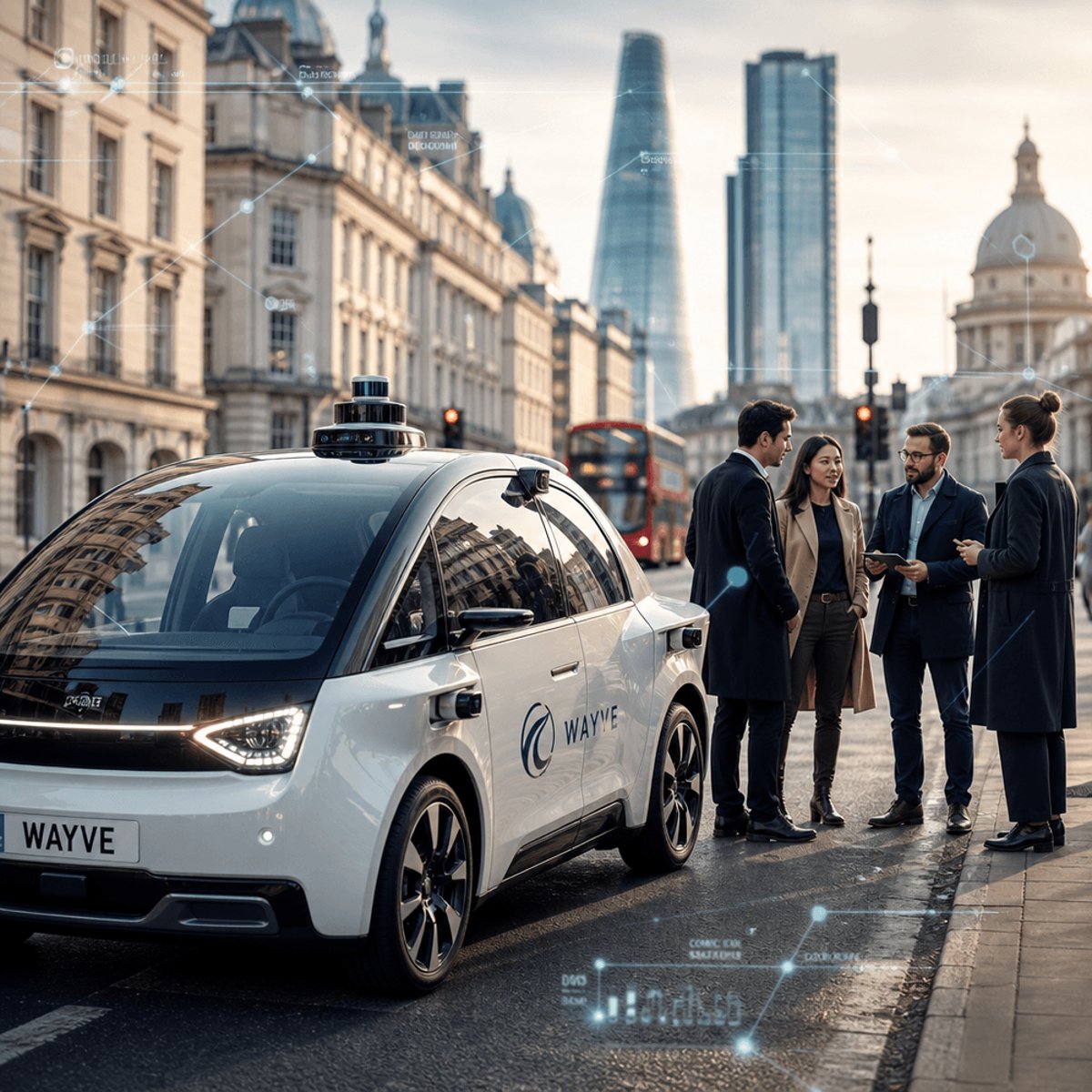
Lyft is pushing into Europe's autonomous vehicle market with a bold move - deploying Baidu's Apollo Go robotaxis across London through Freenow, the mobility network it acquired last year. The partnership marks the first major Chinese autonomous technology deployment in the UK capital and signals a new front in the global race to commercialize self-driving rides. With London's complex road networks and strict regulatory environment, this isn't just a test - it's a statement about who's ready to compete on the world stage.
Lyft just made its most aggressive play yet in the autonomous vehicle wars. The San Francisco-based rideshare giant is deploying Baidu's Apollo Go self-driving cars across London through Freenow, the European mobility network it snapped up in a $1.2 billion deal last year. Testing begins this week in select London boroughs, marking the first time Chinese autonomous technology has operated commercially in the UK.
The move catches the industry off guard. While Waymo has been methodically expanding across US cities and Cruise slowly rebuilds trust after its San Francisco stumbles, Lyft leapfrogged both by tapping into Baidu's battle-tested technology. Apollo Go has already logged over 50 million autonomous miles across Chinese cities like Beijing, Shanghai, and Wuhan - far more real-world experience than most Western competitors.
According to sources familiar with the partnership, Lyft's acquisition of Freenow wasn't just about European market share. It was about infrastructure. Freenow's existing relationships with London transport authorities and its established fleet operations gave Lyft the regulatory foothold and operational backbone to move fast. "You can't just drop robotaxis into London and hope for the best," one mobility analyst noted. "Lyft bought the keys to the city when they bought Freenow."
The initial deployment will be small - around 25 Apollo Go vehicles operating in controlled zones across Westminster and Camden. But the implications are huge. London's narrow streets, aggressive drivers, and unpredictable weather make it one of the toughest testing grounds for autonomous technology. If Baidu's systems can handle London, they can handle anywhere in Europe.
Baidu's been surprisingly quiet about international expansion, focusing instead on dominating China's massive domestic market. The company operates over 500 robotaxis across 30 Chinese cities and recently hit a milestone of 6 million commercial rides. But geopolitical tensions and regulatory hurdles have kept Chinese AV tech largely confined within national borders - until now. Lyft's Freenow platform gives Baidu a Western partner with local credibility and regulatory relationships.
The competitive dynamics are shifting fast. Waymo, backed by Alphabet, has long been considered the gold standard in autonomous vehicles. But it's been slow to expand internationally, focusing on perfecting operations in Phoenix, San Francisco, and Los Angeles. Cruise, majority-owned by General Motors, is still recovering from last year's suspension in San Francisco after a pedestrian dragging incident. That left an opening, and Lyft-Baidu just drove through it.
Lyft CEO David Risher has been telegraphing this strategy for months. After selling the company's internal autonomous vehicle division to Toyota in 2021, Lyft positioned itself as a platform-agnostic marketplace for AV technology. The Freenow acquisition and Baidu partnership validate that approach - why spend billions developing your own self-driving tech when you can partner with whoever's already figured it out?
Regulatory approval came faster than expected. The UK's Department for Transport has been actively courting autonomous vehicle companies as part of its post-Brexit innovation push. London's transport authority granted Freenow a provisional license for limited autonomous operations earlier this month, with strict safety requirements and human safety operators required in every vehicle during the initial phase.
The business model is straightforward - Apollo Go rides will be bookable through the Freenow app at a slight premium to standard rides during testing, then priced competitively once the service scales. Lyft takes a platform fee, Baidu provides the technology and vehicles, and Freenow handles local operations and regulatory compliance. It's the kind of three-way partnership that could become the template for global AV deployment.
But challenges remain. Public skepticism about autonomous vehicles runs high in the UK, especially after high-profile incidents in the US. Data privacy concerns around Chinese technology add another layer of complexity. And London's taxi drivers - already battling rideshare apps - aren't exactly rolling out the welcome mat for robotaxis.
What happens in London over the next six months will determine whether this partnership expands to other European cities or becomes a cautionary tale. Freenow operates in over 100 cities across Europe, giving Lyft-Baidu a ready-made expansion path if London goes well. Paris, Berlin, and Madrid could be next.
This isn't just about London. Lyft's partnership with Baidu through Freenow represents a fundamental shift in how autonomous vehicle technology might spread globally - through strategic acquisitions and cross-border partnerships rather than homegrown development. If Chinese AV tech can prove itself in one of the world's most challenging urban environments while navigating Western regulatory frameworks, it redraws the competitive map. Waymo and Cruise have the technology and the backing, but Lyft-Baidu just demonstrated something arguably more valuable: speed and strategic positioning. The robotaxi race is no longer just about who has the best sensors or algorithms. It's about who can move fastest across borders, regulators, and public skepticism. And right now, that's Lyft and Baidu.