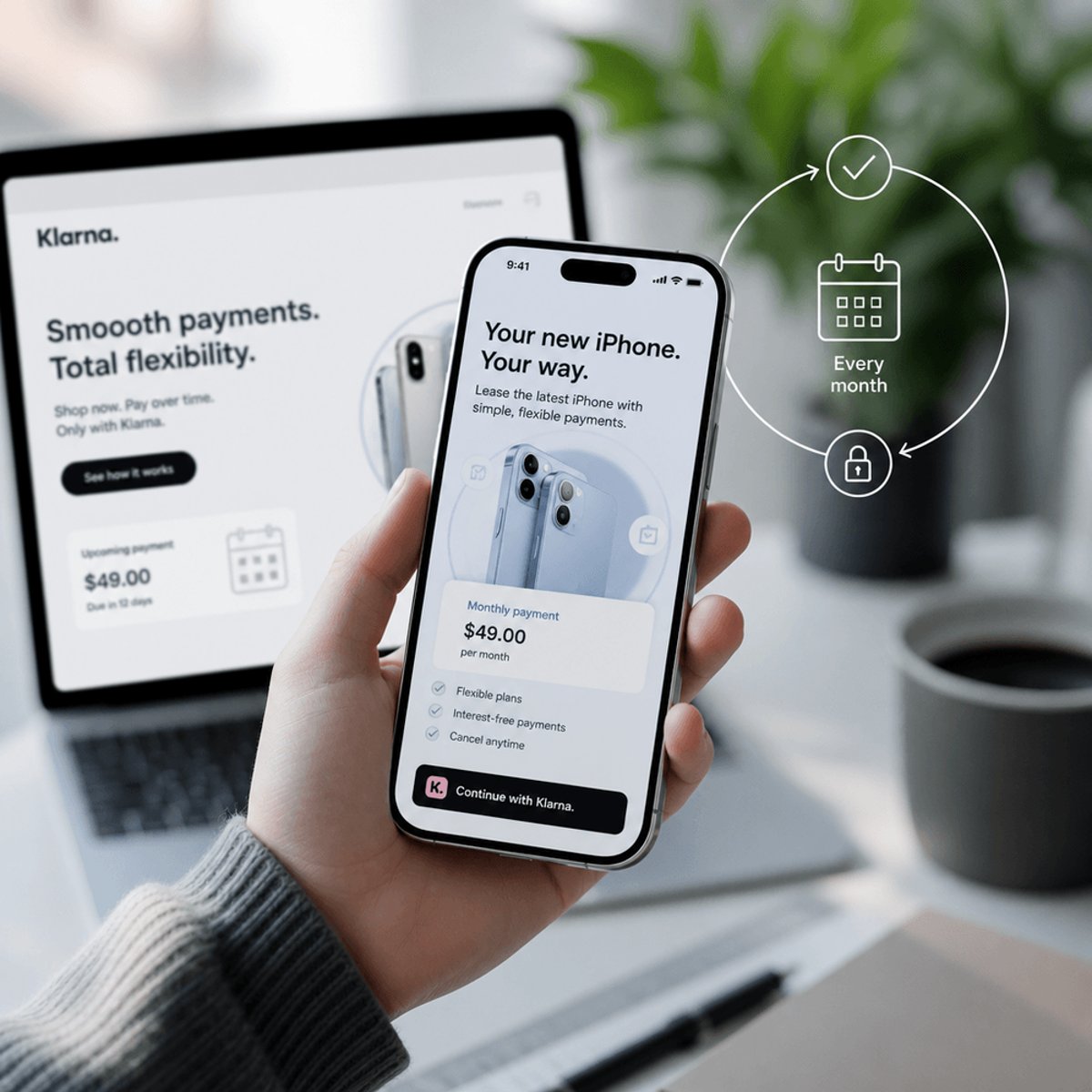
Apple is rolling out a new iPhone leasing program that lets customers pay $17.99 monthly through a partnership with fintech giant Klarna, marking the company's most aggressive push yet into hardware-as-a-service. The move comes just weeks after Apple raised prices on iPads and Macs due to the ongoing global memory shortage, signaling a strategic shift toward predictable subscription revenue as component costs squeeze traditional hardware margins.
Apple just made its boldest move yet into subscription hardware. The company announced today it's launching an iPhone leasing program priced at $17.99 per month, partnering with Swedish fintech powerhouse Klarna to handle the payment infrastructure. The timing couldn't be more strategic - or more telling about where Apple sees its business heading.
The announcement arrives just weeks after Apple raised prices across its iPad and Mac lines, a rare move the company attributed to the global memory shortage that's been squeezing hardware margins industry-wide. According to CNBC's reporting, the new leasing option represents Apple's response to mounting pressure on traditional device sales economics.
At $17.99 monthly, Apple's positioning the program well below typical carrier installment plans, which often run $25-35 per month for flagship iPhones. The pricing suggests Apple's willing to compress margins in exchange for locking customers into its ecosystem long-term. It's a play straight from the software-as-a-service handbook, but applied to $1,000 hardware.
The Klarna partnership is particularly shrewd. Rather than building payment infrastructure from scratch or relying on carriers, Apple's tapping into Klarna's 150 million active users and proven buy-now-pay-later technology. Klarna already processes payments for major retailers globally, giving Apple instant scale without the regulatory headaches of becoming a full-fledged lender itself.
This isn't Apple's first dance with subscription hardware - the company's offered iPhone Upgrade Program financing since 2015 through its partnership with Citizens One bank. But that program required in-store signups and credit checks that created friction. The Klarna deal streamlines the entire process, letting customers lease iPhones with the same ease they'd subscribe to Apple Music or iCloud storage.
The broader context reveals why Apple's moving now. The global memory shortage that forced those iPad and Mac price hikes shows no signs of easing, with industry analysts predicting tight DRAM and NAND supply through 2027. Traditional hardware sales models become increasingly risky when component costs swing unpredictably. Subscription revenue, by contrast, offers the predictability Wall Street loves.
For Klarna, the deal's a major validation as the company works to rebuild its valuation after the fintech correction of 2024-2025. Landing Apple as a partner provides both revenue and credibility as Klarna eyes a potential IPO. The company's been aggressively expanding beyond retail into higher-value verticals, and consumer electronics represents a massive addressable market.
The competitive implications ripple across multiple industries. Wireless carriers have long used device financing as customer retention tools, subsidizing phones to lock in service contracts. Apple's direct-to-consumer leasing program threatens to cut carriers out of that equation, letting Apple own the entire customer relationship from hardware to services.
Device trade-in economics also get interesting. With leasing, Apple controls the entire device lifecycle - it can refurbish and re-lease returned phones, extracting multiple revenue cycles from single devices. That's a fundamentally different business model than one-time sales, with potentially higher lifetime value per device manufactured.
The $17.99 price point likely targets entry-level iPhone models, possibly iPhone SE or previous-generation devices. Apple hasn't disclosed which models qualify, but the monthly cost suggests either a 24-month lease on older hardware or a longer commitment period for current models. The company also hasn't revealed whether leases include upgrade options, though that's standard in similar programs.
What Apple's not saying is equally revealing. The company hasn't mentioned what happens at lease end - do customers own the device, return it, or face buyout terms? Those details matter enormously for understanding the program's true economics and whether it's primarily a financing mechanism or a rental model with perpetual payment obligations.
The memory shortage context adds urgency to Apple's subscription pivot. If component costs remain elevated or volatile, recurring revenue models insulate Apple from margin compression. Services revenue already accounts for over 20% of Apple's total business, and hardware subscriptions could accelerate that shift dramatically.
Apple's Klarna partnership represents more than just another financing option - it's a strategic bet that hardware's future looks more like software, with recurring revenue replacing one-time purchases. As component costs remain unpredictable and service revenue becomes increasingly central to Apple's valuation, expect the company to expand subscription models across its entire product line. The question isn't whether other manufacturers will follow Apple's lead, but how quickly. For consumers, $17.99 monthly sounds appealing until you calculate the long-term cost and realize you're potentially paying in perpetuity for devices you'll never own. The shift from ownership to access is accelerating, and Apple's betting most customers won't mind as long as the latest iPhone stays in their pocket.