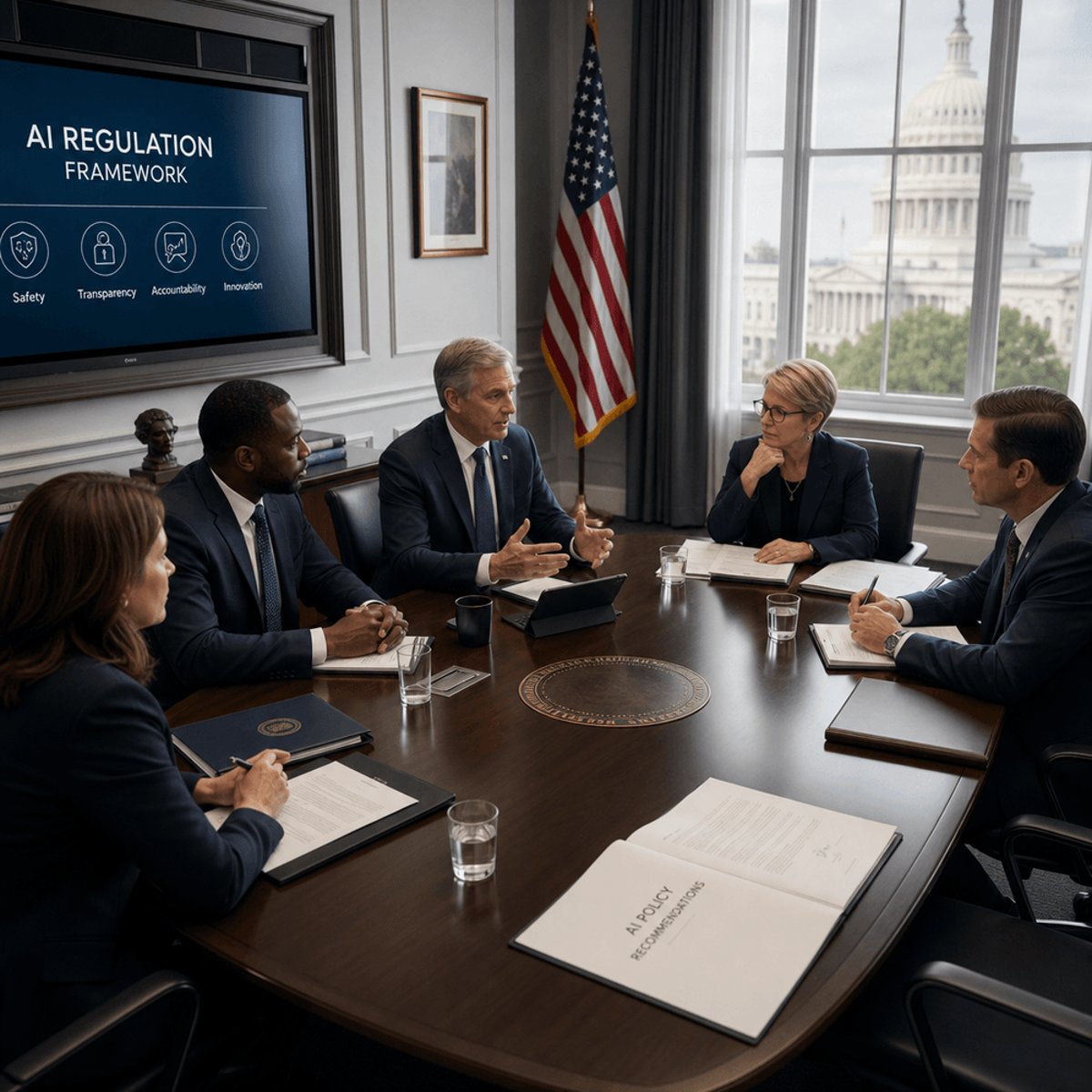
OpenAI CEO Sam Altman is heading to the White House this week for high-stakes meetings with senior Trump administration officials, including Chief of Staff Susie Wiles, as the federal government races toward a critical AI framework deadline. The discussions come at a pivotal moment for AI regulation, with Altman set to engage with lawmakers and economists on policy that could reshape how the industry operates. It's the latest sign that Washington is finally getting serious about governing AI - and that OpenAI wants a seat at the table as those rules take shape.
OpenAI CEO Sam Altman is making the rounds in Washington this week, and the timing couldn't be more critical. According to CNBC, Altman has scheduled meetings with White House Chief of Staff Susie Wiles and a roster of senior Trump administration officials as the federal government barrels toward a deadline for its comprehensive AI regulatory framework.
The meeting blitz marks a significant escalation in OpenAI's government relations efforts. While Altman has long been a visible presence in policy circles - testifying before Congress and advocating for AI safety measures - this week's concentrated engagement suggests the stakes have risen considerably. The federal AI framework, which has been in development for months, is expected to establish baseline rules for everything from model training transparency to safety testing requirements.
Altman isn't just talking to White House staff. His itinerary includes sit-downs with lawmakers from both parties and economists who've been studying AI's potential economic disruption. That broad outreach signals OpenAI is trying to shape policy on multiple fronts - regulatory, legislative, and economic. It's a full-court press that reflects how much the company has to gain or lose depending on how these rules shake out.
The regulatory landscape for AI has shifted dramatically over the past year. What started as voluntary commitments and industry self-regulation has morphed into serious discussions about mandatory safety standards, testing protocols, and disclosure requirements. The Trump administration's framework is expected to lean toward innovation-friendly policies compared to stricter approaches being debated in Europe, but even business-minded regulations could impose significant compliance costs on AI companies.
For OpenAI, the calculus is complicated. The company has publicly advocated for AI regulation - Altman has repeatedly called for government oversight during congressional testimony - but there's a delicate balance between safety measures that establish legitimacy and rules that might slow down deployment or favor competitors. Google and Anthropic have been equally active in Washington, each pushing their own vision of responsible AI governance.
The deadline pressure adds urgency to this week's meetings. While the exact date hasn't been publicly disclosed, sources familiar with the administration's timeline suggest the framework could be unveiled within weeks. That compressed window means Altman's input this week could directly influence the final language - or it could be a last-ditch effort to moderate provisions OpenAI finds concerning.
Washington's approach to AI regulation has been notably hands-off compared to other major economies. The European Union's AI Act imposes strict requirements based on risk categories, while China has implemented content control measures for generative AI. The U.S. has relied primarily on executive orders and agency guidance rather than comprehensive legislation. This upcoming framework represents the most concrete federal action yet, potentially setting precedent for future congressional bills.
The involvement of economists in Altman's meeting schedule is particularly telling. AI's impact on employment, productivity, and economic inequality has become a central concern beyond just safety and ethics issues. Recent analyses suggest AI could displace millions of workers while creating new categories of jobs - but the transition could be messy. Economic policy experts are wrestling with questions about retraining programs, social safety nets, and whether AI development should be slowed to allow labor markets to adapt.
OpenAI has positioned itself as a responsible actor in the AI space, emphasizing safety research and gradual deployment strategies. But the company also operates under intense competitive pressure. Microsoft's massive investment in OpenAI, reported partnerships worth billions, means there are powerful commercial interests pushing for rapid advancement and market dominance. Balancing those imperatives with regulatory compliance will define OpenAI's strategy going forward.
The meetings also come as OpenAI faces its own internal challenges. The company has weathered leadership drama, safety researcher departures, and questions about its governance structure. Altman's public-facing role as the reasonable voice of AI - someone who acknowledges risks while championing innovation - has been crucial to OpenAI's brand. His White House visits reinforce that positioning.
What remains unclear is how much influence any single company will have on the final framework. The administration has consulted with dozens of AI firms, academic researchers, civil society groups, and industry associations. Altman's access to senior officials gives OpenAI a platform, but the ultimate policy will reflect competing pressures from multiple stakeholders. Some advocacy groups have criticized what they see as too much industry input in regulatory processes, arguing that AI companies shouldn't write their own rules.
This week's White House meetings represent a critical moment in AI governance - the point where voluntary industry pledges give way to actual federal rules with teeth. For Altman and OpenAI, the challenge is influencing policy without appearing to capture it, advocating for workable regulations that don't strangle innovation while still addressing legitimate safety concerns. How the administration's framework lands will set the tone for AI policy across federal agencies and potentially shape congressional action for years to come. The real test isn't whether OpenAI gets everything it wants this week, but whether the resulting framework can actually govern AI's breakneck evolution while keeping American companies competitive globally. That's a balancing act no amount of White House meetings can fully resolve, but Altman's making sure OpenAI's voice is heard while the rules are still being written.