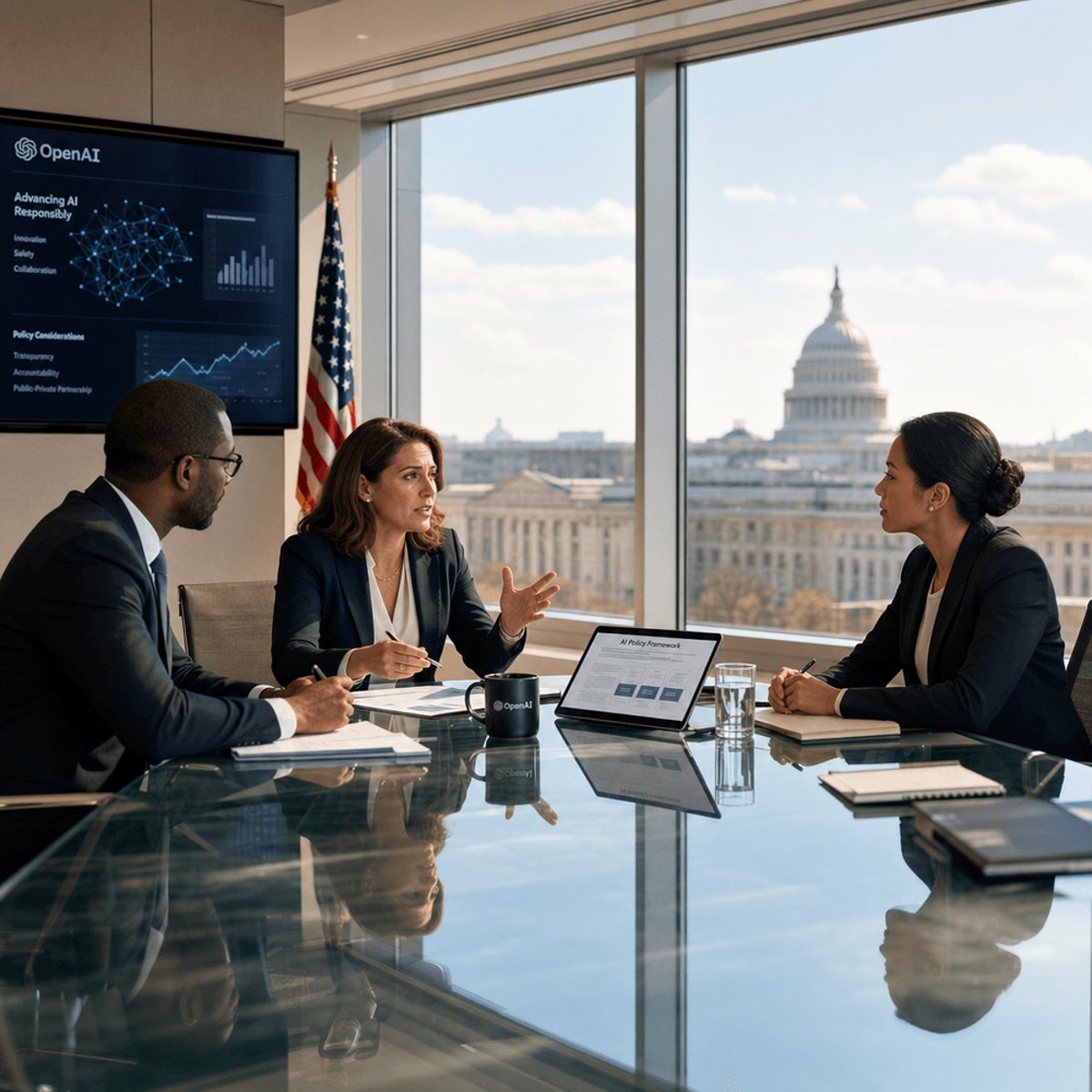
Sam Altman made the rounds in Washington this week, meeting with lawmakers and Trump administration officials just days after President Donald Trump signed a new executive order on artificial intelligence. The OpenAI CEO publicly backed the policy directive, marking another chapter in the AI industry's increasingly cozy relationship with federal regulators as the technology races ahead of existing frameworks.
Sam Altman landed in Washington this week with a mission - to talk AI policy with the people writing the rules. The OpenAI chief executive met with lawmakers and Trump administration officials just days after President Donald Trump put pen to paper on a new executive order governing artificial intelligence development and deployment.
Altman didn't just show up - he came ready to praise. The CEO publicly voiced support for Trump's executive order, though the specific provisions of the policy directive remain closely held. It's a familiar playbook for Altman, who's spent considerable time over the past year shuttling between San Francisco and the nation's capital as Washington scrambles to catch up with AI's breakneck evolution.
The timing matters. OpenAI sits at the center of the generative AI boom that's reshaped tech since ChatGPT's launch in late 2022. The company's technology powers everything from Microsoft's Copilot to countless enterprise applications, making any federal policy on AI development directly relevant to OpenAI's future.
But Altman's DC charm offensive also comes as the industry faces growing questions about safety, copyright, misinformation, and market concentration. Lawmakers from both parties have expressed concern about AI's rapid deployment without clear guardrails - concerns that this executive order presumably aims to address, at least in part.
The lack of detail around the meetings and the executive order itself makes it hard to assess what's actually changing. Is this substantive policy that could reshape how OpenAI and competitors like Google and Anthropic develop their models? Or is it more symbolic - a signal that the administration is paying attention without fundamentally altering the landscape?
What we do know is that Altman's willingness to publicly back the order suggests it's not overly restrictive from OpenAI's perspective. The company has walked a careful line on regulation, generally supporting the concept of AI governance while resisting measures that might significantly slow development or give advantages to competitors.
The meetings also highlight how AI policy has become a bipartisan issue, even in today's polarized environment. Both Democratic and Republican lawmakers have called for AI oversight, though they differ on specifics. Some want safety testing requirements and transparency mandates. Others focus on maintaining American competitiveness against China's AI ambitions. Altman's ability to navigate both camps has become a key part of his role.
OpenAI has reason to stay close to policymakers. The company recently restructured into a for-profit benefit corporation, a move that brings new scrutiny. It's also facing lawsuits over training data and copyright questions that federal policy could influence. And as it pursues its mission of developing artificial general intelligence, having regulators who understand - and support - that goal becomes increasingly important.
The broader context is an industry in flux. While OpenAI maintains its lead in public mindshare, competition intensifies. Google's Gemini models continue improving, Anthropic raises billions for Claude development, and open-source alternatives gain traction. How federal policy shapes this competitive landscape could determine which approaches - and which companies - ultimately prevail.
For now, the details remain frustratingly sparse. What exactly does Trump's executive order require? What commitments, if any, did Altman make during his Capitol Hill meetings? How will this policy interact with state-level AI regulations already taking shape in places like California and New York?
Those answers will likely emerge in the coming days and weeks as the administration releases more information and companies begin implementing whatever requirements the order contains. What's clear is that Altman sees value in showing up, shaking hands, and making sure OpenAI's voice gets heard as the rules get written.
Altman's DC visit underscores a reality of modern tech - the biggest players don't wait for regulation to happen to them, they show up to help shape it. Whether Trump's executive order represents meaningful oversight or industry-friendly window dressing remains to be seen. But OpenAI's chief is making sure his company has a seat at the table as Washington figures out how to govern the most transformative technology in a generation. The devil, as always, will be in the details we haven't seen yet.