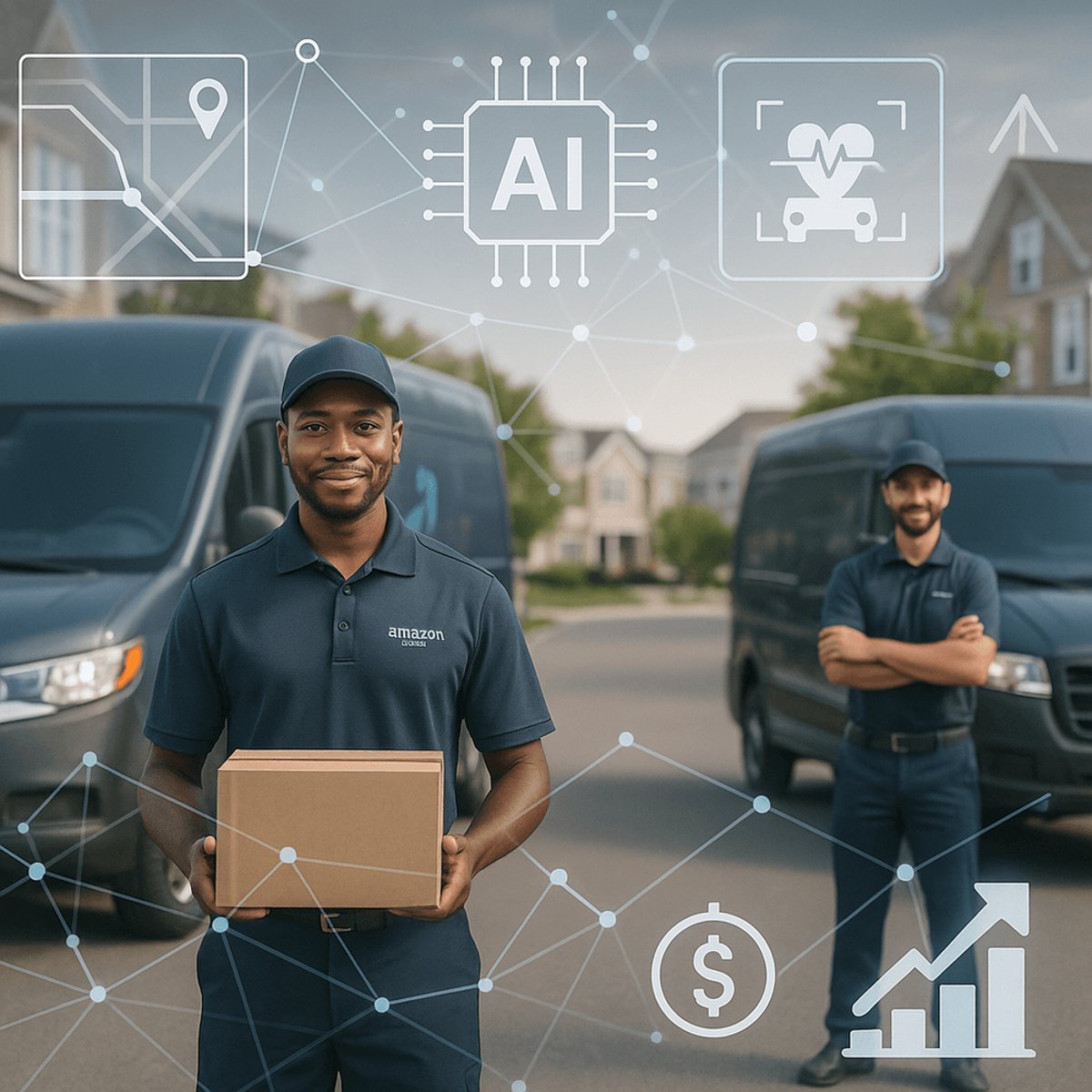
Amazon just turbocharged its delivery empire with a $1.9 billion investment in its Delivery Service Partner program, pushing driver wages toward $23 per hour nationally while rolling out AI-powered safety tools. The mega-commitment brings Amazon's total DSP investment to $16.7 billion over seven years, signaling the company's serious play to cement logistics dominance as competition intensifies from rivals like UPS and emerging players in the last-mile delivery space.
Amazon is betting big on its army of small business delivery partners, and the numbers tell a compelling story about where logistics is headed. The company's latest $1.9 billion commitment to its Delivery Service Partner program doesn't just represent another corporate investment - it's a strategic chess move that could reshape how packages reach doorsteps across America.
The investment timeline reveals Amazon's accelerating focus on delivery infrastructure. Since launching the DSP program in 2018, the company has now pumped $16.7 billion into supporting 4,500 small business owners who handle last-mile deliveries. That's serious capital flowing into what was once considered a capital-light business model.
"We anticipate that Amazon's investments over the past two years will have helped DSPs increase pay by an average of 13%," Beryl Tomay, Amazon's VP of Transportation, revealed at the company's annual DSP Ignite event. The wage bump to nearly $23 per hour nationally puts Amazon delivery drivers ahead of many retail and service workers, creating competitive pressure across the gig economy.
But it's the AI integration that signals where this is really going. Amazon's new safety technology combines satellite imagery with delivery success signals and public data sources to create what the company calls "smarter routing." When drivers report mapping issues, AI systems automatically process the feedback and fix problems across the network. It's the kind of real-time learning loop that traditional logistics companies struggle to match.
The safety metrics emerging from these investments are striking. Amazon reports a 31% reduction in serious collisions and a 32% decrease in dangerous behaviors like speeding and distracted driving over the past year. Those aren't just feel-good statistics - they represent millions in avoided insurance costs and liability exposure.
The competitive implications extend beyond traditional shipping. As FedEx and UPS grapple with union negotiations and aging infrastructure, Amazon's DSP model creates a more flexible, technology-forward alternative. The company's multi-modal AI breakthroughs, which can automatically translate customer delivery instructions across 30+ languages, showcase capabilities that established carriers lack.
Amazon's community investment angle through the "Together, We Give" program adds another layer to the strategy. This month alone, DSPs donated over $430,000 to nonprofits and provided school supplies to 60,000 students. It's smart positioning that turns delivery drivers into community ambassadors while building local goodwill.
The timing isn't coincidental. E-commerce growth has plateaued in some segments, making logistics efficiency increasingly critical to maintaining margins. Amazon's willingness to invest $1.9 billion in driver wages and AI tools suggests the company sees delivery speed and reliability as key differentiators in a maturing market.
Industry analysts are watching how this affects Amazon's notorious delivery promises. The combination of better-paid drivers and AI-optimized routing could enable even faster delivery windows, potentially pushing one-day delivery toward same-day as the default expectation.
For competitors, Amazon's DSP investment creates a dilemma. Matching the wage increases requires significant capital, while the AI safety tools represent years of development that can't be quickly replicated. Walmart, which relies heavily on third-party delivery services, may need to reconsider its logistics strategy as Amazon's advantages compound.
Amazon's $1.9 billion DSP investment isn't just about paying drivers more - it's about building an AI-enhanced delivery network that competitors will struggle to match. With 4,500 small businesses now operating as Amazon's logistics arms, backed by cutting-edge safety technology and community engagement programs, the company is creating competitive moats that extend far beyond traditional shipping metrics. The real question isn't whether other logistics players can match Amazon's spending, but whether they can replicate the integrated technology stack that makes this investment so strategically powerful.