The backlash against constant AI-powered meeting recording is here. As Zoom and competitors bake transcription into every call, a quiet rebellion is brewing in corporate America - workers are finding creative ways to opt out of the always-on surveillance that comes with AI note-taking tools. The question isn't whether the technology works, but whether anyone actually wants every conversation preserved, analyzed, and filed away forever.
Zoom wanted to make meetings more productive. Instead, it might have sparked a workplace privacy movement.
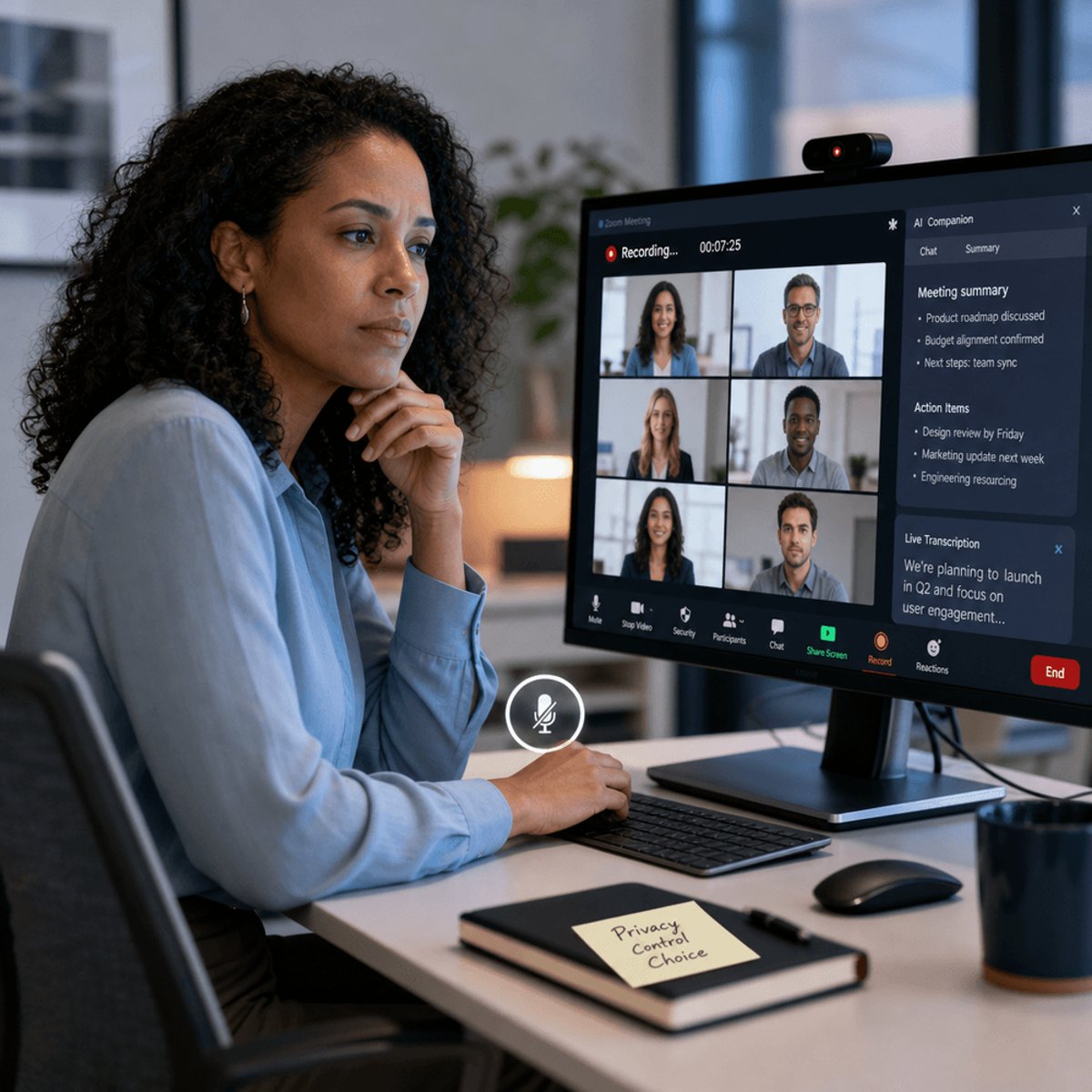
The video conferencing giant has spent the past year aggressively pushing AI-powered transcription and summary features, joining rivals like Microsoft Teams and Google Meet in the race to automatically capture every uttered word. But as these tools become default rather than optional, employees are pushing back - not with formal complaints, but with clever technical workarounds that say 'don't record me' without actually saying it.
The phenomenon highlights a growing disconnect between what productivity software promises and what workers actually want. According to TechCrunch, the resistance isn't about the technology failing - it's about it working too well. When every standup, brainstorm, and casual check-in gets transcribed and filed away, the sheer volume of documentation becomes its own problem.
The timing couldn't be more awkward for Zoom, which has bet heavily on AI features to differentiate itself in an increasingly crowded market. The company's AI Companion tool, launched last year, promised to liberate workers from note-taking drudgery. But liberation looks different when you're the one being recorded. Some employees report feeling less candid in meetings, knowing an AI is parsing every word for sentiment and action items.
This isn't just about privacy - though that's certainly part of it. The deeper issue is information overload. If every meeting generates a transcript, summary, and action item list, who's actually reading any of it? The promise of AI was supposed to be better signal-to-noise ratio, but flooding inboxes with auto-generated summaries just shifts the noise around.
Microsoft has faced similar pushback with Teams' transcription features, particularly in industries with strict compliance requirements. Legal and healthcare professionals have raised concerns about where these transcripts live, who can access them, and how long they're retained. The convenience of searchable meeting records quickly becomes a liability when discovery requests or data breaches enter the picture.
The workarounds themselves reveal the creativity of worker resistance. Some users have discovered that certain audio settings or network configurations can interfere with transcription accuracy just enough to make the output useless. Others simply decline to enable the features, creating awkward standoffs when managers expect AI summaries that never materialize.
What's particularly telling is that this resistance crosses generational lines. It's not just older workers uncomfortable with surveillance technology - younger employees who grew up with social media are equally wary of having their professional conversations permanently archived and analyzed. The difference between choosing to share on Instagram and having every work comment auto-transcribed is the difference between performance and surveillance.
The backlash also exposes the limits of AI as a productivity solution. Transcription technology has improved dramatically - modern speech-to-text is remarkably accurate. But accuracy isn't the same as utility. A perfect transcript of a rambling 45-minute meeting is still a rambling 45-minute meeting, just in text form. The AI summaries help, but they also flatten context and nuance in ways that can create new problems.
For Zoom and its competitors, this presents a tricky product challenge. The AI features are table stakes for enterprise sales - companies expect these capabilities. But if workers actively avoid using them, the value proposition collapses. The solution probably isn't better AI, it's better control - letting individuals and teams decide what gets recorded rather than making everything opt-out by default.
The broader pattern here is familiar from other AI deployments. Tools that promise to augment human capability often end up feeling like replacement or surveillance instead. The same dynamics played out with employee monitoring software during remote work, with productivity tracking tools, and now with meeting transcription. The technology works exactly as advertised, which is precisely the problem.
Some companies are starting to establish recording policies that acknowledge these concerns - designating certain meetings as 'off the record' or requiring explicit consent before transcription starts. But these policies are playing catchup with technology that's already embedded in the tools workers use every day.
The Zoom recording rebellion is about more than just one feature on one platform. It's a signal that workers are reaching their limit with ambient AI surveillance dressed up as productivity tools. The companies that figure out how to make these technologies genuinely optional - not just technically opt-out but culturally acceptable to decline - will probably win more trust than those pushing ever-more-comprehensive recording. The future of work might include AI assistants, but it shouldn't require surrendering every conversation to the algorithm. Sometimes the most productive thing you can do is have a meeting that nobody records.