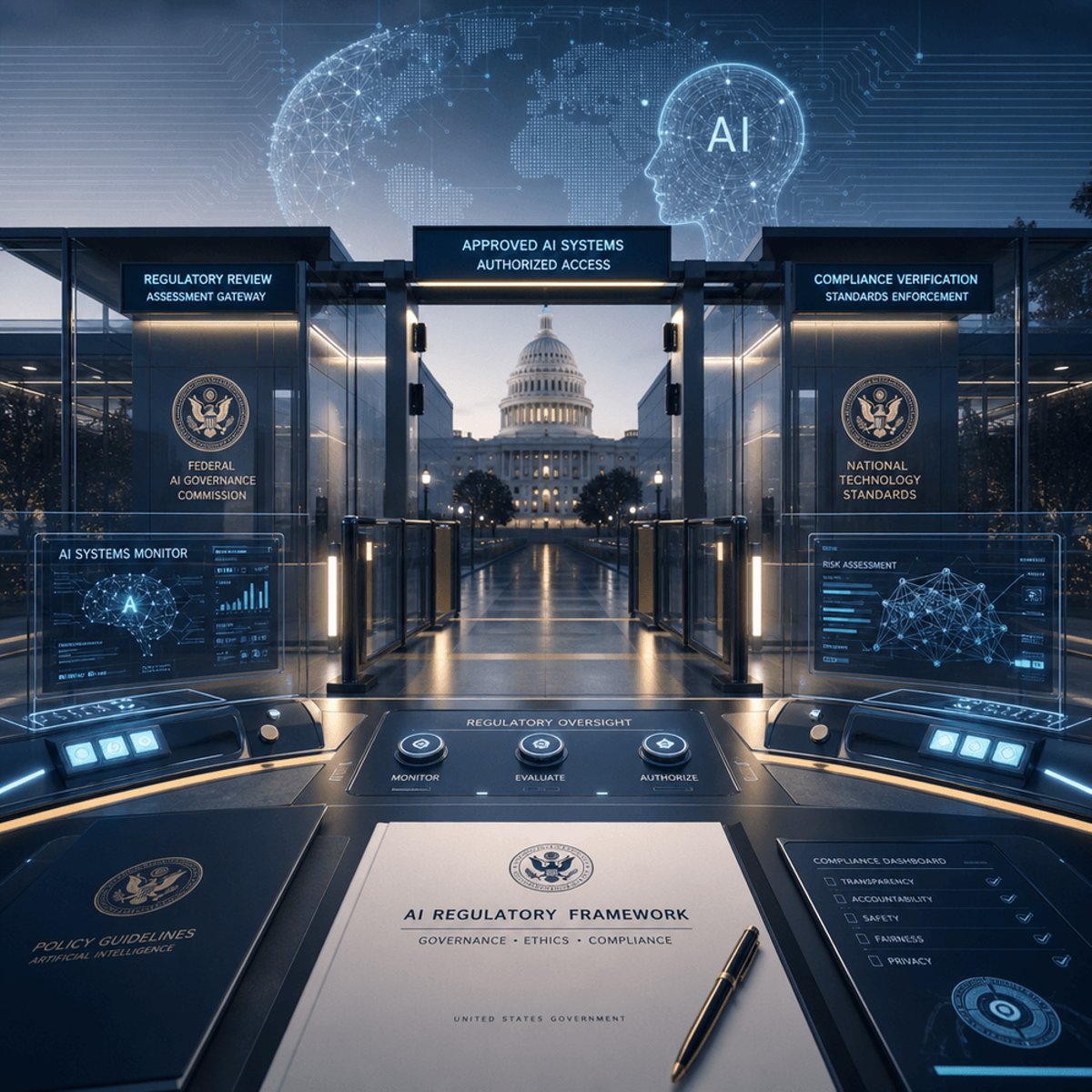
The Trump administration is making an unprecedented power play in artificial intelligence, moving to control who gets access to the most advanced frontier models from companies like OpenAI and Anthropic. Sources familiar with the matter told CNBC the White House is taking direct steps to regulate access to cutting-edge AI systems, a dramatic shift that could fundamentally reshape the balance of power between government and the tech industry in the race for AI dominance.
The White House just grabbed the wheel in the AI race, and Silicon Valley's biggest players are about to feel the impact. The Trump administration is taking concrete steps to dictate who gets access to the most advanced frontier AI models, a move that fundamentally rewrites the power dynamics between government and the tech industry, sources familiar with the matter told CNBC.
The intervention targets the cutting edge of AI development - frontier models from companies like OpenAI and Anthropic that represent the most powerful and capable systems currently in existence. Until now, these companies have largely controlled who gets access to their technology, from enterprise customers to research institutions. That's about to change.
The implications ripple far beyond a simple regulatory flex. We're talking about the federal government inserting itself directly into decisions that have been made in Silicon Valley boardrooms - who gets to build with the most advanced AI, what applications get greenlit, and potentially which industries get prioritized for access. It's the kind of intervention that would have been unthinkable even two years ago, but the breakneck pace of AI development has clearly pushed the administration to act.
For OpenAI, already navigating complex questions about access to GPT-4 and future models, this adds another layer of oversight to an already complicated landscape. The company's partnership with Microsoft gives it unique infrastructure advantages, but federal control over model access could complicate those arrangements. Anthropic, which has positioned itself as the safety-conscious alternative with its Claude models, now faces government gatekeeping on top of its own internal deployment safeguards.
The move reflects growing anxiety in Washington about AI's national security implications. Frontier models aren't just chatbots - they're systems capable of advanced reasoning, code generation, and potentially capabilities that could be weaponized or used to gain strategic advantages. The administration appears to be treating access to these systems the way previous governments treated access to sensitive military technology or encryption standards.
But there's a tension here that's going to play out in real time. The U.S. has maintained its AI leadership partly because of the relatively open ecosystem that's allowed rapid innovation and deployment. Too much government control could slow development, push talent overseas, or create the kind of bureaucratic bottlenecks that hand advantages to competitors in China or elsewhere. It's a delicate balance, and there's little evidence anyone knows exactly where to draw the line.
For enterprise customers already building AI strategies around these frontier models, the uncertainty is the killer. If your company's roadmap depends on accessing the latest capabilities from OpenAI or Anthropic, you now have to factor in potential government approval processes, compliance requirements, and the possibility that access could be delayed or denied based on criteria that aren't even fully defined yet.
The tech giants themselves are in a bind. They've spent months arguing for smart regulation while simultaneously warning against heavy-handed government intervention that could stifle innovation. Now they're getting intervention that's very heavy-handed indeed, and they'll need to decide whether to fight it, accommodate it, or try to shape it into something they can live with. Early signals suggest a mix of all three.
This isn't happening in a vacuum. The move comes as the AI industry faces mounting pressure over safety concerns, job displacement fears, and questions about whether companies can be trusted to self-regulate technologies this powerful. The administration is clearly betting that direct federal oversight is the answer, even if it means upending the largely hands-off approach that's characterized U.S. tech policy for decades.
What remains unclear is how this will actually work in practice. Will there be a formal approval process for frontier model access? What criteria will determine who gets approved? How will this affect international customers and partnerships? And crucially, how will the government define what even counts as a frontier model as the technology continues to evolve? Those details matter enormously, and right now they're mostly missing.
The Trump administration's move to control frontier AI access marks a pivotal moment in the relationship between Silicon Valley and Washington. What started as a technology sector largely left to self-regulate is now facing direct federal intervention at the highest levels of capability. For companies building on these models, enterprise customers planning AI strategies, and the broader ecosystem of AI development, the landscape just got significantly more complex. The next few months will reveal whether this represents necessary oversight of potentially dangerous technology or government overreach that could hamstring American AI leadership. Either way, the era of tech companies controlling access to the most powerful AI systems on their own terms is ending.