Anthropic is heading to the negotiating table with the Trump administration after receiving an unprecedented export control directive that blocks foreign nationals from accessing its latest AI models. The move marks one of the most aggressive federal interventions in AI development to date, forcing the San Francisco-based company into damage control as it scrambles to maintain its global research partnerships while navigating new national security restrictions on frontier AI technology.
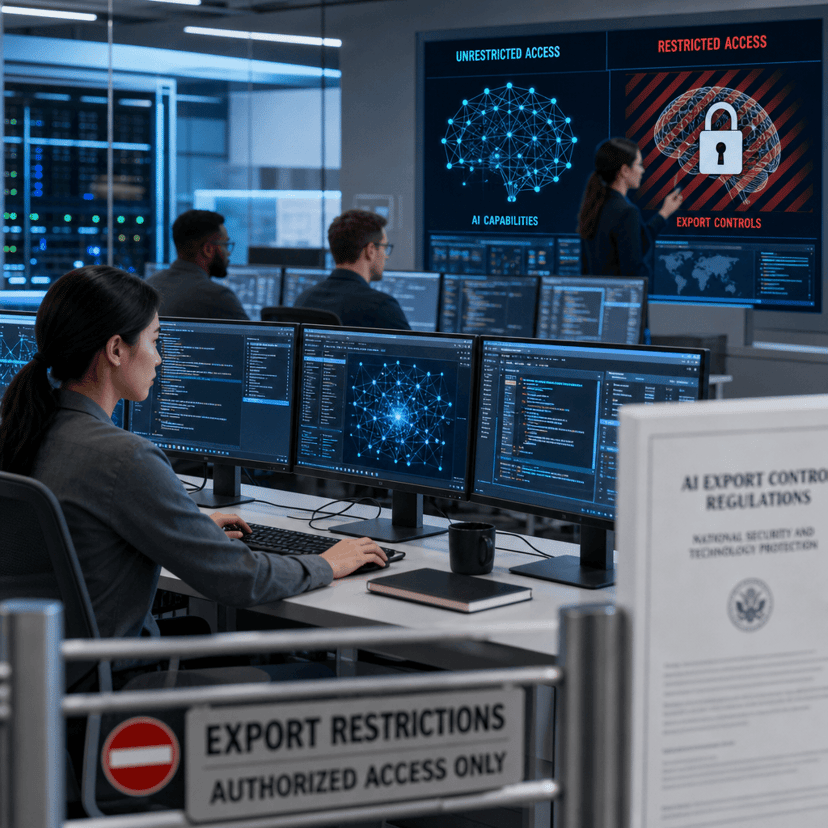
Anthropic just got hit with what may be the AI industry's first major export control crisis. The company behind Claude received a federal directive ordering it to suspend access to its latest AI models for any foreign national, throwing its global research operations into uncertainty and setting up a high-stakes confrontation with the Trump administration.
The export control order, which sources are calling the Mythos dispute, arrives as Washington ratchets up scrutiny of frontier AI development. Unlike previous regulatory conversations around AI safety or transparency, this represents direct federal intervention in who can access cutting-edge models, a move that could fundamentally alter how AI labs operate.
Anthroplic is now racing to arrange meetings with Trump administration officials to negotiate the terms and scope of the restrictions. The company finds itself in an awkward position - it needs to demonstrate compliance with national security directives while preserving the international research collaborations that have become essential to AI development. Major AI labs routinely employ foreign nationals and collaborate with overseas institutions, making blanket access restrictions potentially devastating.
The timing is particularly fraught for Anthropic. The company has been positioning itself as a leader in AI safety and responsible development, attracting significant investment from Amazon and Google. Export controls that limit who can work with its models could handicap its competitive position against rivals like OpenAI and Google DeepMind, depending on how broadly the administration applies similar restrictions across the industry.
The directive appears to stem from growing concerns in Washington about AI technology transfer and the potential for advanced models to end up in adversarial hands. Both Republican and Democratic lawmakers have pushed for tighter controls on AI exports, particularly as models grow more capable. But the administration's focus on foreign nationals working within U.S. companies represents a new escalation.
Industry observers are watching closely to see whether this becomes a template for broader AI export controls. If the Trump administration applies similar directives to OpenAI, Google, or Meta, it could trigger a fundamental restructuring of how AI research happens in the United States. Many of these companies rely heavily on international talent and collaborative research models that would be difficult to maintain under strict nationality-based access controls.
The export control framework traditionally used for physical technologies like semiconductors or weapons systems doesn't map cleanly onto AI models, which can be copied, modified, and distributed digitally. Experts have long debated how to apply export controls to software and algorithms, and Anthropic appears to be caught in the middle of that policy experiment.
For Anthropic, the immediate challenge is operational. The company needs clarity on exactly which models are covered, which nationals are restricted, and what exceptions might exist for research partnerships or safety testing. Without clear guidance, the company risks either over-complying and gutting its research capabilities, or under-complying and facing legal consequences.
The upcoming meetings with Trump administration officials will likely focus on finding middle ground - some framework that addresses national security concerns while allowing Anthropic to continue developing and testing its models effectively. But with frontier AI development moving faster than policy frameworks can keep up, there may not be easy answers.
The Mythos dispute puts Anthropic at the center of a collision between AI innovation and national security policy that's been building for months. How the company navigates these talks with the Trump administration could set precedents for the entire industry - determining whether frontier AI development remains a global collaborative effort or becomes fragmented along national security lines. For now, Anthropic is in diplomatic mode, but the outcome of these negotiations will ripple far beyond one company's access policies.