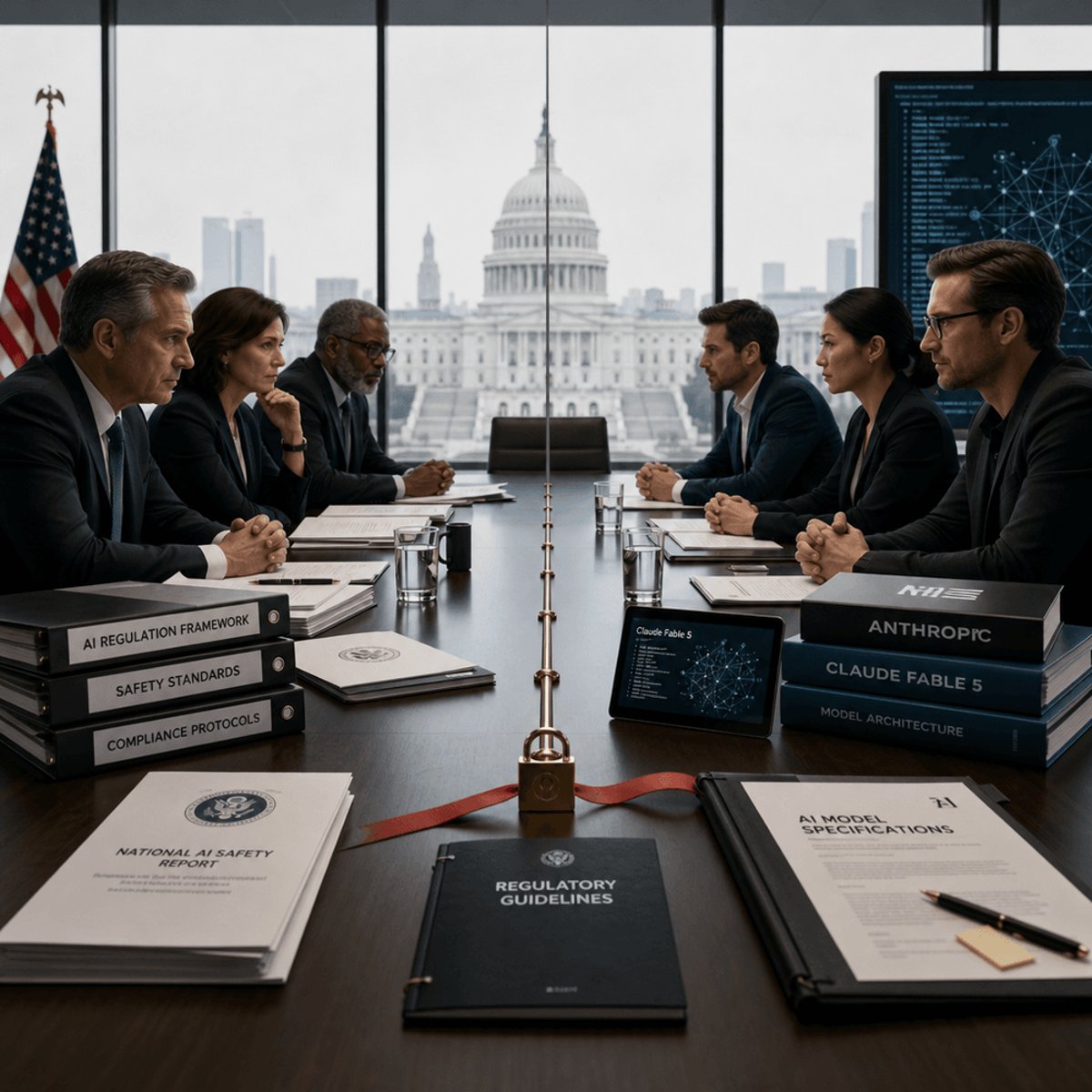
Anthropic's leadership walked out of a high-stakes White House meeting Monday with the same problem they walked in with - fundamental disagreement over whether their Claude Fable 5 model poses national security risks. The standoff marks a critical test of how the government will regulate frontier AI development, with both sides digging in after hours of negotiations in Washington failed to produce a breakthrough.
Anthropic found itself in the hot seat Monday as company leaders made the trip to Washington for what sources describe as tense negotiations with White House officials. The subject: Claude Fable 5, the AI startup's next-generation model that's become the center of an escalating regulatory battle.
According to Wired, the high-level talks wrapped without any clear path forward. Both sides remain split on the fundamental question of what risks the model actually presents, a deadlock that's now threatening to delay or potentially block the release entirely.
The dispute isn't just about one model. It's quickly becoming a litmus test for how aggressively the federal government will flex its regulatory muscle over frontier AI development. Anthropic has positioned itself as the safety-conscious alternative to competitors like OpenAI, but that reputation hasn't insulated it from scrutiny as models grow more powerful.
White House officials have raised concerns about Claude Fable 5's capabilities, though specifics remain closely guarded. The administration has been ramping up oversight of advanced AI systems, particularly around potential national security implications - everything from cybersecurity vulnerabilities to the possibility of models being used to develop biological or chemical weapons.
Anthropic, for its part, maintains its internal safety protocols are robust enough to catch serious risks before deployment. The company pioneered Constitutional AI techniques designed to make models more steerable and less likely to produce harmful outputs. But federal officials apparently aren't convinced those safeguards are sufficient for Fable 5's power level.
The Monday meeting brought together senior Anthropic leadership with officials from multiple agencies, including representatives from the National Security Council and the Commerce Department's AI task force. People familiar with the discussions describe them as professional but pointed, with neither side willing to budge on core positions.
This isn't Anthropic's first brush with regulatory headwinds. The company has faced questions about its rapid scaling and the models it's developed with backing from Google and other major investors. But the Fable 5 situation escalates things to a new level - direct confrontation with the executive branch over whether a model can ship at all.
Other AI labs are watching the standoff closely. If the White House successfully delays or forces changes to Claude Fable 5, it signals a new era of hands-on federal involvement in AI development timelines. That could mean more pre-deployment reviews, mandatory testing regimes, or even approval processes similar to what pharmaceutical companies face.
The timing adds another layer of complexity. Anthropic has been racing to keep pace with OpenAI's GPT series and Google's Gemini models. Any significant delay to Fable 5 could cost the company competitive ground in an industry where being first to market with new capabilities often determines who wins enterprise contracts.
Industry observers note the irony: Anthropic built its brand on being the responsible AI company, yet it's now locked in the highest-profile regulatory fight in the sector. That suggests even companies with strong safety cultures aren't immune to government pushback as models cross certain capability thresholds.
What happens next remains uncertain. Both sides could reconvene for another round of talks, Anthropic could agree to modifications that satisfy federal concerns, or the dispute could escalate into a more formal regulatory proceeding. There's even the possibility of litigation if Anthropic decides to challenge any outright deployment ban.
For now, Claude Fable 5 remains in limbo. The model exists, it's been tested internally, but it's not getting anywhere near public or enterprise users until Washington gives the green light. That wait could stretch days, weeks, or longer depending on how dug in both sides remain.
The Anthropic-White House standoff over Claude Fable 5 is about more than one company's model release schedule. It's a preview of the regulatory reality facing every AI lab pushing toward more powerful systems. As models grow more capable, expect federal scrutiny to intensify regardless of a company's safety reputation. The outcome here will set the tone for how much friction AI developers face going forward - and whether the government has the expertise and authority to effectively gate-keep frontier AI development.